Flamingos Face Growing Threats in Southern Iraq Despite Legal Protections
The flamingo, long regarded as a symbol of the natural beauty of Iraq’s marshlands, has increasingly become a target for illegal hunting.
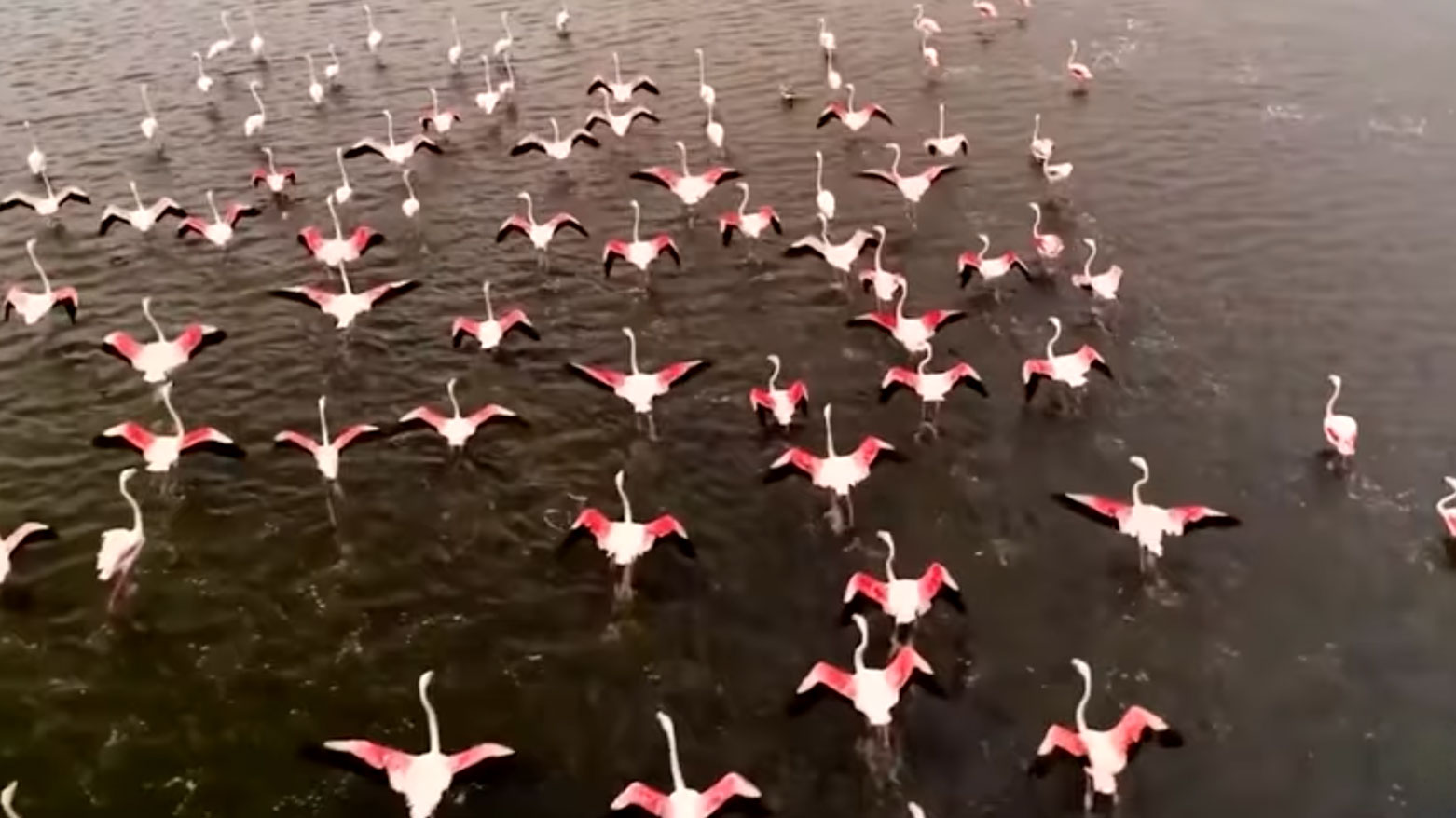
ERBIL (Kurdistan24) — Every year, as temperatures drop across Europe and the Caspian Sea, thousands of flamingos migrate south to Iraq’s marshes and coastal areas, seeking calm waters and a suitable winter habitat. But instead of finding safety, many encounter a growing threat from poachers, placing one of the marshes’ most iconic species at risk of extinction.
The flamingo, long regarded as a symbol of the natural beauty of Iraq’s marshlands, has increasingly become a target for illegal hunting. Environmental activists warn that unchecked poaching is severely damaging biodiversity in southern Iraq and undermining international conservation efforts.
“There are many serious violations against migratory birds, especially flamingos, which are of great importance to international environmental institutions,” Bassam Lami, president of the Mazra'a Organization for Environmental Protection, told Kurdistan24.
Iraqi law strictly prohibits the hunting of migratory birds, with penalties ranging from three to seven years in prison. In response to pressure from environmental organizations, authorities have also banned the sale of flamingos and other protected birds in local markets—a move that has reduced open trade in some areas.
“We used to buy and sell them for a living, but after the government banned hunting them, we stopped,” said Zia Ali, a former bird seller, reflecting on the impact of the new restrictions.
However, enforcement remains uneven. Some traders admit that the practice continues underground. “Our livelihood depends on this,” said Sabah Saleh, highlighting the economic challenges faced by communities that once relied on trade.
In Basra province, the village of Aldir has long been known as a hub for selling migratory birds. While hundreds of flamingos were once displayed openly on the streets, stricter oversight has pushed the trade out of sight. Environmentalists say many of the captured birds now end up in restaurants.
Activists warn that certain hunting methods are particularly destructive. “Hunting flamingos with nets is a disaster,” Lami said. “Around 1,000 flamingos can be captured at once using nets, whereas only about 20 are hunted with weapons over two days.”
As flamingos arrive in southern Iraq in search of peace, they are increasingly caught between poachers and law enforcement efforts that struggle to keep pace. Conservationists stress that protecting flamingos goes beyond saving a single species.
“Preserving the flamingo is about safeguarding Iraq’s natural heritage and protecting the global identity of wildlife,” Lami said, calling for stronger enforcement and greater public awareness to ensure the survival of these migratory birds and the fragile ecosystems they depend on.