China’s Economy Grew at One of Its Slowest Rates in Decades Last Year
GDP rose 5% in 2025, fourth-quarter growth slowed to 4.5%, retail sales up 3.7%, property investment down 17.2%, and exports drove a record $1.2 trillion trade surplus.
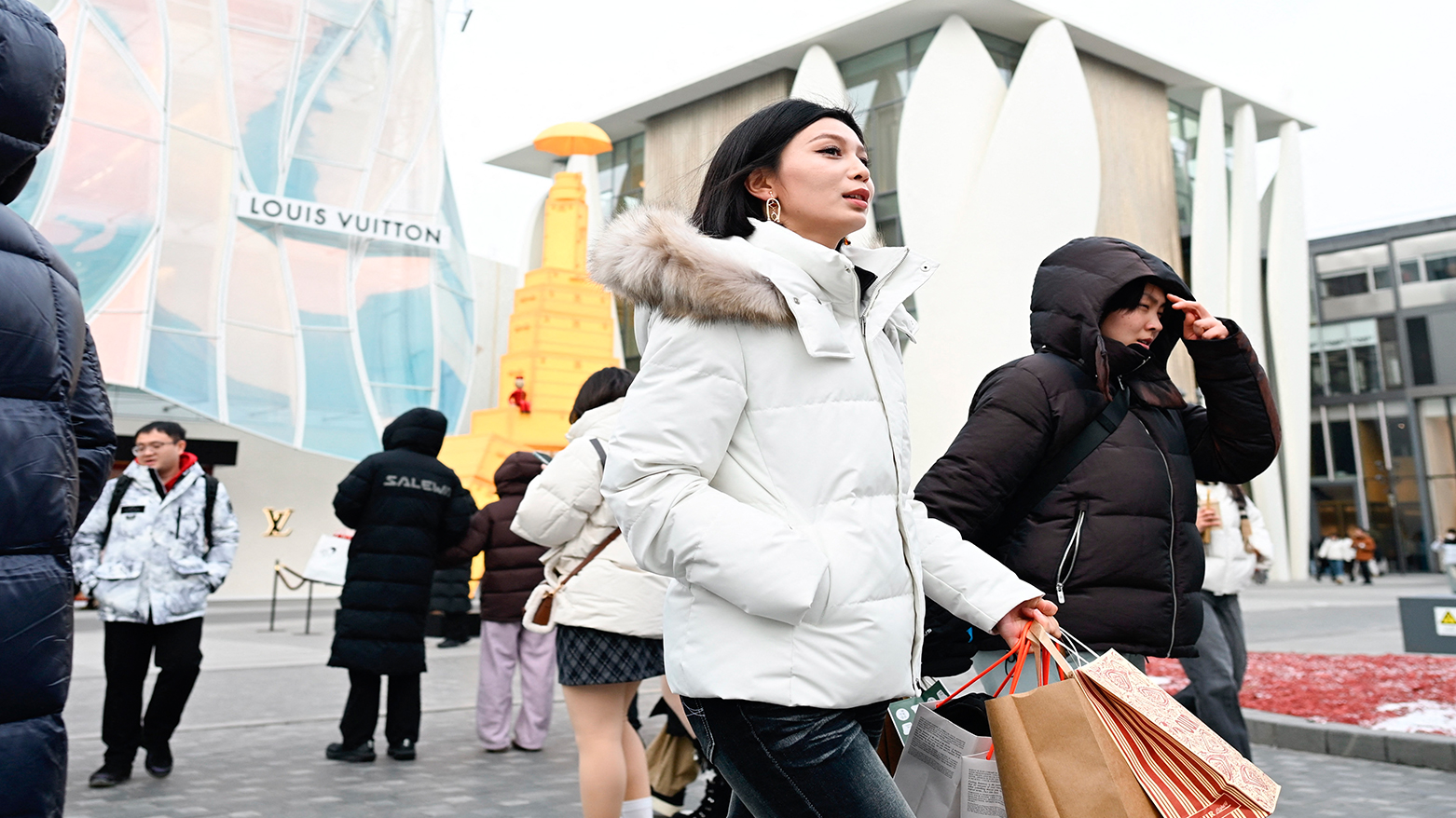
ERBIL (Kurdistan24) — China’s economy grew at one of its slowest rates in decades last year, official data released Monday showed, highlighting persistent structural challenges despite meeting Beijing’s annual growth target.
Gross domestic product expanded by five percent, in line with the government’s goal of “around five percent,” but economists and officials acknowledged that the headline figure masked weak domestic demand and heavy reliance on exports.
Growth also slowed toward the end of the year, with the economy expanding 4.5 percent in the fourth quarter.
“The impact of changes in the external environment has deepened,” National Bureau of Statistics (NBS) official Kang Yi told a news briefing.
He added that “the domestic contradiction of strong supply and weak demand is prominent,” pointing to lingering and emerging challenges facing economic development.
Consumer sentiment remains fragile amid high unemployment and uncertainty, despite government efforts to stimulate spending through looser fiscal policy and subsidies for household goods.
Authorities said measures to boost consumption would continue into 2026, including expanded trade-in programs for appliances and steps to remove what Kang described as “unreasonable restrictions” in the consumption sector.
Data released Monday underscored the strain on household spending. Retail sales growth slowed to 3.7 percent last year from four percent in 2024, while December sales rose just 0.9 percent year-on-year—the weakest pace since China ended its strict zero-COVID controls in late 2022. Economists attributed part of the slowdown to the fading impact of subsidies.
“Overall figures likely overstate the strength of the economy,” said Zichun Huang of Capital Economics, noting that recent resilience was driven largely by exports rather than a broad-based recovery in domestic demand.
Industrial output grew 5.9 percent in 2025, a slight slowdown from the previous year, though December’s 5.2 percent increase marked an improvement from November.
The manufacturing purchasing managers’ index edged up to 50.1 in December, just above the threshold separating contraction from expansion, offering a modest sign of stabilization after months below that level.
The property sector, however, continued to weigh heavily on the economy. Fixed-asset investment fell 3.8 percent last year, reflecting a shift away from decades of heavy spending on property and infrastructure.
Real estate investment dropped 17.2 percent, as the housing market struggled to recover from a prolonged debt crisis despite interest rate cuts and relaxed homebuying restrictions.
External trade remained a bright spot. Although exports to the United States fell 20 percent amid renewed trade tensions following President Donald Trump’s return to the White House, China’s overall export performance was buoyed by strong demand elsewhere.
The country posted a record trade surplus of $1.2 trillion, with exports to the Association of Southeast Asian Nations rising 13.4 percent, shipments to Africa surging 25.8 percent, and exports to the European Union increasing 8.4 percent.
Analysts cautioned that export-led growth may not be sufficient to sustain momentum in the year ahead. Capital Economics expects growth to soften slightly, underscoring the challenge facing policymakers as they seek to revive consumer confidence, stabilize the property sector, and rebalance the economy toward more durable sources of demand.