PM Barzani to Hold Over 20 High-Level Davos Meetings to Attract Investment
Analyst Aras Khoshnaw told Kurdistan24 that PM Masrour Barzani will hold over 20 high-level meetings at Davos 2026, using the forum as a "golden opportunity" to attract investment and showcase the Region's stability and diversification.
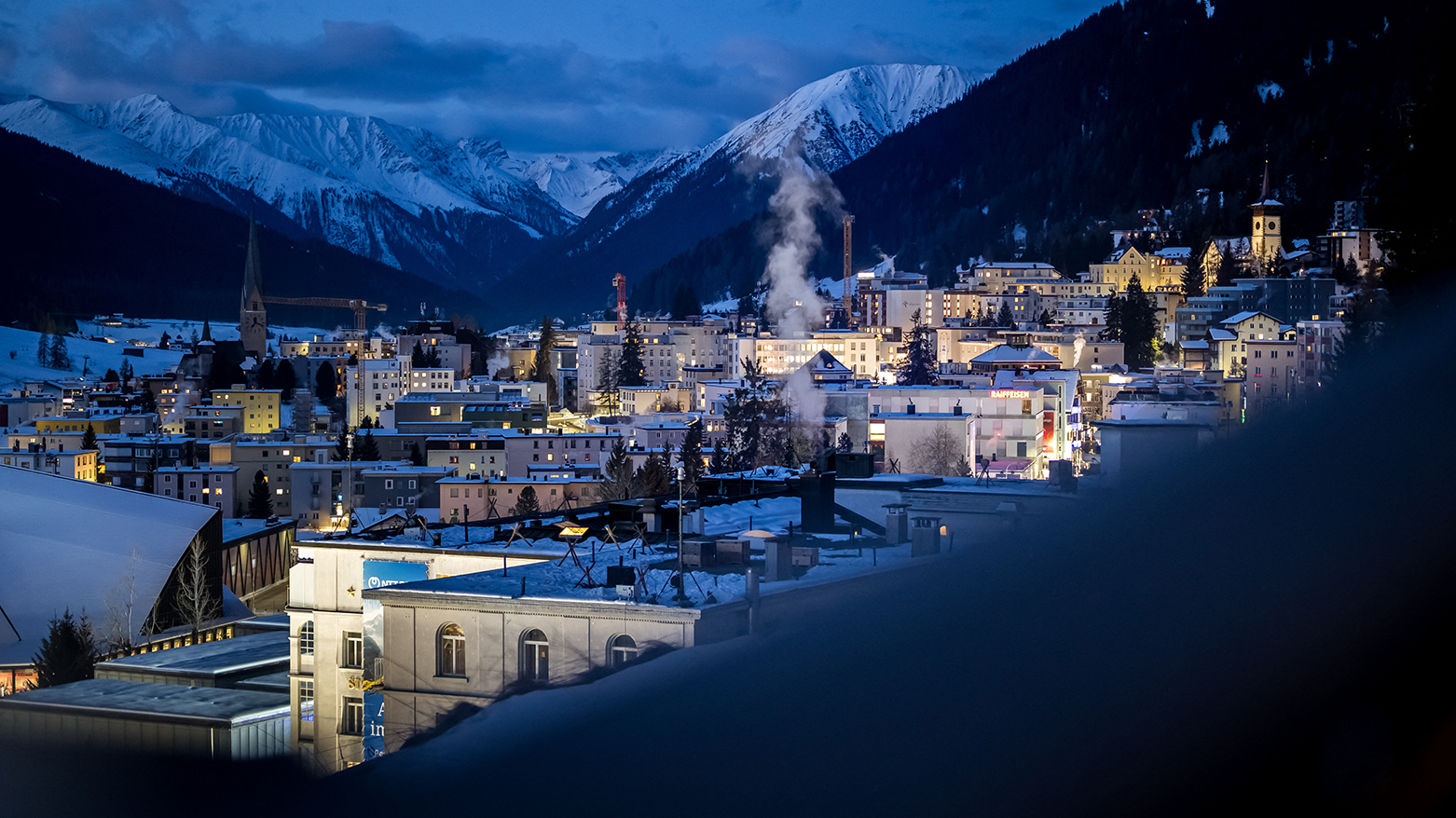
ERBIL (Kurdistan24) - Kurdistan Region Prime Minister Masrour Barzani is scheduled to conduct a rigorous agenda comprising more than 20 high-level meetings with world leaders and executives from major global investment firms during the World Economic Forum in Davos, Switzerland. The details of the Prime Minister’s itinerary were outlined on Monday by Dr. Aras Khoshnaw, the Head of the Information and Strategic Studies Center, who characterized the summit as a critical platform for accelerating economic decision-making and showcasing the Kurdistan Region’s stability to the international community.
In a statement provided to Kurdistan24, Dr. Khoshnaw offered a strategic assessment of the Prime Minister’s participation in the global forum. He emphasized that the delegation’s presence in Switzerland is not merely ceremonial but is structured around a series of substantive engagements designed to yield tangible economic results.
According to Dr. Khoshnaw, Prime Minister Barzani will hold these meetings "on the sidelines of the forum," utilizing the unique convening power of Davos to engage with a concentrated group of decision-makers.
Dr. Khoshnaw specified that the Prime Minister’s schedule involves concurrent engagement with political leadership and the private sector. He stated that Mr. Barzani will meet with "several major global investment companies at the same time and place."
This dual approach, targeting both diplomatic counterparts and capital allocators, is central to the Kurdistan Regional Government’s strategy at the forum.
Dr. Khoshnaw noted that the very nature of Davos—where "decision-makers, businessmen, and initiators gather"—creates a specific dynamic that leads to "accelerating the decision-making process and the implementation of tasks." By having key stakeholders present in a single location, the delegation aims to bypass the typical delays associated with international economic diplomacy.
The Head of the Information and Strategic Studies Center provided insight into the core message that Prime Minister Barzani intends to deliver during these sessions.
Dr. Khoshnaw told Kurdistan24 that the "vast majority of the Prime Minister's meetings" are focused on a specific narrative regarding the investment climate in the Kurdistan Region. He explained that the Prime Minister is tasked with presenting the Region as a "favorable and open environment for welcoming foreign investment."
Dr. Khoshnaw elaborated on the specific pillars of this presentation. He indicated that the Prime Minister will highlight the Region’s strengths in terms of "environment, economy, society, and stability."
By categorizing the appeal of the Kurdistan Region across these four distinct vectors, the delegation aims to present a holistic argument to potential investors, assuring them not only of financial viability but also of the social and security conditions necessary for long-term capital commitment.
The emphasis on "stability" and an "open environment" suggests a concerted effort to differentiate the Kurdistan Region as a secure destination for foreign direct investment within the broader Middle East.
Furthermore, Dr. Khoshnaw contextualized the current diplomatic push within the broader trajectory of the Kurdistan Region’s development.
He mentioned that the Region has demonstrated resilience in its economic planning, noting that "in the past, despite all challenges, [the Region] has been able to continue the process of reconstruction and diversification of revenue sources."
This statement serves to reinforce the narrative of economic durability. By referencing the ongoing process of diversification, Dr. Khoshnaw underscored the government's commitment to moving beyond a single-revenue economy, a key talking point for attracting diverse international partners.
The analyst described the 2026 World Economic Forum as a "golden opportunity" to operationalize these achievements on a global stage.
Dr. Khoshnaw emphasized that the primary utility of the forum is to "introduce these advancements and encourage more investors to turn towards the Kurdistan Region."
The characterization of the event as a "golden opportunity" reflects the high priority the Information and Strategic Studies Center places on this specific diplomatic mission as a catalyst for future economic growth.
The strategic assessment provided by Dr. Khoshnaw suggests that the Kurdistan Regional Government views the Davos forum as a functional mechanism for economic integration.
By securing more than 20 meetings with top-tier officials and corporate leaders, the Prime Minister’s delegation is executing a targeted campaign to convert the Region’s internal progress in reconstruction and diversification into external partnerships.
The analyst’s comments indicate that the metric for success at Davos will be the extent to which these interactions accelerate investment decisions and validate the Region’s status as an open and stable market.
As the forum proceeds, the focus of the Information and Strategic Studies Center remains on how effectively these high-level interactions can be leveraged. Dr. Khoshnaw’s analysis positions the Prime Minister’s visit as a pivotal moment to bridge the gap between the Region’s domestic potential and the global capital required to fuel its next phase of development.
The coordination of meetings with both political figures and major investment companies "at the same time and place" is viewed as the essential tactical advantage provided by the Davos environment, one which Dr. Khoshnaw argues the Kurdistan Region is poised to exploit fully.