SDF Forces Repel Coordinated Assaults on Kobani Fronts as Siege Warfare Tactics Target Raqqa Prison
SDF repelled attacks near Kobani, inflicting heavy losses, while Damascus-linked groups cut water to Raqqa's Aqtan Prison. PKK's Karayilan pledged full support, and the SDC warned of terrorism's resurgence amid the escalating conflict.
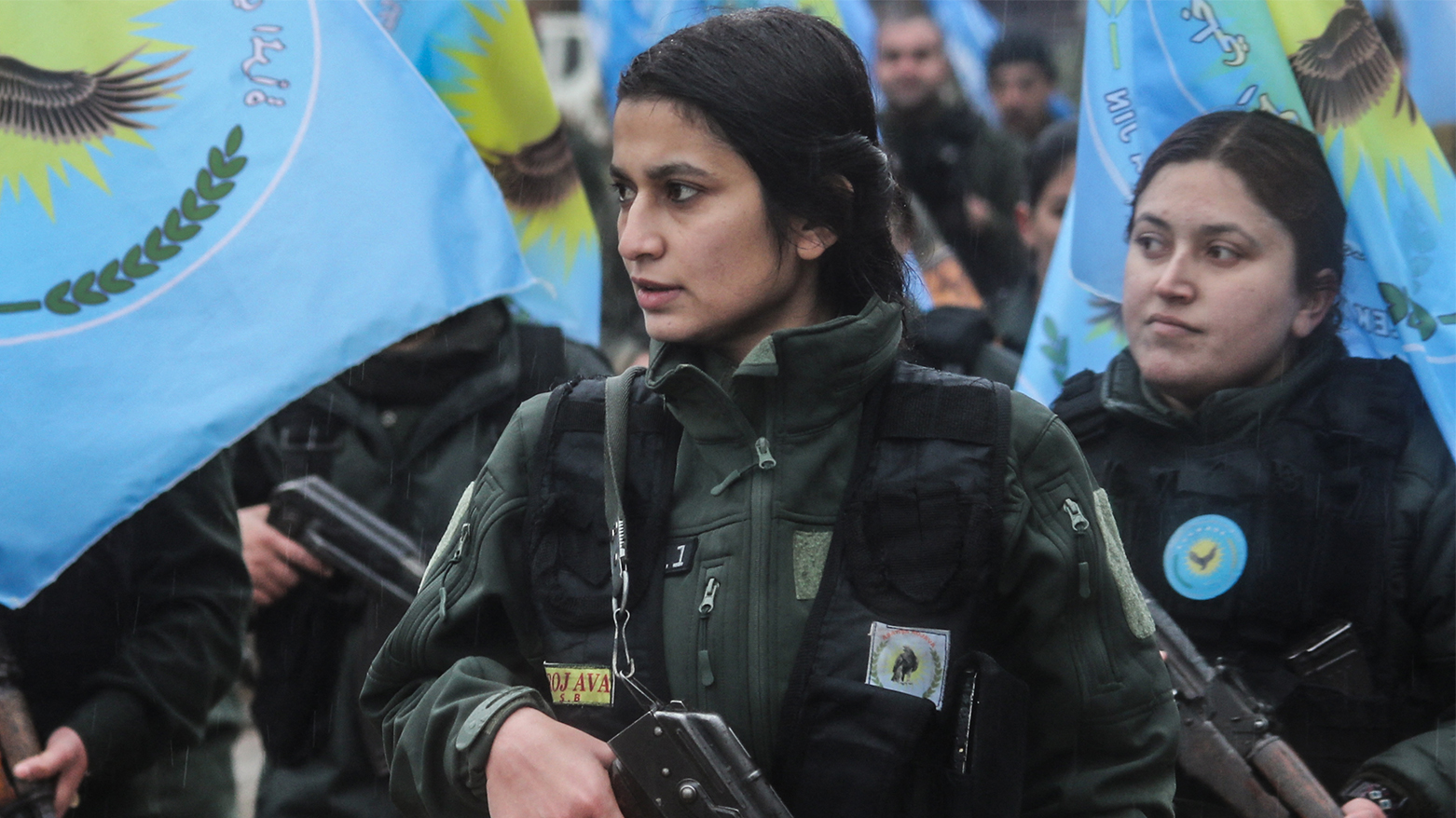
ERBIL (Kurdistan24) - The Syrian Democratic Forces (SDF) announced on Tuesday that their units successfully repelled multiple coordinated attacks by armed groups affiliated with the Damascus government along the southern fronts of Kobani, inflicting "heavy losses" on the advancing forces.
The tactical victories in the strategic border region come as Kurdish authorities report the implementation of siege warfare tactics against detention facilities in Raqqa, further escalating the humanitarian and security crisis in northeast Syria.
According to a statement released by the SDF Media Center early Tuesday, the confrontations on the southern Kobani axis began in the pre-dawn hours. Between 3:00 a.m. and 6:00 a.m., hostile forces launched two consecutive assault attempts targeting the Sarrin axis.
SDF units, including the Women’s Protection Units (YPJ), engaged the attackers, reportedly destroying a significant number of military vehicles and armored personnel carriers.
The statement characterized the defense as executed "with courage and skill," resulting in lethal casualties for the occupants of the destroyed vehicles.
The SDF reported simultaneous engagements on other fronts south of the city. On the "Abu Sra" axis, Kurdish forces struck a military convoy belonging to the government-affiliated groups, forcing a retreat.
Concurrently, an attempt to advance on the village of Khan Mamad in southeast Kobani was thwarted. The SDF described the counter-attack in Khan Mamad as a "fatal blow" that compelled the opposing forces to withdraw.
The Media Center emphasized that all units remain on "maximum alert" to confront further aggression, reaffirming their commitment to defend the territory.
Siege Tactics at Aqtan Prison
While the SDF held the line in Kobani, the situation in neighboring Raqqa deteriorated sharply.
The SDF Media Center released a separate statement on Tuesday confirming that armed groups affiliated with Damascus have cut off the water supply to Aqtan Prison.
This facility, located in northern Raqqa, houses a large population of Islamic State (ISIS) prisoners. The water cut follows an earlier siege and artillery shelling of the prison's buildings and infrastructure.
The SDF warned that the deliberate disruption of water supplies has created a "severe crisis" within the facility, compounded by a dangerous shortage of food and medical supplies.
The statement condemned these actions as a "blatant violation of human rights" that directly endangers the lives of the prisoners.
"We hold Damascus fully responsible for any humanitarian or security repercussions that may occur as a result of this action," the SDF stated, calling on international organizations to intervene urgently to ensure the provision of basic necessities.
PKK Commander Pledges Support
The intensification of the conflict has drawn a sharp response from broader Kurdish militant leadership.
Murad Karayilan, a member of the Executive Committee of the Kurdistan Workers' Party (PKK), issued a message on Tuesday pledging full support for the Kurdish administration in Syria.
"We will do whatever is necessary for Rojava and to stand against these attacks," Karayilan stated. He characterized the offensive not merely as an assault on the autonomous region but as an attack on "all of Kurdistan."
Karayilan also linked the violence to regional geopolitics, asserting that the attacks are an attempt to "sabotage the peace process in Türkiye."
He alleged that the gunmen carrying out operations are affiliated with "Hayat Tahrir al-Sham," a group he claimed is supported by Türkiye, despite the official attribution of the attacks to groups affiliated with the Damascus government.
This rhetoric underscores the complex web of alliances and enmities fueling the conflict, as Kurdish communities across the region mobilize in solidarity.
Political Condemnation and Calls for Dialogue
The Syrian Democratic Council (SDC), the political wing of the SDF, issued a public statement on Tuesday framing the escalation as a threat to global security. The council condemned the execution of captured YPJ fighters and the release of ISIS militants, describing these acts as a "reproduction of terrorism."
The SDC warned that the targeting of Kobani—a city that stands as a global symbol of resistance against ISIS—constitutes an act of retaliation against those who defeated the terrorist group.
"The targeting of Kobani cannot be separated from the broader targeting of northeastern Syria in all its diversity," the SDC statement read.
It accused the "transitional government" in Damascus of pursuing an exclusionary assault aimed at undermining coexistence. While reaffirming its commitment to dialogue, the SDC stressed the necessity of "continuing legitimate resistance" in the face of what it termed brutal actions by forces rejecting peaceful solutions.
Civilian Mobilization and International Appeal
The military pressure has triggered widespread civilian mobilization.
In Western Kurdistan, residents have taken up arms to fight alongside SDF forces, vowing to protect their land.
Similar sentiments have echoed across the border in the Kurdistan Region, where citizens in various cities have poured onto the streets to express support for their compatriots in Rojava. Protesters are calling on the international community to intervene and prevent further attacks by Arab armed groups.
As the conflict widens from the frontlines of Kobani to the besieged prisons of Raqqa, the prospect of a negotiated settlement appears increasingly fragile.
The convergence of military assaults, siege tactics, and the involvement of regional actors suggests a protracted struggle for control of northeast Syria, with significant implications for the stability of the entire region.