European Airlines Suspend Regional Service as Israel Clears Airspace
KLM and Air France suspended regional flights Friday as Israel cleared its airspace amid rising regional tensions and President Trump’s warning of an incoming large military force.
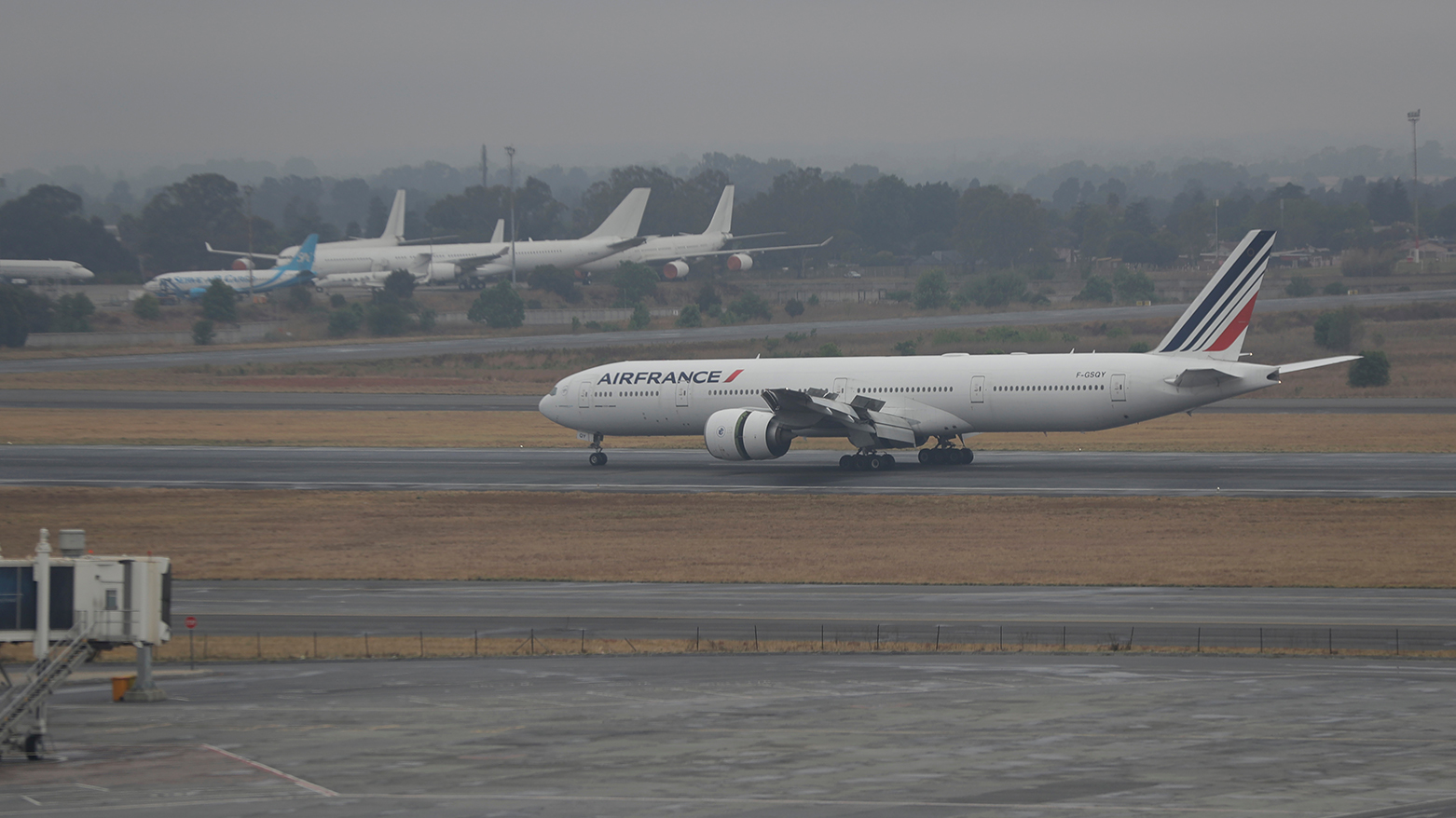
ERBIL (Kurdistan24) - A selection of major European airlines on Friday announced the unexpected suspension of flight operations to Israel and several neighboring Arab nations, citing a rapid deterioration in security conditions across the Middle East. The move coincided with reports from Israeli media that the country has cleared its national airspace of all civilian aircraft as a precautionary measure amid a surge in regional instability and escalating military rhetoric between the United States and Iran.
According to a report by Israel’s Channel 12, the Dutch flag carrier KLM has halted all service to Israel, as well as routes connecting to Saudi Arabia and the United Arab Emirates.
The suspension is reported to extend to several other unnamed countries in the immediate area. Simultaneously, Air France has suspended its flight schedule to Tel Aviv and the broader surrounding region.
These operational shifts occur as commercial entities react to what analysts describe as an environment of acute regional tension driven by recent U.S. diplomatic and military maneuvers.
The disruption in commercial aviation extends beyond airline scheduling to the sovereign management of regional airspace.
Israeli media outlets reported on Friday that the state has initiated a clearing of its national skies, effectively removing all aircraft from its territory.
While official statements from the Israeli government regarding the specific duration or technical triggers of the measure were not immediately available, the move is being characterized by domestic media as a precautionary response to the evolving political landscape and the potential for a widening conflict.
The immediate catalyst for the heightened alert appears to be a series of warnings and military movements involving the United States.
Earlier, U.S. President Donald Trump announced that a "large force is heading toward the Middle East," signaling a significant reinforcement of the American military presence in the theater.
This deployment follows a period of intensifying friction between Washington and Tehran, particularly concerning U.S.-led negotiations and the broader Israel-Iran conflict.
President Trump further underscored the gravity of the U.S. position by issuing a direct warning to Iranian leadership.
According to the report, the President has threatened to authorize heavy military strikes against Iran if the government in Tehran proceeds with scheduled executions.
This threat has added a volatile layer to existing regional tensions, directly influencing the risk assessments of international travel companies and sovereign aviation authorities who manage the region's busy transit corridors.
The decision by KLM and Air France to pre-emptively ground flights reflects a cautious approach to the safety of passengers and equipment in light of these developments.
The inclusion of major Arab economies such as Saudi Arabia and the United Arab Emirates in the suspension list suggests that carriers are viewing the security risk as a theater-wide concern rather than one confined to active combat zones.
The Dutch airline's decision to include the Gulf states in its cancellation list highlights the perceived potential for the instability to disrupt travel across the wider region.
The current climate of uncertainty is rooted in a complex intersection of the ongoing Israel-Iran war and U.S.-Iran diplomatic friction. As regional tensions have escalated due to U.S. actions and subsequent threats, commercial operators are increasingly finding Middle Eastern flight paths difficult to navigate safely.