Hujam Surchi Remembered as Symbol of Kurdish Resilience and Resistance
Kurdistan marked 11 years since the martyrdom of Peshmerga Hujam Surchi, publically executed by ISIS in 2015. His resilience remains a national symbol, and his executioner was killed in 2017.
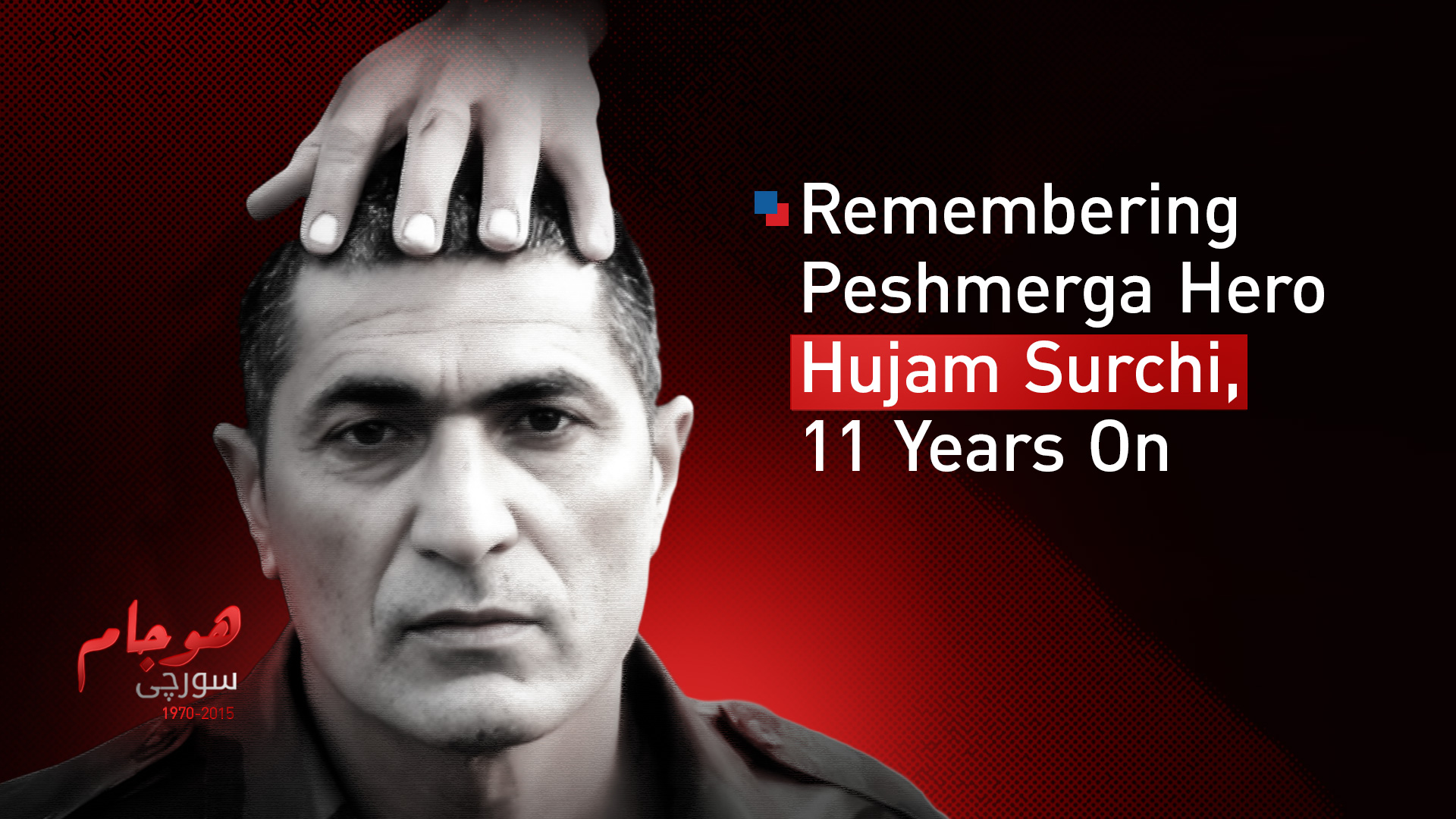
ERBIL (Kurdistan24) - The Kurdistan Region on Sunday observed the 11th anniversary of the martyrdom of Hujam Surchi, a Peshmerga soldier whose public execution by Islamic State (ISIS) terrorists in 2015 became a defining moment of Kurdish resistance and a catalyst for international condemnation. The annual commemoration, held on Jan. 25, 2026, serves as a solemn reminder of the human cost of the war to liberate Mosul and the enduring legacy of those who served in the front lines against the extremist group.
Hujam Abdulrahman Khidir Surchi, whose name has since become synonymous with resilience across the region, was born in 1970 in the village of Bardasor. The village is situated within the Ruvia sub-district of the Bardarash district, an area that has long contributed personnel to the Kurdish security apparatus. Hujam’s commitment to the Peshmerga forces began in 1991, a pivotal year in Kurdish history, and he maintained his military service for more than two decades until his final deployment in the Nineveh Province.
It was during the protracted and violent campaign to liberate the city of Mosul from Islamic State control that Hujam fell into the hands of the terrorist organization.
According to regional records and reports from the time, he was taken captive while performing his duties in Nineveh.
The capture of a veteran Peshmerga soldier was utilized by the Islamic State for propaganda purposes, culminating in a brutal public execution. On Jan. 25, 2015, Hujam was beheaded in public, an act of documented cruelty that was recorded and disseminated by the group.
The martyrdom of Hujam Surchi triggered immediate and significant reactions both domestically and on the international stage.
In the Kurdistan Region, the brutality of the act did not result in the intimidation the perpetrators sought; instead, it served to significantly bolster the morale of the Peshmerga forces. The image of Hujam’s final moments became a rallying point for Kurdish troops, reinforcing their resolve to defeat the ISIS and secure the liberated territories. International observers and governments also reacted with gravity, citing the incident as a clear testament to the extreme violence and disregard for human life that characterized the organization’s ideology.
In the immediate aftermath of his death, local authorities and the public moved to ensure that Hujam’s sacrifice would be permanently recognized.
In March 2015, only two months after his execution, a statue of the martyr was unveiled in the Ruvia sub-district. The monument was established as a tribute to his resilience and as a site for annual commemorations. Since its unveiling, the statue has served as a physical landmark where citizens and officials gather every Jan. 25 to honor his memory and the values of self-sacrifice he represented.
The pursuit of justice for the execution of Hujam remained a priority for regional security forces and their international partners. Nearly two years after the events in Nineveh, a joint operation was launched involving the Kurdistan Region’s security forces and the global Coalition. The primary target of the mission was the individual identified as the supervisor of Hujam’s martyrdom.
The operative was identified as Mowaffaq Asaad Iskandar, known by the alias "Abu Abdullah." The successful conclusion of the joint operation resulted in the death of Iskandar, providing a measure of accountability for the public beheading that had shocked the world.
Now, in 2026, the passage of 11 years has not diminished the impact of Hujam’s story within the archives of the war against terror. His martyrdom continues to be analyzed as a foundational event that illustrated the stark contrast between the brutality of the Islamic State and the defensive mission of the Peshmerga.
Regional historians and military analysts maintain that the image of his martyrdom remains one of the clearest testaments to the challenges faced by Kurdish forces during the height of the conflict.
The annual commemorations across the Kurdistan Region emphasize that the collective memory of the war to liberate Mosul is inextricably linked to individual acts of bravery. For the people of Bardarash and the Ruvia sub-district, the anniversary is a local tragedy that became a national symbol.
The story of the man from Bardasor village who served from 1991 until 2015 remains a central narrative in the ongoing efforts to educate younger generations about the costs of security and the necessity of resilience in the face of extremism.
As the Kurdistan Region marks this 11-year milestone, the focus remains on the preservation of the values for which Hujam died. Public statements from various sectors of Kurdish society on Sunday underscored that while the territorial caliphate has been defeated, the lessons of Hujam Surchi’s sacrifice remain relevant.
The resilience he displayed during his captivity and the subsequent international mobilization against his killers are viewed as key chapters in the region's broader struggle for stability and peace.
The commemorations on Jan. 25, 2026, concluded with various ceremonies at the statue in Ruvia, reflecting the enduring respect for a soldier who became a symbol of national dignity. The legacy of Hujam Surchi, as noted by observers, is not only found in the monuments built in his honor but in the continued unity of the forces that eventually cleared Nineveh Province of the threat that claimed his life.
The image of his martyrdom, though painful, is preserved as a testament to the fact that the resolve of a people often proves more durable than the violence intended to break it.