Factories District in Baghdad: Pollution Lakes Fuel Disease as Kidney Failure Claims Lives
Severe pollution in Baghdad’s al-Ma‘amil district has caused dozens of serious illnesses, including kidney failure that has killed more than fifty people, amid sewage lakes, absent hospitals, and official silence.
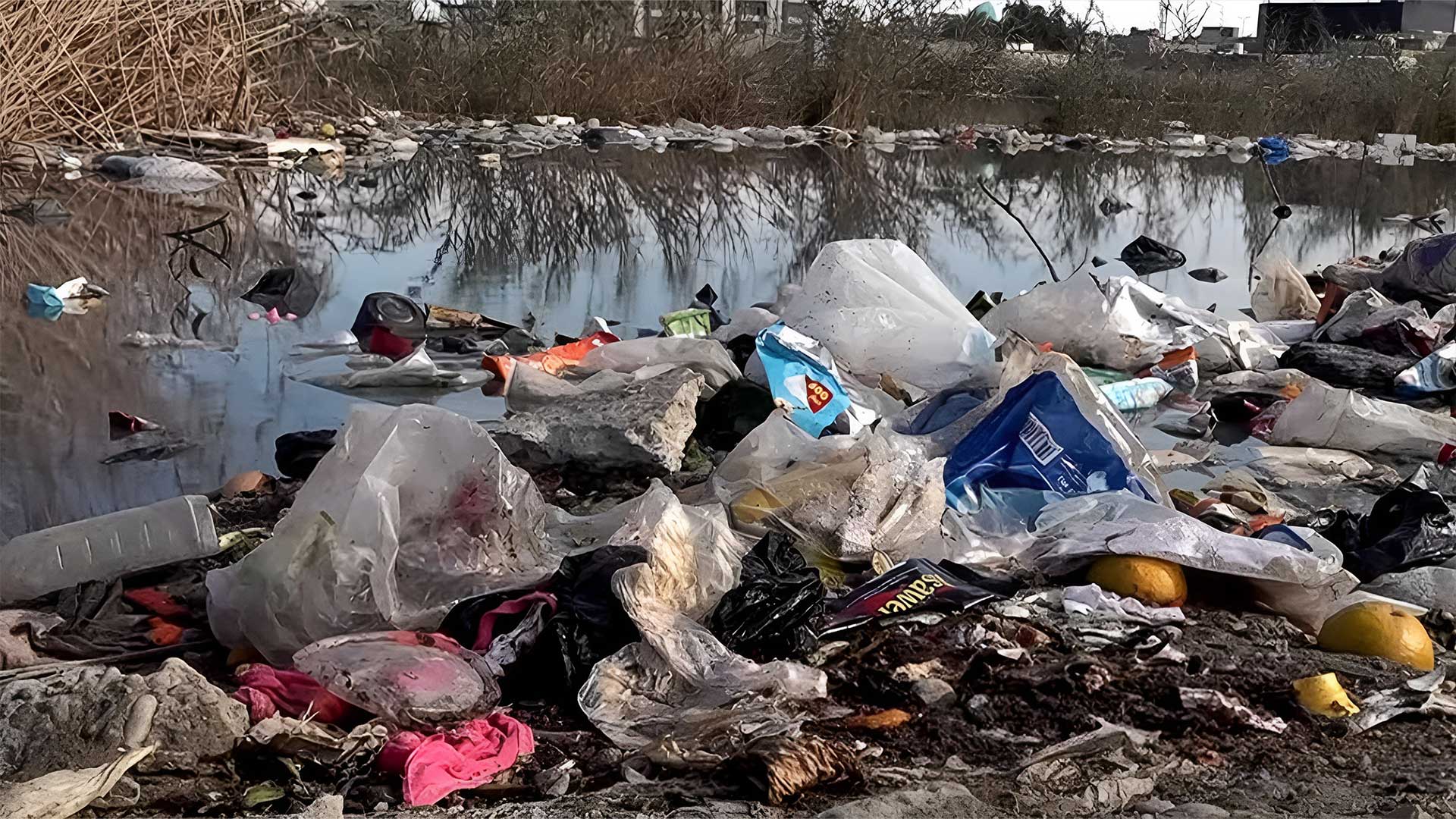
ERBIL (Kurdistan24) - In a scene that even the world’s poorest regions would reject, Baghdad’s al-Ma‘amil (Factories) district has become a landscape of sewage water and waste heaps, where pollution is no longer a matter of foul odors but a silent killer stalking residents and claiming lives.
The al-Ma‘amil area, east of the Iraqi capital Baghdad, is grappling with severe environmental contamination that has transformed daily life into a struggle for survival. Stagnant sewage water and mounting piles of waste have become a permanent feature of the neighborhood; a reality residents say is the result of prolonged government neglect.
Statistics cited by members of Baghdad’s local government indicate that environmental pollution in the area has led to dozens of serious illnesses, most notably kidney failure, which has so far caused the deaths of more than fifty people.
Kurdistan24 visited the narrow streets of the district and met Abu Ali, the father of a child suffering from kidney failure. Speaking with bitterness, he said: “The water here is not fit for human use. Even animals cannot drink it. We have repeatedly appealed to the relevant authorities without any response. My son today suffers from kidney failure and bladder problems as a result of water pollution and inhaling gases emitted from the waste surrounding us.”
The crisis is compounded by the absence of basic health infrastructure. Al-Ma‘amil, which covers an area of twenty square kilometers and is home to more than 850,000 people—a population larger than that of the entire Muthanna province—does not have a single hospital capable of meeting the growing needs of its residents.
Civil activist Ali Kazem described the situation as catastrophic. “We are facing a real disaster,” he said. “Our organization has documented fifty-three cases of kidney failure recently, and we have carried out more than twenty-five surgical operations for patients from the area at the organization’s expense. The biggest shock came last month alone, when we lost four people who died from this disease.”
Pointing to what he described as “black lakes” in the middle of residential neighborhoods, Kazem said: “This lake you see is not natural. It is a تجمع of sewage water coming out of homes, which has collected here due to the absence of proper sewage networks, turning it into a hotspot for epidemics and toxins.”
Kurdistan24 attempted to contact the relevant health authorities to clarify the reasons behind the dangerous spread of diseases and the deteriorating environmental conditions. However, all attempts went unanswered, leaving official silence as the dominant response.
Caught between the hammer of pollution and the anvil of absent services, hundreds of thousands of residents in al-Ma‘amil face an uncertain future, as activists warn that the continuation of this reality could turn the area into a “mass grave” driven by diseases that spare neither children nor adults.