European and Norwegian MPs Criticize NATO and EU Silence on Western Kurdistan
European MP Evin Inger and Norwegian MP Mani Hussaini criticized NATO and EU silence on Western Kurdistan, citing Turkey’s role, humanitarian neglect, and the need to support Kurds who fought ISIS and now face siege and hardship.
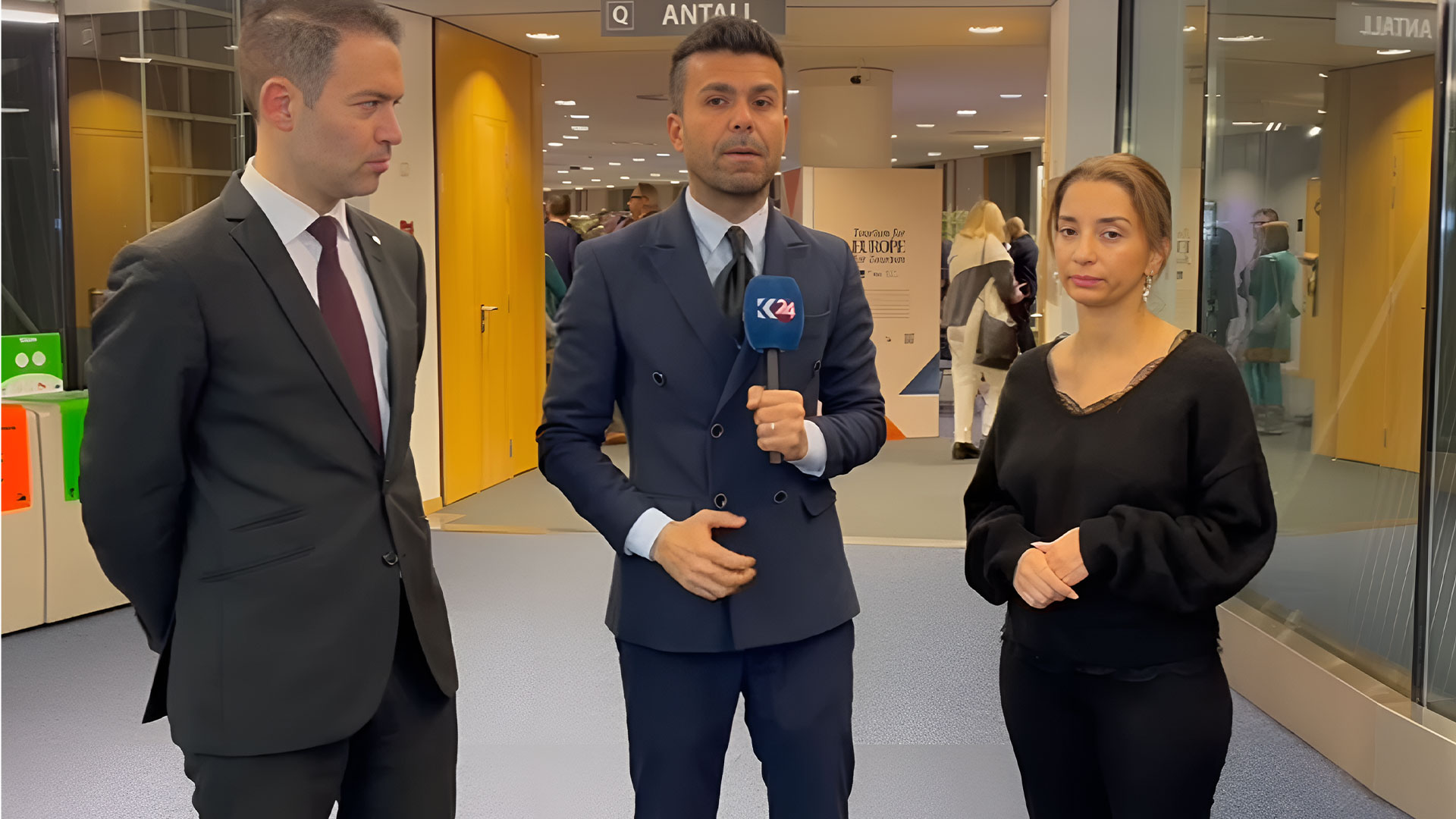
ERBIL (Kurdistan24) - Against the backdrop of deepening conflict, displacement, and humanitarian hardship in Western Kurdistan, two European lawmakers have voiced sharp criticism of NATO and the European Union, warning that political silence and caution are enabling continued suffering and disregarding Kurdish sacrifices in the fight against ISIS.
In an interview with Kurdistan24’s correspondent in Europe, Evin Inger, a Member of the European Parliament, and Mani Hussaini, a Member of the Norwegian Parliament, discussed the situation in Western Kurdistan and the positions of the European Union and NATO.
Asked about NATO’s stance following her recent meeting with NATO Secretary General Jens Stoltenberg, Inger said the current approach is deeply problematic. She pointed to Turkey as a central issue, stating that because Turkey is a NATO member, the alliance remains silent.
“This is unacceptable,” she said, stressing that NATO should support those fighting ISIS. She noted that Kurds are part of the coalition against ISIS and said it cannot be accepted that NATO takes action while remaining silent on such realities.
Inger was also asked what role she could play as a Member of the European Parliament. She said the European Union is sending funds to Syria, specifically to the Syrian government. She recalled that around two weeks earlier, the President of the European Commission and heads of states visited Syria without making any reference to Rojava.
“When money is sent to a government, conditions must be attached,” she said, emphasizing that respect for international law is essential and that violations cannot be accepted in Syria.
Turning to the Norwegian perspective, Hussaini was asked how Norway views the situation in Western Kurdistan and whether it supports Rojava. He said lawmakers must raise their voices more forcefully.
“What is happening is genocide,” he said, referring to developments in Rojava and the east. He urged Europe to open its eyes to what is unfolding on the ground and reminded that Kurds sacrificed heavily in the fight against ISIS, saying more than twenty thousand Kurds were martyred while defending European security.
He said Norway, Europe, and the United States must not forget who their allies were in the Middle East.
Asked about the stance of the Norwegian government and parliament, Hussaini said many issues dominate international politics, making it difficult to place Rojava consistently on the agenda. However, he said many Norwegian parliamentarians are discussing developments in Western Kurdistan and are seeking to provide humanitarian assistance.
He highlighted the situation in Kobani, saying the city has been under siege for more than a week, with no food, water, or electricity. He said that two days earlier, Norwegian assistance had been involved in efforts to open a humanitarian corridor to deliver aid.
“The most important issue now is humanitarian assistance,” he said, warning that civilians risk dying without urgent support. He added that political efforts are also needed to ensure Kurds secure their rights in Western Kurdistan, noting that Kurds lived under Assad’s rule for fifty years and should not face the same conditions again.
The interview comes amid ongoing crises in Western Kurdistan, including siege conditions, shortages of basic services, and political uncertainty. Kurdish forces previously played a central role in fighting ISIS, sustaining heavy losses, while international actors continue to debate their responsibilities and engagement in the region.
Both lawmakers called on Kurds across all four parts of Kurdistan and in the diaspora to remain united and raise their voices, urging European institutions to assume their responsibilities and take concrete action regarding Western Kurdistan.
Kurdistan24’s correspondent in Europe, Barzani Hassan, contributed to this article