Kurdish Artist to Open Berlin Exhibition with Proceeds Targeted for Rojava Relief
Lukman Ahmad will open the "Braids of Rojava" art exhibition in Berlin on Feb. 7, 2026. The artist intends to donate all proceeds to aid the "dire" humanitarian situation for Kurds in Rojava.
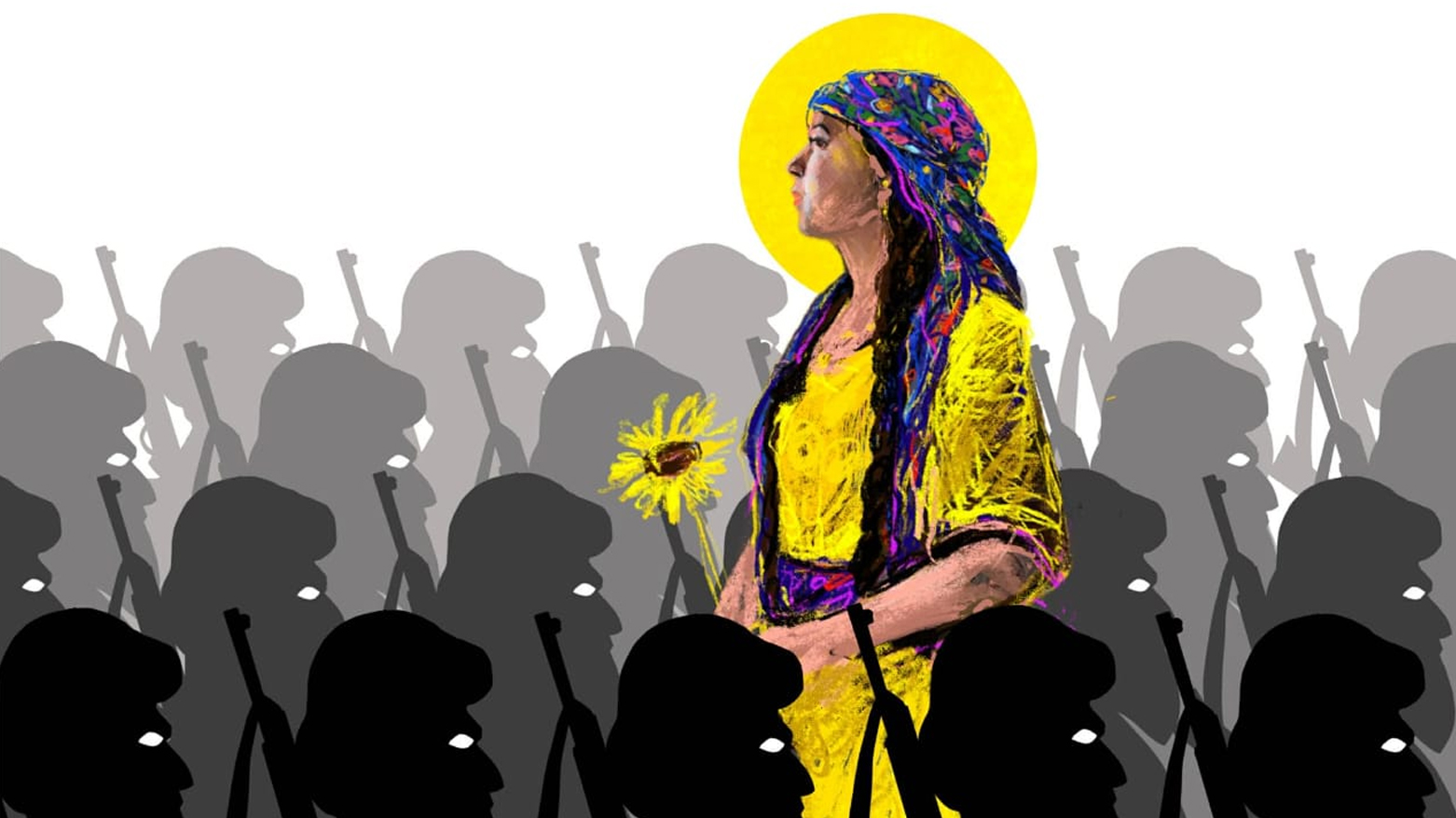
ERBIL (Kurdistan24) - Lukman Ahmad, a visual artist originally from Rojava, announced on Wednesday that he will open a fine arts exhibition in Berlin next month, pledging to donate the entirety of the proceeds to support relief efforts in the Kurdish-majority regions of northern Syria. The exhibition, titled “Braids of Rojava,” is scheduled to debut on February 7, 2026, and is framed by the artist as a cultural vehicle for both humanitarian aid and political resistance during a period of acute regional instability.
Speaking to Kurdistan24 on Wednesday, Jan. 28, 2026, Ahmad detailed the logistical and thematic scope of the upcoming event. The collection will feature 50 paintings, primarily ranging in size from 50 to 70 centimeters.
To maximize the potential for financial contributions, the artist stated that he is working to include several much larger works intended to command higher prices. The inventory will consist largely of original pieces, though a segment of the exhibition will offer prints at lower price points to ensure accessibility for a broader range of patrons and supporters.
Ahmad characterized the exhibition as a visual documentation of the contemporary Kurdish experience in Syria.
According to the artist, the primary objective of the work is to showcase the "suffering and pain" of the population in Rojava. He described the paintings as evidence of the multifaceted challenges currently facing the region, utilizing symbolic imagery to convey themes of loss and endurance.
"In this exhibition, I am showcasing the suffering and pain of the Kurds of Rojava," Ahmad told Kurdistan24. "My paintings speak of the agony that the people there are currently facing."
He specifically referenced recent symbolic tensions, noting that while antagonists have sought to "cut our braids," Kurdish women have responded by "weaving thousands more," a metaphor for cultural resilience that informs the title of the exhibition.
The artist’s decision to allocate the revenue to Rojava is driven by his assessment of the humanitarian conditions on the ground. Ahmad described the current situation for residents in northern Syria as "very dire," asserting that there is a profound and immediate need for outside assistance.
He issued an appeal to the Kurdish community residing in the German capital to attend the event and encouraged them to invite the broader German public and international residents. The goal, he explained, is to achieve maximum sales to provide material support for those affected by the ongoing conflict and displacement.
Beyond the humanitarian aspect, Ahmad articulated a philosophy of art as an active component of political struggle.
He specifically addressed the role of intellectuals and other artists in the regional conflict, citing what he described as a malicious campaign launched by certain Arab figures against the Kurdish people. Ahmad identified the caricaturist Ali Farzat as a specific example, alleging that Farzat utilized his drawings to attack Kurdish interests when the war in Rojava intensified.
In response to such intellectual and artistic campaigns, Ahmad argued that Kurdish creators have a responsibility to utilize their own influence as a defensive measure. He stated that the artistic output of the diaspora should not be viewed merely as a display of aesthetic beauty, but as a form of "resistance."
According to the artist, the struggle for national rights must be fought through creative channels as much as through political ones. "As Kurdish artists, we must confront them through our art and struggle against them with our creativity," he stated.
The exhibition occurs at a time when the Kurdish diaspora is increasingly mobilized. Ahmad expressed significant pride in what he characterized as a unified global stance among Kurds. He suggested that the current period represents a decisive day for taking a stand, noting that the collective Kurdish voice is now being heard across international borders.
"I am very happy that we Kurds are united across the globe, striving for our national rights," he said. He expressed a high degree of confidence in the eventual achievement of these rights, asserting that the strength and will of the people are "immense" and that their presence has been felt globally.
Ahmad’s Berlin exhibition is part of a broader trend of cultural activism within the Kurdish community in Europe. As the second-largest Kurdish diaspora on the continent, the community in Germany often serves as a primary hub for such initiatives.
By linking fine arts to direct humanitarian funding and political advocacy, the "Braids of Rojava" exhibition seeks to maintain international attention on the situation in Syria.
The artist concluded his statement to Kurdistan24 by reiterating that his work is intended to prove that "no force can overcome us," emphasizing that the endurance of the Kurdish people in their homeland will ultimately prevail over efforts to expel them.
As the February 7 opening date approaches, organizers are preparing for what they hope will be a significant turnout of both the diaspora and the local German art community in Berlin.
Kurdistan24 correspondent Garmian Gelli contributed to this report.