Displaced Families Leave Hasakah Camps, Relocate to Cities Across Western Kurdistan
An official overseeing shelters in Hasakah, speaking on condition of anonymity, said displaced families had previously been distributed across 37 shelters accommodating more than 1,295 families.
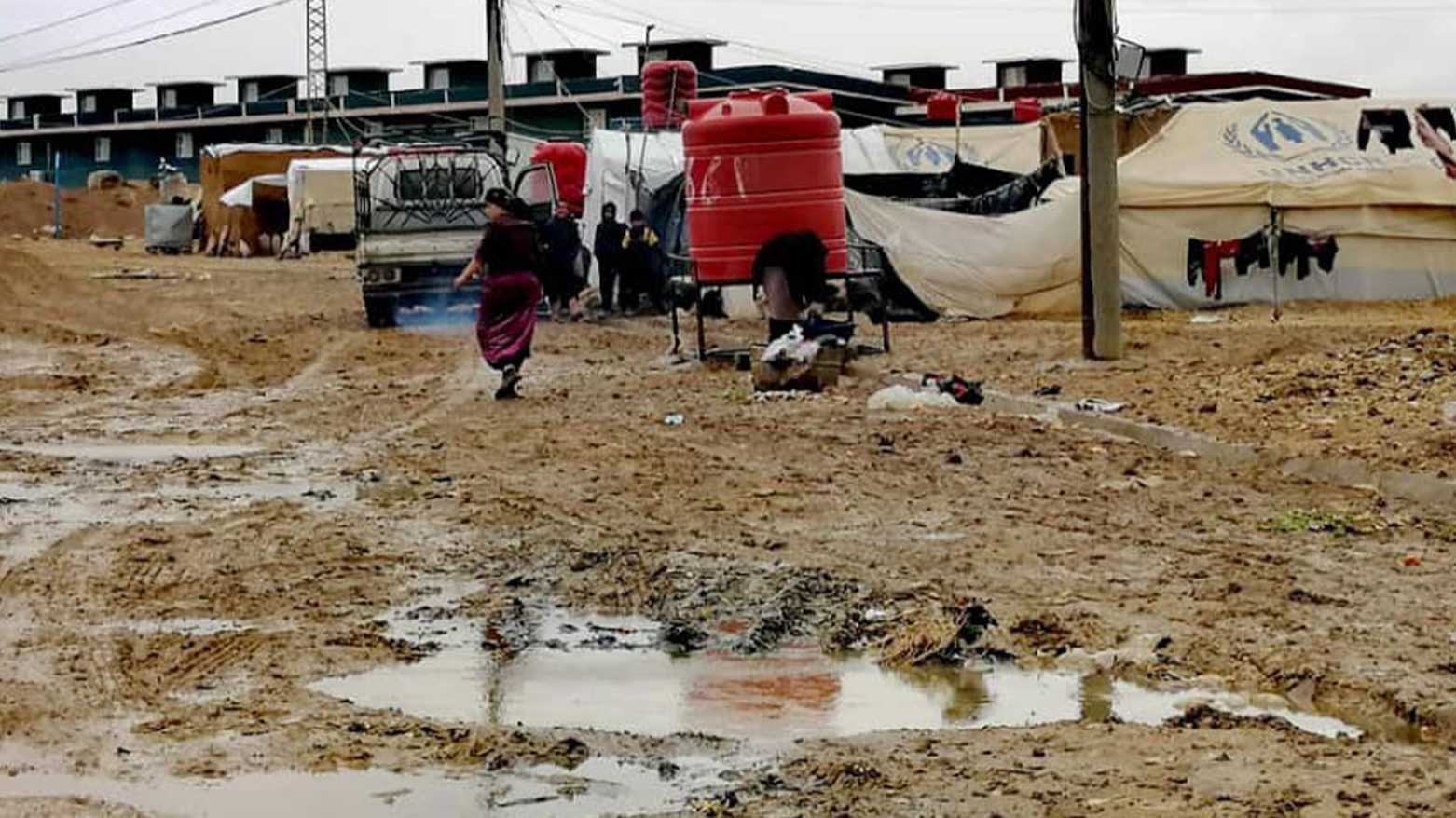
ERBIL (Kurdistan24) — The administration of internally displaced persons (IDPs) camps in Hasakah and surrounding villages announced on Thursday that several displaced families have begun leaving camps after years of residence, relocating mainly to the cities of Qamishlo, Darbasiyah, and Amuda.
An official overseeing shelters in Hasakah, speaking on condition of anonymity, said displaced families had previously been distributed across 37 shelters accommodating more than 1,295 families. After a school used as a shelter was evacuated, the number of operational shelters dropped to 36.
The official added that many families have relocated to neighborhoods within Hasakah city and nearby villages, while only two or three families have returned to their hometown of Serê Kaniyê. Authorities stressed the need to conduct a new census to accurately assess the number of families still residing in shelters.
Meanwhile, an official from Tala'i camp, who also requested anonymity, said the camp had hosted around 2,700 displaced families, mostly from Serê Kaniyê. According to the official, roughly 25 percent of those families have recently left the camp, partly following the suspension of assistance from international and local organizations.
Most families relocating from the camp have moved to nearby cities, while only a limited number have returned to Serê Kaniyê, the official added.
At Washokani camp, which houses more than 2,500 displaced families from Serê Kaniyê, camp authorities reported that around 10 percent of residents have similarly departed in recent weeks, mainly relocating to cities across the region.
The population movements come amid growing congestion in towns and villages across northern Hasakah province, particularly in Qamishlo, Amuda, and Darbasiyah, which have already absorbed large numbers of displaced families from Tabqa, Raqqa, Deir ez-Zor, and rural Hasakah.
Local and international humanitarian organizations have also scaled back or suspended activities in several areas due to ongoing security concerns linked to attacks by the Syrian Arab Army, prompting some displaced families to leave the camps and seek accommodation in surrounding communities.