Iraq’s Leadership Talks Intensify as Maliki Defends Nomination and Shiite Blocs Weigh Alternatives
Maliki reaffirmed his candidacy as Iraqi blocs debated alternatives and Kurdish parties remained divided ahead of a parliamentary vote on the presidency.
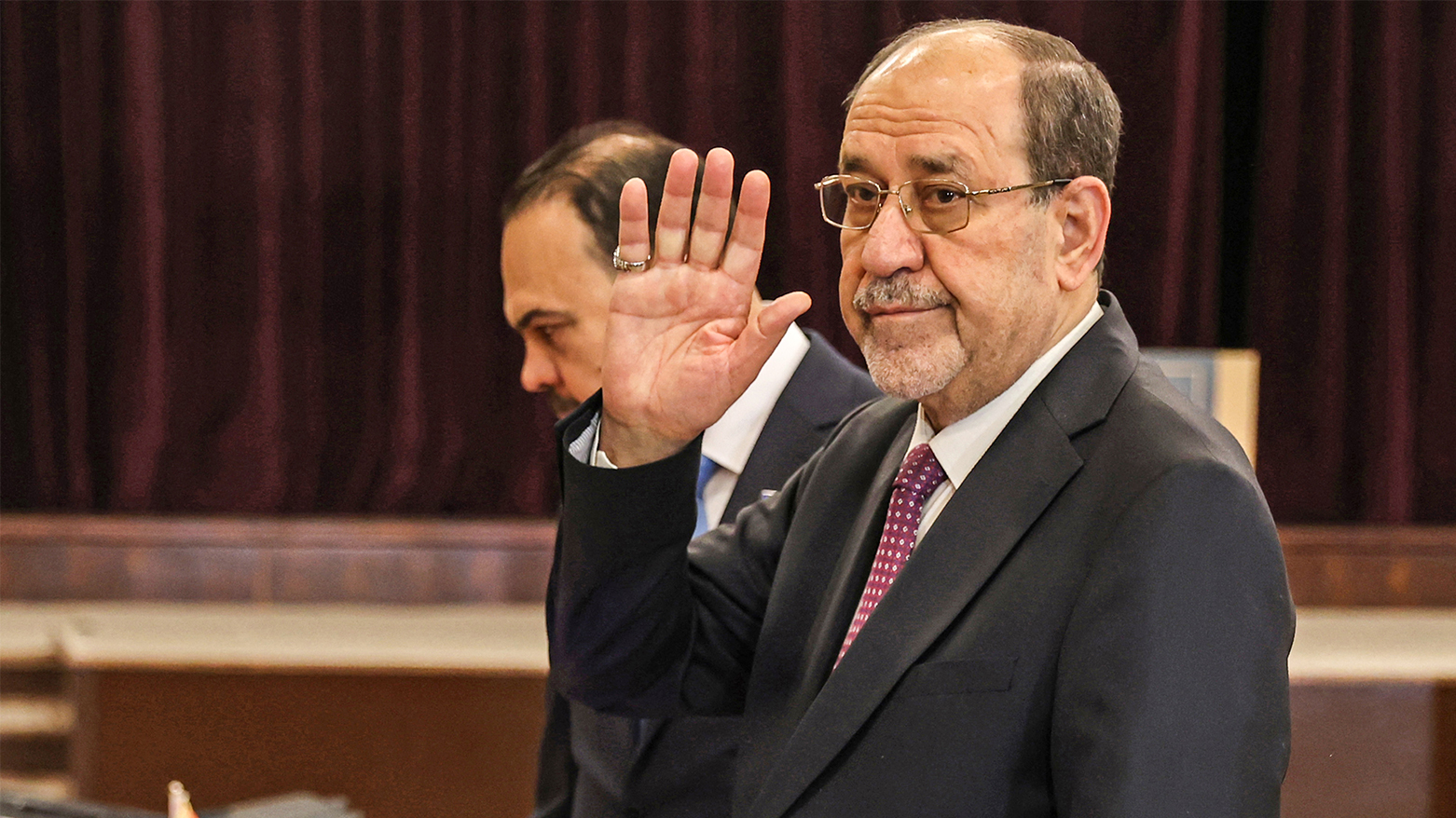
ERBIL (Kurdistan24) - Iraq’s political process entered a critical phase on Saturday as Nouri al-Maliki, leader of the State of Law Coalition, publicly reaffirmed his refusal to compromise on what he described as the Iraqi people’s right to choose their leaders, while rival blocs within the Shiite-led Coordination Framework met to consider scenarios that could include replacing him as the candidate for prime minister and to address unresolved disputes over the presidency.
In remarks responding to journalists, Maliki framed the current moment as a test of Iraq’s post-election democratic process, saying successive elections had demonstrated public acceptance of democracy, freedom, and political partnership. From that standpoint, he said, his coalition would not retreat from what he described as a core achievement or compromise on the people’s right to select an individual they trust to lead the next stage of government.
“We take pride in the achievements of Iraq’s political and democratic life today, which we have secured following great sacrifices,” Maliki said, according to statements released by his office. He emphasized that the selection of the government and its leaders is a national issue that must be respected, adding that his coalition respects the choices made by others.
Maliki also addressed Iraq’s external relations, saying that in the current climate his bloc seeks to build balanced political, economic, and security relations with regional countries and major powers.
He said those relationships should be based on partnership and mutual interest and remain free from interference or negative relations. Concluding his remarks, Maliki said respect for the will of the people and their right to choose leaders through constitutional institutions was an “unwavering principle” from which he would not retreat.
His statements came as the Coordination Framework, the dominant coalition of Shiite parties, prepared to meet at 7:00 p.m. on Saturday, Jan. 31, to decide positions related to both the prime minister and the president.
The meeting followed growing reports of internal disagreement over whether Maliki should remain the nominee or be replaced, disagreements that multiple figures within the Framework acknowledged were unresolved.
Dr. Haider Lami, a leader in the State of Law Coalition, dismissed reports of Maliki’s withdrawal or removal as unfounded. Speaking to Kurdistan24, Lami said that Maliki “will not be removed” and will form the new Iraqi government cabinet. His comments reflected the State of Law position that the nomination remains intact and that speculation about alternatives is premature.
Other factions within the Framework offered a more cautious assessment. Dr. Salam Zubaidi, spokesperson for the Nasr Alliance, said the situation could not be reduced to rumors alone.
He pointed to what he described as risks arising from a message sent by U.S. President Donald Trump to Iraqi leaders, saying the issue was under discussion and that, for the sake of protecting Iraq, replacing the prime ministerial candidate might be considered.
According to Zubaidi, such a discussion could open the door to selecting a replacement or revisiting names previously proposed for the post.
Sabah Salahi, a member of the executive body of the Hikma (Wisdom) Movement, characterized the Coordination Framework’s position as difficult. He did not officially deny the possibility of Maliki’s withdrawal but said such a move would appear as a defeat.
Salahi outlined three scenarios facing the Framework: tasking a candidate to form a government and then withholding a vote of confidence until the constitutional time frame expires, effectively ending that candidacy; designating a replacement for Maliki; or Maliki choosing to withdraw as a final decision.
Alongside the dispute over the premiership, the Coordination Framework has also been considering the presidency, a post scheduled for a parliamentary vote on Sunday, Feb. 1.
The Nasr Alliance spokesperson said the Framework prefers that Kurdish parties present a single candidate so its votes are not divided. He said Iraqi Foreign Minister Fuad Hussein was viewed as a frontrunner because of his experience in domestic and foreign affairs and his diplomatic relations.
According to the same account, the Kurdistan Democratic Party (KDP) bloc in the Iraqi Parliament was expected to meet Saturday evening with Hussein, the KDP’s nominee, to finalize its position. Parliament is scheduled to convene on Sunday to elect the president after a previous session was postponed at the request of the Patriotic Union of Kurdistan (PUK) to allow for further discussions.
Sherwan Dubardani, a KDP member of parliament, said the outcome of Sunday’s session depends on the results of Saturday’s Coordination Framework meeting. Speaking to Kurdistan24, Dubardani said that if the Framework reaches agreement on the prime minister, parliament will meet and the legal quorum will be met.
He added that the process remains difficult because the KDP and PUK have not agreed on a joint candidate, with each party maintaining its own nominee.
Srwa Mohammed, a PUK member of parliament, said her bloc would attend Sunday’s session and had been officially notified to do so. She said she expects the quorum to be met but identified Kurdish disunity as the central problem. If the quorum is achieved, she said, Kurdish parties will participate with several different candidates rather than a single consensus nominee.
The KDP has nominated Fuad Hussein for the presidency, while the PUK has nominated Nizar Amedi. Several other Kurdish and Arab candidates are also competing for the post, with parliament scheduled to vote among 18 candidates.
The session had been planned for the previous Tuesday but was postponed by the parliamentary presidency at the PUK’s request to allow further talks.
The unresolved disputes are unfolding against the backdrop of earlier U.S. opposition to Maliki’s nomination. In a previous report cited by Kurdistan24, The Washington Post said the Trump administration formally warned Iraqi leaders against selecting Maliki as prime minister.
According to that report, a letter delivered by U.S. officials stated Washington’s opposition while acknowledging that the choice of prime minister is a sovereign Iraqi decision, and warned that U.S. cooperation would be guided by American interests.
The Washington Post reported that despite the warning, the Coordination Framework proceeded with Maliki’s nomination. The report said President Trump later intervened publicly, warning that the United States would no longer help Iraq if Maliki returned to power.
The public nature of that statement brought heightened attention to U.S. efforts to influence the formation of Iraq’s next government, according to the report.
Iraqi officials cited by The Washington Post expressed concern that defying Washington could have severe economic consequences, noting that Iraq’s oil revenues are deposited in the U.S. Federal Reserve and distributed monthly to Baghdad.
The report said some Iraqi figures believe the ultimate decision could rest with Maliki himself, with withdrawal framed by some as an option taken in the national interest.
Aqeel al-Fatlawi, a spokesman for the State of Law coalition, was quoted in the report as saying the Iraqi people would not accept external interference in internal affairs and suggesting that U.S. opposition could change.
The report also described divisions within Iraq’s political landscape and competing pressures from regional and international actors, though Iraqi leaders have continued to emphasize the primacy of constitutional procedures.
Within Iraq, the immediate focus remains on the Coordination Framework meeting and the scheduled parliamentary session. Maliki’s public remarks underscored his insistence that the process remain rooted in what he described as democratic legitimacy and constitutional respect.
At the same time, statements from other Framework members reflected uncertainty over whether consensus can be reached without revisiting the prime ministerial nomination.
As parliament prepares to convene, the interlinked questions of the premiership and the presidency have placed multiple blocs under pressure to reconcile internal differences. Kurdish parties face their own divisions over the presidency, while Shiite factions continue to debate the costs and implications of maintaining or changing their nominee for prime minister.
Whether the Coordination Framework can bridge these gaps in time for Sunday’s session remains unclear. What is clear from statements made on Saturday is that Iraq’s political leaders are navigating a narrow path between internal consensus, constitutional procedure, and external pressure, with decisions expected to shape the immediate formation of the next government.