DEM Party Welcomes SDF–Damascus Deal, Urges Kurdish Unity at Critical Juncture
“We follow President Barzani’s diplomatic efforts very closely and with appreciation, and our communication and dialogue on this matter are ongoing,” said DEM Party spokesperson Aysegul Dogan.
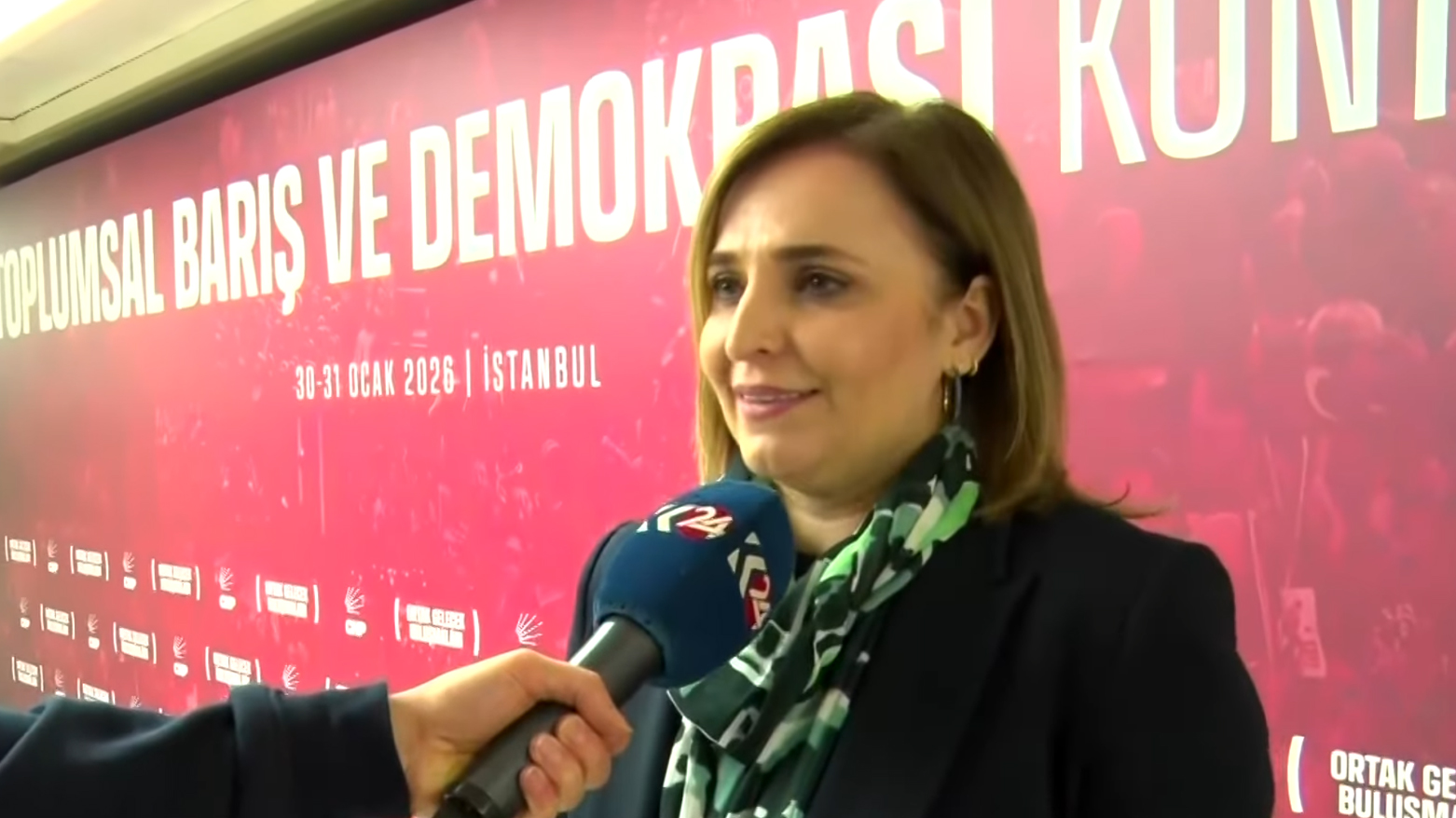
ERBIL (Kurdistan24) — Turkey’s Peoples’ Equality and Democracy Party (DEM Party) on Saturday welcomed the recent understanding between the Syrian Democratic Forces (SDF) and the Syrian government, stressing that Kurdish unity is the most vital asset for Kurds at the current sensitive stage.
Speaking on the sidelines of the “Peace and Democracy Conference” in Istanbul on Saturday, DEM Party spokesperson Aysegul Dogan outlined her party’s position on regional developments, the situation in Western Kurdistan, and the broader peace process. Dogan made the remarks in an exclusive interview with Murad Akinci, Kurdistan24’s correspondent in Istanbul.
Commenting on the reported agreement between the SDF and the Syrian government in Damascus, Dogan said the deal should be viewed positively if it helps prevent further bloodshed and displacement.
“If this agreement contributes to stopping violence and preventing the forced displacement of people, then it is a welcome and positive step,” she said.
Dogan emphasized that political and social disputes must be resolved through dialogue and negotiation rather than armed conflict, warning that wars inevitably exact a heavy toll on civilians, particularly children.
The DEM Party spokesperson underlined that, at this critical moment, the greatest strength Kurds possess lies in internal cohesion and unity.
“Our most important capital today is Kurdish unity and the reorganization of the Kurdish internal front,” Dogan said. “The gains achieved by Kurds in all parts of Kurdistan—Basur, Bakur, Rojava, and Rojhelat—must be protected. We need a united and organized political will to safeguard these achievements.”
Asked about the role of President Masoud Barzani and his diplomatic efforts to protect Rojava, Dogan said the DEM Party views those initiatives with great respect.
“We follow President Barzani’s diplomatic efforts very closely and with appreciation, and our communication and dialogue on this matter are ongoing,” she said.
Speaking during an appearance on Kurdistan24’s news bulletin on Friday, Hussein Olan, a DEM Party lawmaker, said President Barzani had a “very significant” role in calming the situation in Western Kurdistan and preventing it from sliding toward greater instability.
Olan said his party places high value on what he described as the “sacred” role of President Barzani, stressing that Barzani’s diplomatic initiatives helped prevent the expansion of tensions and preserved Kurdish unity during a sensitive period.
“These efforts by President Barzani to protect the Kurdish people and to calm the situation are extremely sacred,” Olan said, adding that Barzani’s diplomacy succeeded in blocking the worsening of crises in Western Kurdistan.
He also revealed that DEM Party parliamentarians have intensified their diplomatic efforts at the international level to convey the message of Western Kurdistan and to draw attention to developments on the ground.
The SDF and the Syrian government reached a comprehensive agreement on Friday to end hostilities and integrate military, security, and administrative structures in Western Kurdistan, according to details released by the SDF.
The deal provides for a full ceasefire and the withdrawal of forces from current front lines, with Syrian Interior Ministry units set to enter the centers of Hasakah and Qamishlo and a process launched to merge the Asayish internal security forces into the state framework.
Militarily, the agreement establishes a new division made up of three SDF brigades and a special Kobani brigade operating under Aleppo province’s command.
Administratively, it places institutions of the Democratic Autonomous Administration of North and East Syria under Syrian state authority, ensures the continuation of civil services, guarantees Kurdish civil and educational rights, and facilitates the return of internally displaced persons to their home areas.