Iraq’s Shiite Coordination Framework Reaffirms Maliki Candidacy, Rejects Foreign Interference
The bloc stressed that it “rejects external dictates” and reiterated its firm support for Maliki as its candidate.
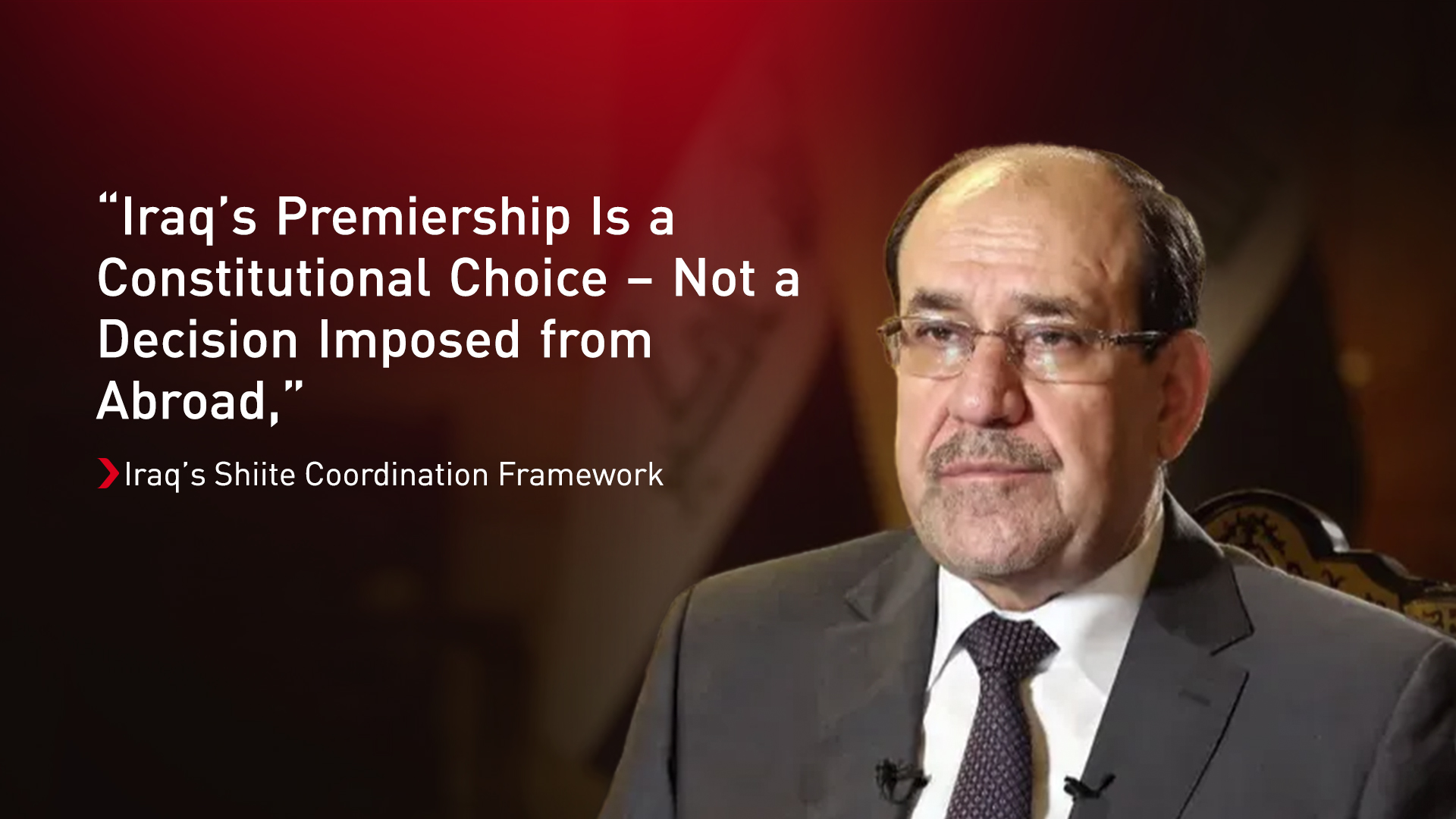
ERBIL (Kurdistan24) — Iraq’s Shiite Coordination Framework (SCF) on Saturday reaffirmed its commitment to nominating former prime minister Nouri Kamil al-Maliki for the premiership, insisting that the selection of the next head of government is an exclusively Iraqi constitutional matter and must proceed without external pressure.
In a statement issued after its 261st regular meeting, held at Maliki’s office, the SCF said the choice of prime minister should be determined through Iraq’s political process in a way that prioritizes national interests and respects constitutional mechanisms.
The bloc stressed that it “rejects external dictates” and reiterated its firm support for Maliki as its candidate.
The SCF also emphasized its desire to maintain balanced relations with the international community, particularly influential global powers, based on mutual respect and non-interference in Iraq’s internal affairs.
It underscored that Iraq is a state of institutions capable of managing its political entitlements in line with the constitution and the will of elected representatives, while calling on all actors to respect constitutional deadlines and work toward consensual solutions.
The renewed endorsement of Maliki comes amid mounting international scrutiny and growing political tension, following recent remarks by U.S. President Donald Trump signaling Washington’s rejection of Maliki’s return to the premiership.
Trump’s comments, made in the context of broader U.S. concerns over governance, stability, and regional alignments, were widely interpreted as a clear message that the former prime minister would face strong opposition from Washington.
Maliki, who served as Iraq’s prime minister from 2006 to 2014, remains a deeply polarizing figure domestically and internationally. His tenure coincided with intense sectarian conflict, widespread corruption allegations, and the collapse of Iraqi security forces in the face of the Islamic State’s 2014 offensive—developments that continue to shape perceptions of his leadership.
While his supporters within the SCF view him as an experienced figure capable of consolidating Shiite political power and confronting security challenges, critics argue that his return would risk renewed instability and further strain Iraq’s relations with Western and regional partners.
The current dispute over Maliki’s nomination reflects a broader struggle over Iraq’s political direction, as the country grapples with entrenched factionalism, competing foreign influences, and public frustration over weak governance and insecurity.
With constitutional timelines approaching and external pressure intensifying, the premiership question is once again emerging as a focal point in Iraq’s protracted political standoff.