Details of SDF–Damascus Agreement Revealed as Full Text Emerges
A fourteen-point agreement signed Jan. 29 between the Syrian government and the SDF outlines a permanent ceasefire, military redeployments, integration of forces, and civil administration reforms in Hasakah and Kurdish areas.
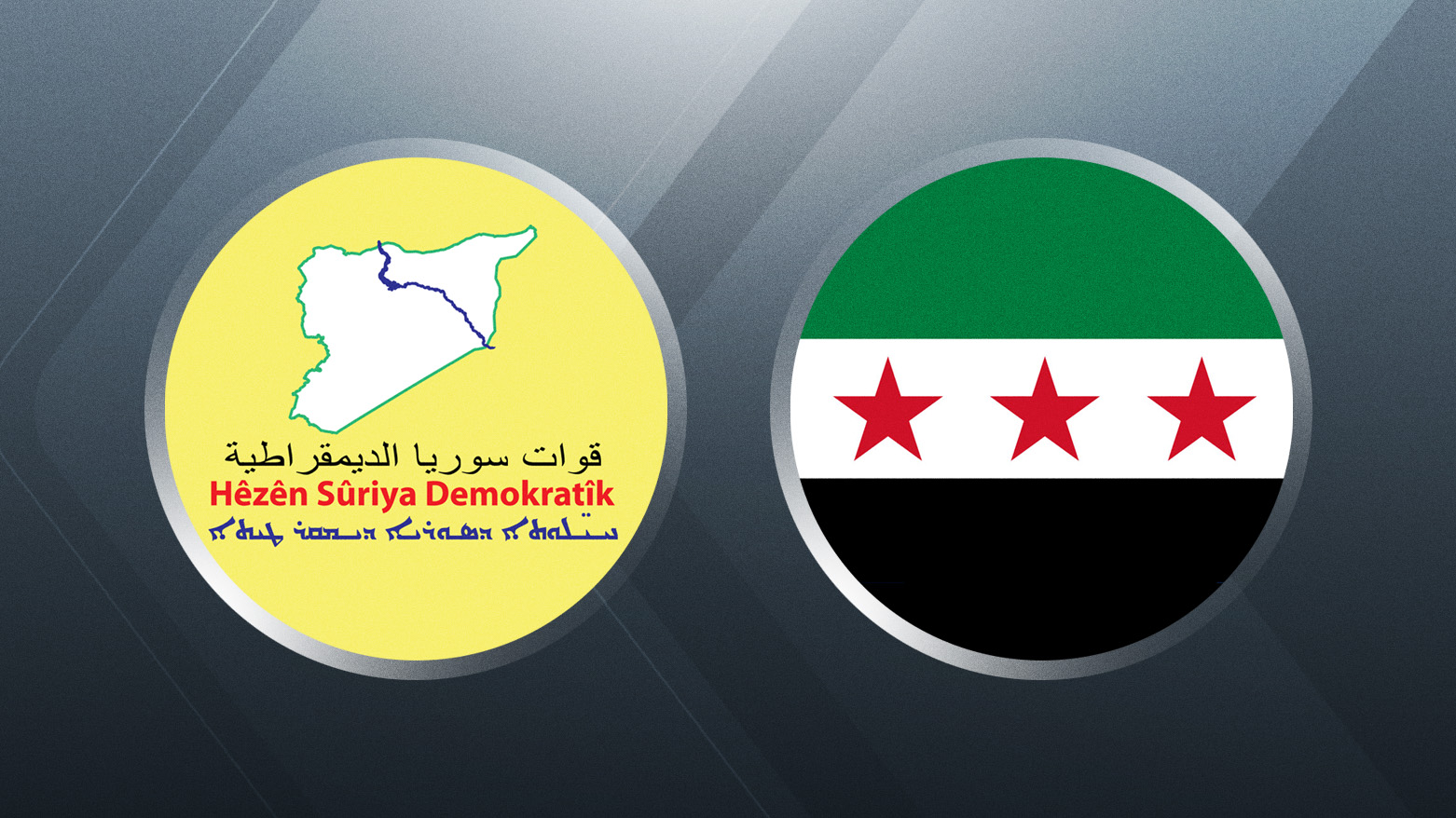
ERBIL (Kurdistan24) - New details have emerged regarding a recently signed agreement between the Syrian government and the Syrian Democratic Forces (SDF), as the news platform Majalla published the full text of the document, shedding light on its military, security, administrative, and economic provisions.
A comprehensive fourteen-point agreement signed between Damascus and the SDF has now come to light, revealing a structured roadmap aimed at reshaping security, governance, and administration in northeastern Syria under a phased implementation plan.
According to the document obtained by al-Majalla Magazine, the agreement consists of fourteen clauses divided into four implementation phases, all to be carried out within one month. A fifth phase focuses on permanent commitments.
The agreement distributes its provisions across military, security, administrative, and economic files, beginning with a permanent and comprehensive ceasefire. Under the first clause, all arrest campaigns and raids are to be halted, while the SDF remains responsible for guarding ISIS prisons, with full logistical support provided for transfer operations.
On military redeployment, the agreement stipulates the withdrawal of SDF forces from the cities of Hasakah and Qamishli to mutually agreed military bases. In return, Syrian army forces are to withdraw immediately to the town of Shaddadi in southern Hasakah.
The third clause mandates the Syrian Ministry of Defense to establish a special military division for Hasakah province, with SDF forces integrated into the division within three brigades.
Regarding Kobani, the agreement calls for the integration of its military forces as a single brigade affiliated with a military division of Aleppo province.
On security affairs and the Interior Ministry, the document provides for the entry of fifteen security vehicles into each of the cities of Hasakah and Qamishli to reinforce stability and security. It also initiates the process of integrating SDF internal security forces (Asayish) into the Ministry of Interior.
The agreement further outlines the allocation of senior administrative and security posts. The governor of Hasakah is to be appointed with the SDF nominating the candidate. The police or internal security chief of the province is to be appointed with the Syrian government nominating the candidate. The position of deputy minister of defense is to be filled with an SDF nominee.
Sensitive sites are also addressed, including the handover of the Rmelan and Sweidi oil fields, with their civilian staff integrated into the Ministry of Energy. The agreement also transfers Qamishli Airport to the authority of civil aviation.
On border crossings, a team from the border authority is to be dispatched to the Semalka and Nusaybin crossings to formalize civilian staffing. The agreement prohibits the use of crossings for weapons smuggling or foreign entry and calls for their immediate reopening.
Civil institutions form a central part of the deal. The Syrian government assumes supervision over all civilian institutions in Hasakah province, integrating autonomous administration bodies into state institutions and formally recognizing their civilian employees.
A key provision explicitly bans the entry of military forces into cities and towns by all parties, with particular emphasis on Kurdish areas.
The agreement also recognizes and resolves the status of all certificates issued by schools, institutes, and universities under the Autonomous Administration of North and East Syria.
It grants legal operating permits to all local civil society, cultural organizations, and media institutions in accordance with applicable laws of relevant ministries.
On education, the document calls for cooperation with the Ministry of Education to open dialogue on the Kurdish curriculum process and to take into account specific educational characteristics.
The final clause guarantees the return of all displaced persons to their cities and villages, including Afrin, Sheikh Maqsud, and Serikaniye, and provides for the appointment of local representatives within the civil administrations of those areas.
The agreement forms part of a broader process between the Syrian government and the SDF aimed at restructuring military, security, and civil governance in northeastern Syria, with phased implementation and permanent commitments outlined in its final stage.
With its full text now public, the fourteen-point SDF–Damascus agreement sets out a detailed and time-bound framework that reshapes control, administration, and security in Hasakah and Kurdish areas, marking a significant phase in the evolving arrangements between both sides.