Iran Signals Conditional Openness to Talks With U.S., Citing Regional Mediation Efforts
Pezeshkian says negotiations possible only without threats, stressing dignity and national interests.
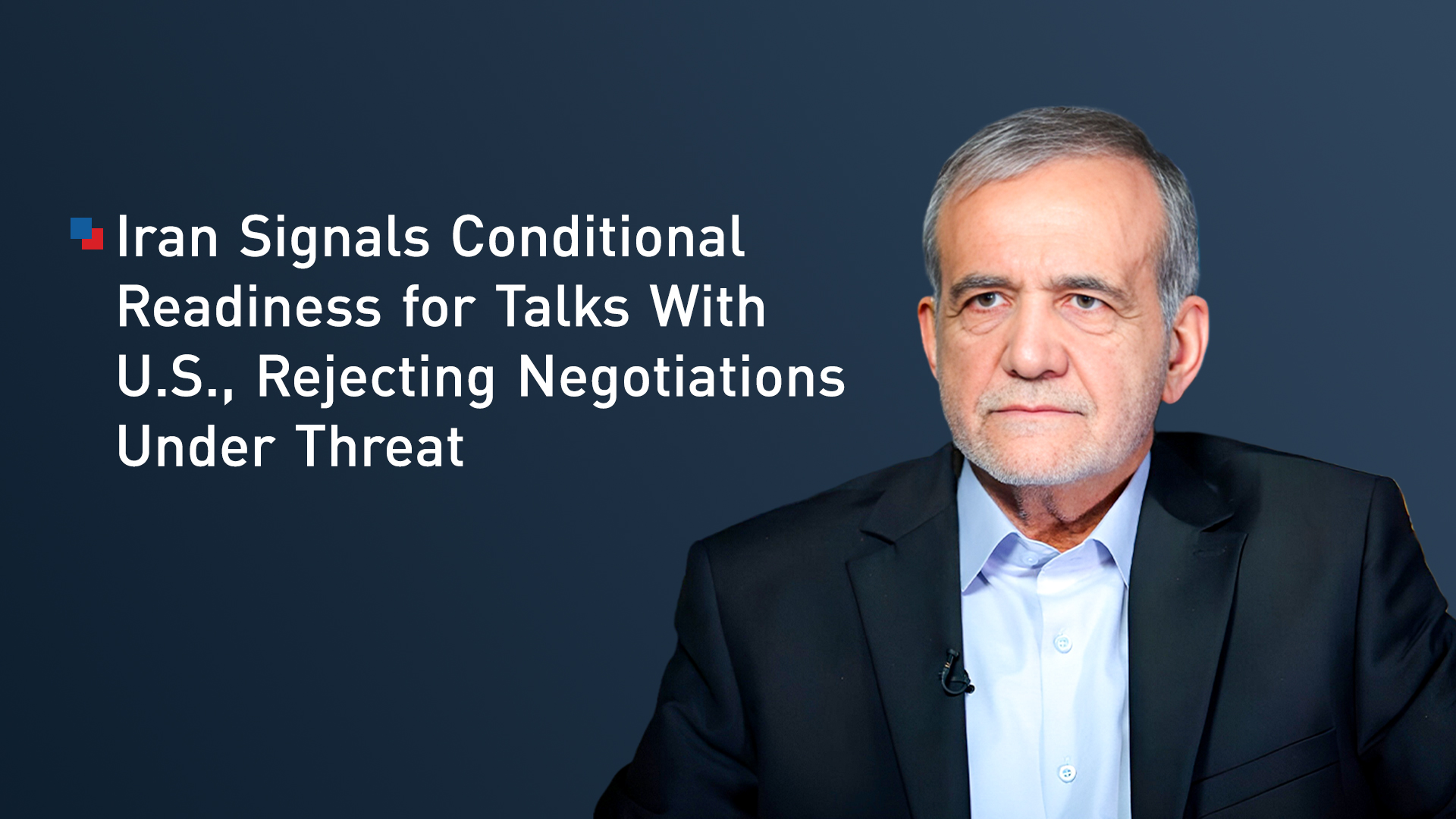
ERBIL (Kurdistan24) — Iranian President Masoud Pezeshkian on Tuesday signaled conditional openness to negotiations with the United States, saying Tehran is prepared to explore talks if they are conducted in an environment free from threats and “unreasonable expectations.”
In a statement published on his official X account, Pezeshkian said the decision came in response to requests from “friendly governments in the region” urging Iran to reply to a proposal by U.S. President Donald Trump for negotiations.
“Provided that a suitable environment exists—one free from threats and unreasonable expectations—I have instructed my Minister of Foreign Affairs to pursue fair and equitable negotiations,” Pezeshkian wrote, emphasizing that any talks must be guided by the principles of “dignity, prudence, and expediency.”
The Iranian president underlined that negotiations, if they take place, would be conducted strictly within the framework of Iran’s national interests, reflecting Tehran’s longstanding position that dialogue cannot occur under pressure or coercion.
Pezeshkian’s remarks suggest a cautious shift in tone amid heightened regional and international diplomatic activity, with several Middle Eastern governments reportedly seeking to ease tensions between Tehran and Washington. However, his statement also reinforces Iran’s red lines, particularly its rejection of negotiations under threat, sanctions pressure, or preconditions that undermine sovereignty.
The White House has not yet publicly responded to Pezeshkian’s comments. The exchange comes at a time of renewed uncertainty over the future of U.S.–Iran relations, as both sides weigh diplomatic engagement against ongoing disputes over sanctions, regional security, and Iran’s nuclear program.
The backdrop to Pezeshkian’s statement is marked by mixed signals from Washington, combining diplomatic outreach with overt displays of military pressure. U.S. President Donald Trump told reporters at the White House on Monday that American naval assets were “heading to Iran right now,” describing them as “big ones,” while simultaneously confirming that talks with Tehran were underway.
“We have ships heading to Iran right now, big ones … and we have talks going on with Iran. We’ll see how it all works out.” — President Trump pic.twitter.com/7IshgqGx80
— Department of State (@StateDept) February 2, 2026
The remarks underscored a dual-track U.S. approach that pairs negotiations with a visible show of force in the region. Trump’s comments have reinforced long-standing Iranian concerns about engaging in dialogue under threat, a point repeatedly emphasized by Tehran’s leadership.
Iranian officials have consistently argued that military posturing and sanctions undermine the credibility of diplomatic initiatives and erode trust, insisting that meaningful negotiations require a de-escalatory environment.
The convergence of these statements highlights the fragile and highly conditional nature of any prospective U.S.–Iran talks. While regional intermediaries appear to be pressing for engagement to prevent further escalation, the parallel movement of U.S. warships and diplomatic contacts illustrates the deep mistrust that continues to define relations between the two countries.