Iran Seeks Changes to US Talks as Gulf Incidents Heighten Tensions
“Continued Iranian harassment and threats in international waters and airspace will not be tolerated,” Hawkins said in a statement.
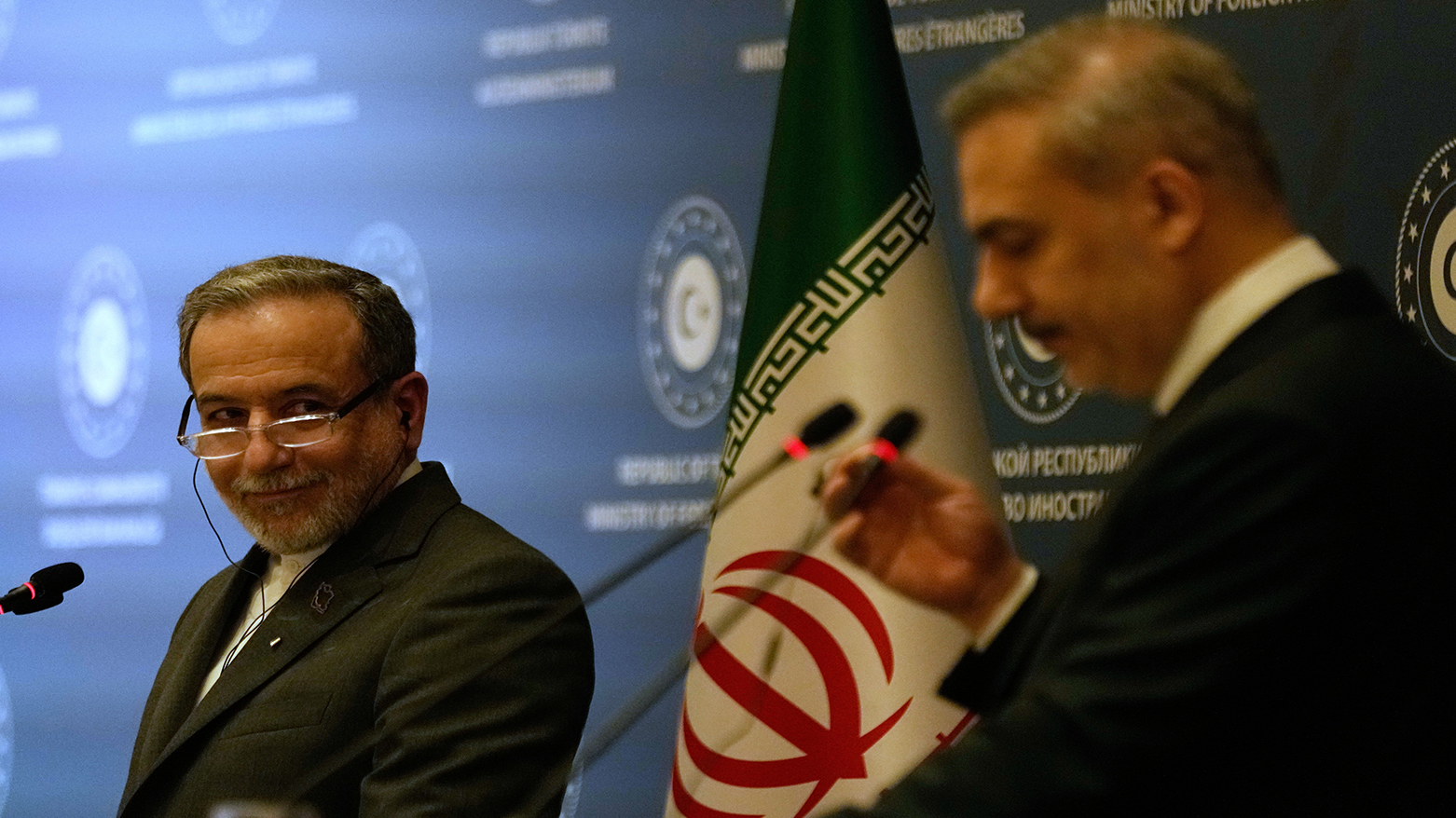
ERBIL (Kurdistan24) — Iran has demanded last-minute changes to the venue and format of planned negotiations with the United States scheduled for Friday, even as its military carried out two confrontational actions against U.S. vessels in the Gulf, developments that risk derailing fragile diplomatic efforts, according to officials and sources familiar with the matter.
Two sources told Axios that Tehran is seeking to move the talks from Istanbul to Oman and to hold them in a strictly bilateral format with Washington, abandoning earlier understandings that included the presence of several Arab and Muslim countries as observers. The shift comes after invitations had already been extended to regional participants, the sources said.
Despite the changes, an Arab official indicated that the talks are now expected to proceed in Oman on Friday, with the Trump administration agreeing to the Iranian request. Discussions remain ongoing over whether other regional countries will ultimately take part.
According to a source familiar with the negotiations, Iran’s push for a bilateral format reflects its desire to confine the talks to nuclear issues and avoid discussions on its missile program and regional proxy networks—subjects that are high priorities for other Middle Eastern states.
An Iranian Foreign Ministry spokesperson downplayed the controversy, telling state media that locations including Turkey and Oman were under consideration and that the timing and venue of the talks “should not be used as fodder for media games.”
The negotiating teams are expected to be led by U.S. envoy Steve Witkoff and Iranian Foreign Minister Abbas Araghchi. In the run-up to the talks, Araghchi held phone calls with his counterparts in Oman and Turkey, as well as with the prime minister of Qatar, underscoring active regional diplomacy.
The diplomatic maneuvering unfolded against a backdrop of heightened military friction. U.S. officials said the Iranian military carried out two “very aggressive” actions toward U.S. assets within a six-hour span on Tuesday.
In the first incident, fast boats operated by Iran’s Revolutionary Guards attempted to board a U.S.-flagged commercial vessel near the Strait of Hormuz. The boats dispersed after a U.S. Navy destroyer arrived to escort the ship with support from the U.S. Air Force. No shots were fired.
Several hours later, an Iranian drone with what U.S. officials described as “unclear intent” flew close to the USS Abraham Lincoln aircraft carrier. The drone was shot down by an F-35 fighter jet, according to U.S. Central Command spokesperson Capt. Tim Hawkins.
“Continued Iranian harassment and threats in international waters and airspace will not be tolerated,” Hawkins said in a statement. He warned that Iran’s actions near U.S. forces, commercial vessels, and regional partners increase the risk of miscalculation and wider regional instability.
White House Press Secretary Karoline Leavitt said she had spoken with Witkoff about both the Gulf incidents and Iran’s new demands. “As of right now, the talks with Iran are still scheduled,” she told reporters, adding that President Donald Trump remains committed to pursuing diplomacy first.
“But it takes two to tango,” Leavitt said, noting that Trump is keeping all options on the table.
The developments come at a sensitive moment, with the United States having significantly increased its military presence in the Gulf. U.S. officials privately acknowledge that the combination of Iranian provocations and shifting diplomatic positions could test Trump’s stated preference for negotiations over military action.
Israel is closely monitoring the situation. Witkoff met on Tuesday in Israel with Prime Minister Benjamin Netanyahu, a meeting Israeli officials said focused heavily on Iran. Netanyahu was joined by senior security officials, including Israel Defense Forces Chief of Staff Lt. Gen. Eyal Zamir, Mossad Director David Barnea, and military intelligence chief Maj. Gen. Shlomi Binder.
With tensions simmering on both the diplomatic and military fronts, the outcome of the Oman talks—if they proceed as planned—could prove decisive in determining whether Washington and Tehran remain on a negotiating track or slide toward a more dangerous confrontation.