Trump Says U.S.-Iran Talks Were ‘Very Good’ as Both Sides Signal Further Negotiations
Trump and Iranian officials described indirect Oman talks as positive and agreed to continue negotiations, even as the U.S. imposed new sanctions and prepared possible tariffs on Iran’s trade partners.
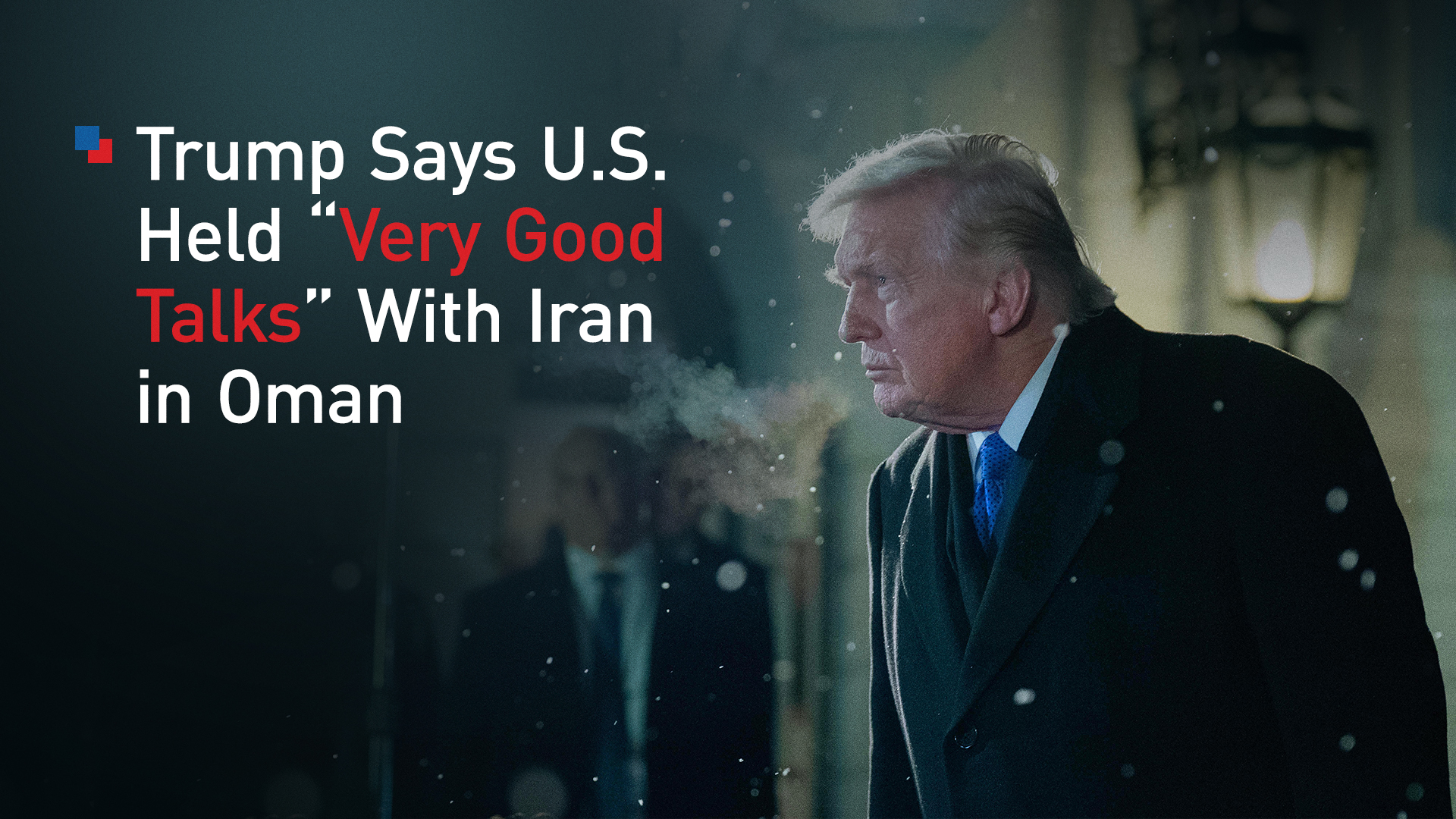
ERBIL (Kurdistan24) – U.S. President Donald Trump said Friday that Washington held “very good talks” with Iran following a day of indirect negotiations in Oman, adding that additional meetings were expected early next week, according to an AFP report citing comments he made aboard Air Force One.
The talks, mediated by Oman and held in Muscat, marked the first indirect dialogue between the two countries since the United States joined Israel’s war with Iran in June and carried out strikes on Iranian nuclear sites, AFP reported. The negotiations took place as U.S. naval forces, led by an aircraft carrier, were operating in Middle Eastern waters, underscoring the heightened tensions surrounding the diplomatic effort.
Trump, speaking to reporters while traveling to his Mar-a-Lago resort in Florida, said, “We likewise had very good talks on Iran,” and added, “we’re going to meet again early next week,” according to AFP. He also warned that failure to reach an agreement would carry consequences, saying, “If they don’t make a deal, the consequences are very steep.”
Iranian officials offered a cautiously positive assessment of the discussions. Foreign Minister Abbas Araghchi, who led Tehran’s delegation, said the talks were conducted in a “very positive atmosphere” and that both sides had agreed to continue negotiations, AFP reported. He told Iranian state television that the exchanges “focused exclusively” on Iran’s nuclear program.
Araghchi said the Iranian delegation used the talks to present its positions and hear those of the U.S. side. “In a very positive atmosphere, our arguments were exchanged and the views of the other side were shared with us,” he said, according to AFP. Speaking to the official IRNA news agency, he expressed hope that Washington would refrain from “threats and pressure” so that “the talks can continue.”
The negotiations in Muscat were indirect, with U.S. and Iranian officials not meeting face-to-face but instead holding discussions through Omani mediators, AFP reported. Multiple sessions were held throughout the day, with delegations shuttling to and from the residence of Omani Foreign Minister Badr Albusaidi.
According to AFP, the U.S. delegation was led by Middle East envoy Steve Witkoff and included Jared Kushner, Trump’s son-in-law. Images published by the Oman News Agency showed U.S. Central Command commander Admiral Brad Cooper present at the talks, a development also highlighted by the Associated Press.
The presence of the senior U.S. military commander served as a reminder of the broader security backdrop to the talks. The AP reported that U.S. Navy Adm. Brad Cooper, head of Central Command, attended the discussions in his dress uniform as U.S. warships, including the aircraft carrier USS Abraham Lincoln, operated off Iran’s coast in the Arabian Sea.
Trump’s remarks combined optimism with continued pressure. According to the AP, he said Iran appeared eager to reach an agreement, telling reporters, “Iran looks like they want to make a deal very badly — as they should.” He also suggested Tehran might be willing to “do more” than in previous talks, though he did not provide details.
At the same time, Trump warned of serious consequences if diplomacy failed. “We have plenty of time,” he said when asked how long he was willing to wait for a deal, according to the AP. He referenced past U.S. actions in Venezuela to underscore that Washington was “in no rush.”
Iranian officials stressed the need for a calm environment. Speaking to journalists after the talks, Araghchi said that “nuclear talks and the resolution of the main issues must take place in a calm atmosphere, without tension and without threats,” according to the AP. He added that refraining from threats and pressure was a prerequisite for dialogue.
Oman’s foreign minister, Badr al-Busaidi, who oversaw the talks, described them as “useful to clarify both the Iranian and American thinking and identify areas for possible progress,” the AP reported.
Shortly after the Muscat talks concluded, the United States announced new sanctions targeting Iran’s energy sector. According to AFP and the AP, the U.S. Treasury and State Department imposed penalties on oil tankers, trading firms and business executives accused of helping Iran evade existing sanctions and export oil through what U.S. officials described as a “shadow fleet.”
The timing of the sanctions raised questions about their connection to the negotiations. AFP reported that it was not clear whether the measures were directly linked to the talks. State Department spokesman Tommy Pigott said in a statement that Trump was “committed to driving down the Iranian regime’s illicit oil and petrochemical exports under the administration’s maximum pressure campaign.”
In a related move, Trump on Friday signed an executive order preparing the ground for tariffs on countries that continue to do business with Iran. According to a separate AFP report, the order, effective Saturday, establishes a process for imposing tariffs on goods imported into the United States from countries that purchase Iranian goods or services.
The order states that tariffs “may be imposed” on such imports, with the rate to be determined by Secretary of State Marco Rubio and potentially set at 25 percent, a level Trump had previously mentioned. AFP reported that the potential tariffs could affect trade with countries including Russia, Germany, Türkiye and the United Arab Emirates.
The AFP report noted that the executive order followed Trump’s pledge of another round of talks with Tehran next week, highlighting the administration’s parallel use of diplomatic engagement and economic pressure.
While the Muscat talks focused on Iran’s nuclear program, differences remain over the scope of negotiations. According to the Wall Street Journal, Tehran refused to end uranium enrichment during the talks, rejecting a core U.S. demand. Iranian state media quoted Araghchi as saying Iran would not agree to halt enrichment or move it offshore.
The WSJ reported that neither side moved significantly from its initial position, though both signaled a willingness to continue discussions. The paper said the talks were conducted indirectly through Omani diplomats and that both delegations aimed to meet again.
U.S. officials have said they want negotiations to address not only Iran’s nuclear activities but also its ballistic missile program and support for regional militias. Iran, however, has maintained that it is willing to discuss only its nuclear work, according to both AFP and the WSJ.
The Associated Press reported that the talks had initially been expected to take place in Türkiye and include regional countries, with a broader agenda covering missiles and militia support. Iran rejected that format, leading to the compromise meeting in Oman focused on the nuclear issue.
The broader regional context has added to concerns about escalation. France’s Foreign Minister Jean-Noël Barrot urged restraint by Iran-backed groups if U.S.–Iran tensions intensify, according to an AP report. Speaking in Beirut after visits to Syria and Iraq, Barrot warned that regional escalation would “profoundly destabilize the Near and Middle East.”
Barrot said that if tensions escalate, groups supported by Iran should exercise “the greatest restraint” to avoid worsening the situation, the AP reported. His comments came as Gulf Arab states expressed fears that any military confrontation could trigger a wider regional conflict.
Developments on the ground in Iran have also drawn scrutiny. A New York Times analysis of satellite imagery reported that Iran has rapidly repaired several ballistic missile facilities damaged in strikes last year but has made more limited progress in rebuilding major nuclear sites hit by Israeli and U.S. attacks.
According to the Times, construction work has been observed at more than half of the missile sites struck during the 12-day conflict in June, suggesting a short-term focus on missile capabilities. By contrast, experts cited by the newspaper said Iran’s main nuclear enrichment facilities at Isfahan, Natanz and Fordow appeared largely inoperative, with only partial repairs visible.
The Times reported that Western and Israeli officials have found few signs that Iran has made significant progress toward restoring its ability to enrich nuclear fuel or build a nuclear warhead. Experts cautioned, however, that satellite imagery provides only an aboveground view and that some activity could be concealed.
These assessments have informed the diplomatic urgency surrounding the Muscat talks. According to the WSJ, U.S. officials have massed air and naval forces near Iran and warned of possible strikes over its nuclear program, while also indicating a preference for a negotiated outcome if possible.
The talks also took place against the backdrop of domestic unrest in Iran and a severe government crackdown on protests. AFP reported that Trump had earlier threatened military action over the crackdown and told demonstrators that “help is on its way,” though regional powers urged Washington not to intervene militarily.
According to AFP, the U.S.-based Human Rights Activists News Agency said it had confirmed the deaths of 6,505 protesters, along with 214 members of the security forces and 61 bystanders, amid nationwide protests. The group said nearly 51,000 people had been arrested, figures cited by AFP in its report on the talks.
Despite these tensions, both Washington and Tehran indicated an interest in continuing dialogue. Araghchi said diplomats would return to their capitals for consultations and that the results would be conveyed to Oman’s foreign minister, according to the AP.
Trump, for his part, reiterated that diplomacy remained an option even as he emphasized pressure. White House spokeswoman Karoline Leavitt said late Thursday, according to the WSJ, that Trump wanted to see whether a deal could be struck at the negotiating table, while warning that he had other options available.
The Muscat talks thus concluded without a breakthrough but with commitments to further engagement. They underscored the fragile balance between diplomacy and confrontation as both sides navigate deep mistrust and unresolved differences over Iran’s nuclear activities and regional role.