Iraq Urged to Accelerate Mass Grave Excavations as Officials Cite Delays and Lack of Recognition
Adalat Omar, Senior Advisor at the General Board for the Kurdistani Areas outside the Region, told Kurdistan24 that around 150 mass graves have been discovered over the years, but many remain unexamined due to what he described as negligence by the Iraqi Foundation of Martyrs.
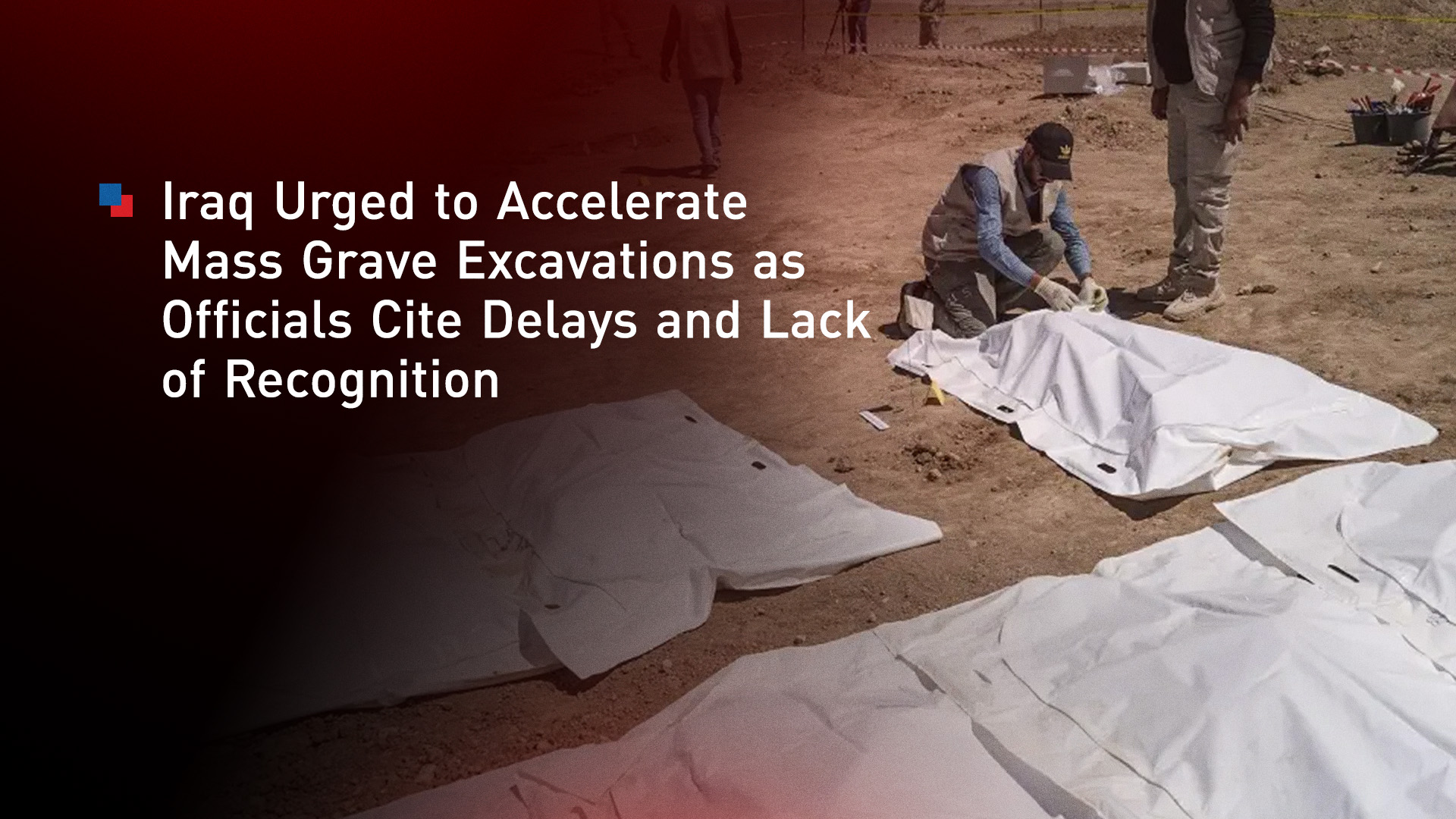
ERBIL (Kurdistan24) — More than a decade after the fall of the former regime, concerns persist over the handling of mass graves across Iraq, with officials and activists urging federal authorities to accelerate excavation efforts and improve coordination with regional institutions.
Adalat Omar, Senior Advisor at the General Board for the Kurdistani Areas outside the Region, told Kurdistan24 that around 150 mass graves have been discovered over the years, but many remain unexamined due to what he described as negligence by the Iraqi Foundation of Martyrs.
“The foundation has not taken any serious action regarding the excavation of mass graves,” Omar said, adding that the cooperation between the federal institution and the Kurdistan Regional Government (KRG) needs improvement. He noted that the Kurdistan Region currently has only one representative within the agency and called for stronger representation, particularly given what he characterized as Baghdad’s reluctance to proceed with excavations.
Omar also stressed the need for legislative reform, saying parliament should amend existing laws to ensure equal treatment between the Kurdistan Region and the KRG Ministry of Martyrs and Anfal affairs in matters related to mass grave investigations and victims’ rights.
Meanwhile, Mirza Dinnayi, founder of the House of Coexistence Foundation, said some sites remain officially unrecognized. He stated that mass graves linked to the so-called “Red Cell” have not been acknowledged by Iraqi authorities and that even graves excavated by Kurdish authorities in February 2015 have yet to receive formal recognition.
Mass graves across Iraq date back to multiple periods of conflict, including the Baathist era, sectarian violence after 2003, and atrocities committed by extremist groups. Excavation and forensic analysis are considered essential for identifying victims, documenting crimes, and providing closure to families. Human rights organizations have repeatedly called for faster procedures, better funding, and stronger coordination between the federal government and the KRG to address the issue comprehensively.