Macron Urges Implementation of SDF–Damascus Deal, Stresses Kurdish Inclusion in Syria
“We will always remember what they did during the hard times when terrorist groups were attacking France and Europe,” Macron said, calling SDF fighters “brave men and women” who fought on behalf of the international community.
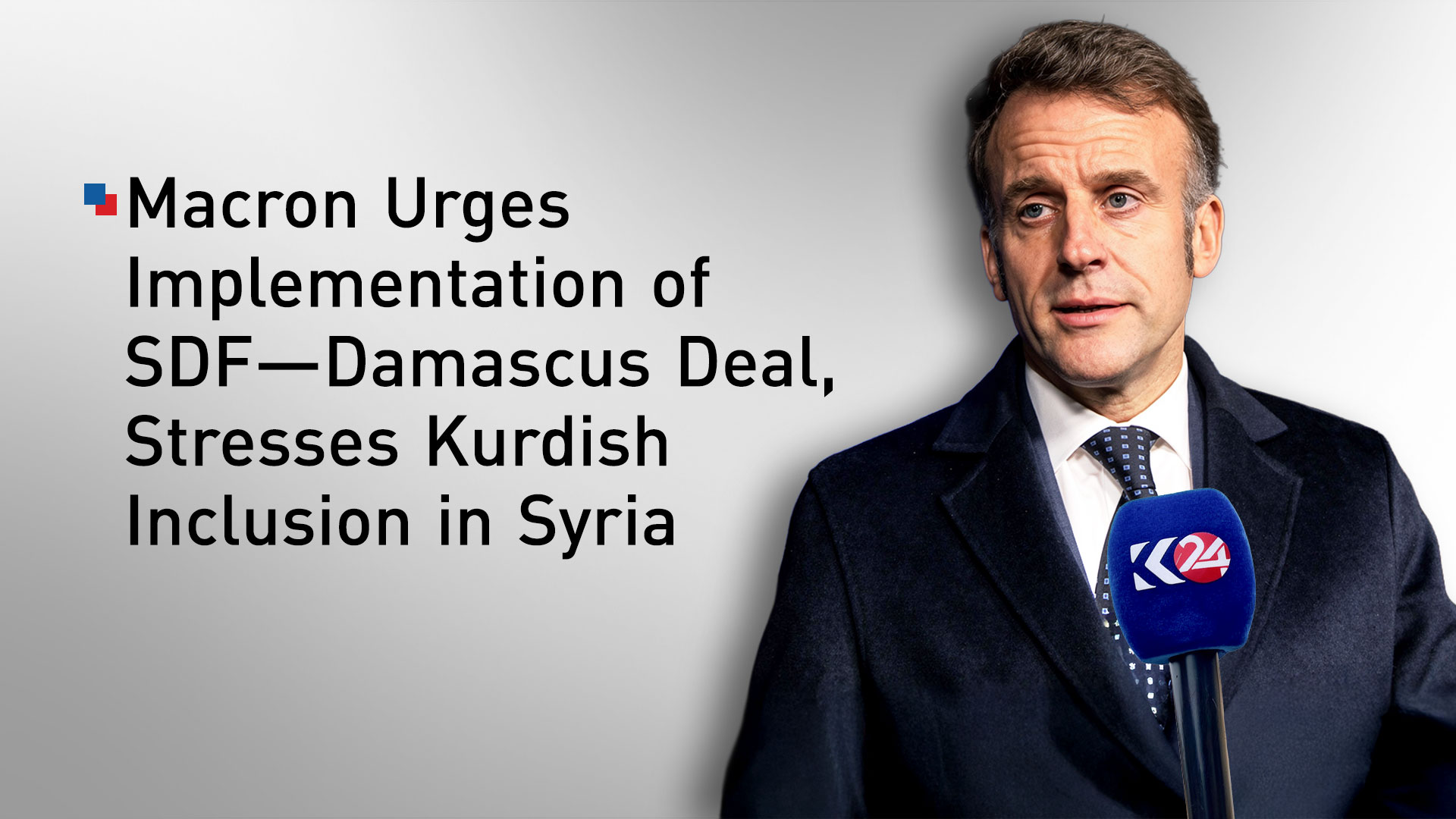
ERBIL (Kurdistan24) — French President Emmanuel Macron said he has been in direct contact with both Syrian Democratic Forces (SDF) commander Mazloum Abdi and Syrian President Ahmed al-Sharaa, emphasizing the urgent need to implement a ceasefire agreement and ensure Kurdish participation in Syria’s future political and security structures.
Speaking to Kurdistan24 reporter Barzan Hassan, Macron stated that France had “worked very hard” diplomatically to help bridge understandings between the two sides. He underscored that the priority is enforcing the ceasefire while preserving Syria’s territorial integrity and sovereignty.
“For me, it’s very important that we have a ceasefire and that it is implemented,” Macron said, adding that stability must be coupled with “respect and integration of the Kurdish component,” including the gradual incorporation of the SDF into Syria’s army and administrative institutions.
The French president described the roadmap signed between Abdi and al-Sharaa as essential and said it must be carried out in full. He also reiterated France’s continued vigilance regarding developments in Syria and its dual commitment to Syria’s sovereignty and to the SDF, praising Kurdish-led forces for their role in combating extremist groups.
“We will always remember what they did during the hard times when terrorist groups were attacking France and Europe,” Macron said, calling SDF fighters “brave men and women” who fought on behalf of the international community.
On Jan. 30, the SDF and the Syrian government reached an agreement aimed at ending hostilities and restructuring military and administrative authority in Western Kurdistan (northeast Syria).
According to SDF-released details, the deal includes a comprehensive ceasefire and withdrawal of forces from the frontlines. Security arrangements stipulate that Syria’s Interior Ministry forces will enter the central areas of Hasakah and Qamishlo, while the SDF’s internal security force, Asayish, will be gradually integrated into the state security system.
Militarily, the agreement calls for forming a new division composed of three SDF brigades and a special Kobani brigade under Aleppo province’s military command. Administratively, institutions linked to the Democratic Autonomous Administration of North and East Syria will come under official state authority, with civil servants continuing their duties.
The accord also guarantees civil and educational rights for Kurds and includes provisions to facilitate the return of displaced residents to their home regions.