U.S. Lawmakers Meet Syrian Officials at Munich Security Conference to Discuss Political Transition
Sen. Jeanne Shaheen Highlights Bipartisan Support for Inclusive Governance and Lifting Caesar Act Sanctions
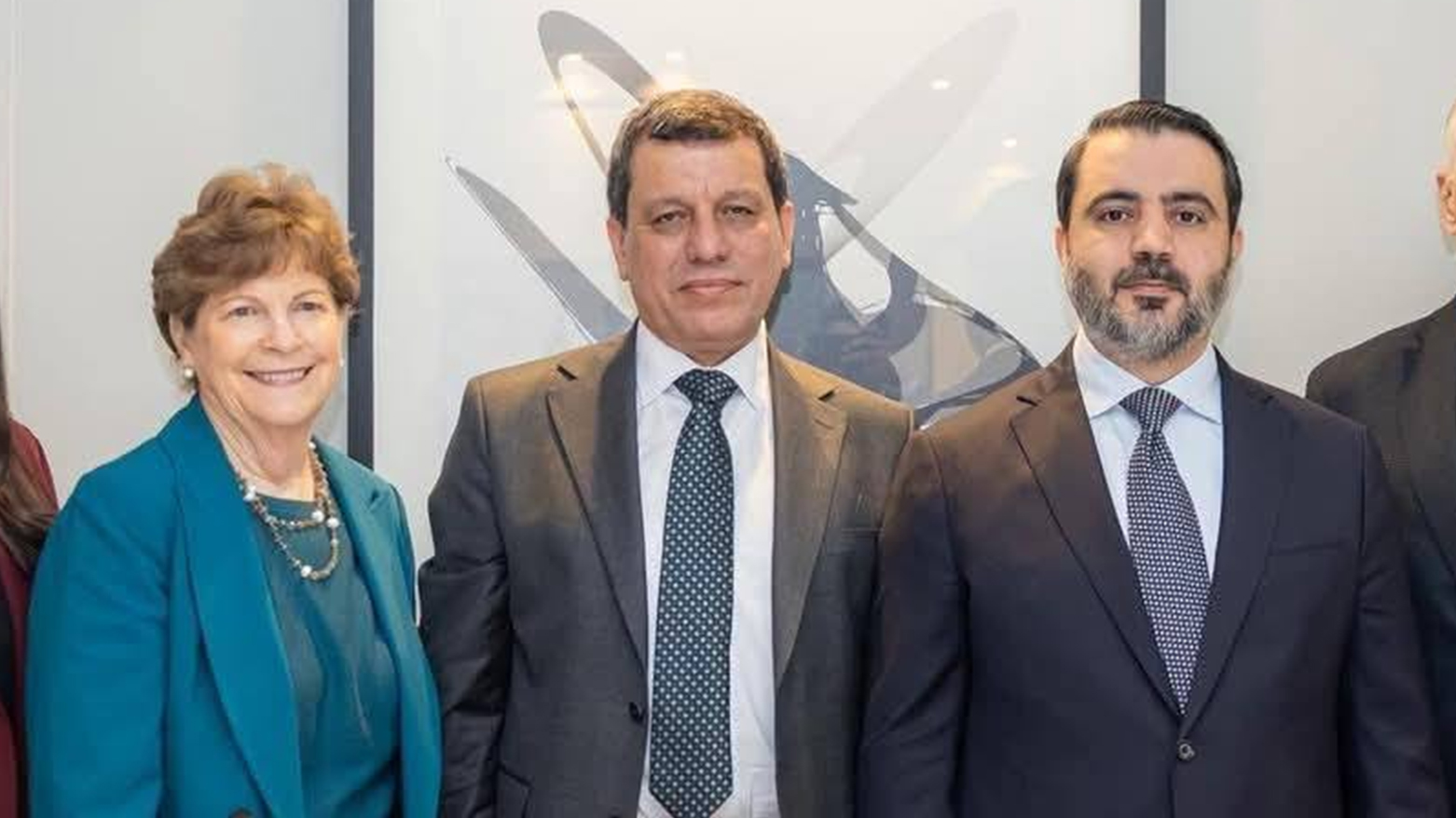
ERBIL (Kurdistan24) — A bipartisan delegation of U.S. lawmakers met on Saturday with Syrian Foreign Minister Asaad al-Shaibani and Commander of the Syrian Democratic Forces, General Mazloum Abdi, on the sidelines of the 62nd Munich Security Conference in Germany, focusing on Syria’s political transition and regional stability.
The delegation included Senators Jeanne Shaheen, Thom Tillis, Chris Coons, Chris Murphy, and Mark Kelly, along with Representatives Jim Himes and Sara Jacobs.
Ranking Member Shaheen described the meeting as historic, coming after a recent agreement between the Syrian government and the Syrian Democratic Forces (SDF), which she characterized as a key step toward national reconciliation and a unified Syrian state that safeguards all communities.
She stressed the importance of sustained dialogue, full implementation of the agreement, and measurable progress toward inclusive governance and human rights protections. Shaheen reaffirmed bipartisan congressional commitment to supporting a stable and sovereign Syria that contributes to wider regional security.
She also underscored her role in securing the repeal of the Caesar Act sanctions in the Fiscal Year 2026 National Defense Authorization Act. According to Shaheen, the Assad-era sanctions had increasingly hindered economic recovery and foreign investment following the regime’s collapse. Removing them, she argued, is designed to give Syrians a viable path to reconstruction, reduce the risk of instability, deny ISIS opportunities to regroup, and counter destabilizing influence from Iran and Russia.
The recent understanding between Damascus and the SDF marks one of the most consequential political developments in Syria since the fall of the Assad government. The SDF — a Kurdish-led coalition that played a central role in the territorial defeat of ISIS — has long controlled large parts of northeastern Syria.
Tensions between central authorities and the autonomous administration in those areas have historically revolved around governance structures, resource management, and security coordination.
The agreement is widely viewed as an attempt to integrate SDF forces into a reconstituted national security framework while preserving local administrative arrangements. If implemented effectively, it could reduce fragmentation within Syria, lower the risk of renewed armed confrontation, and facilitate broader constitutional and political reforms. However, analysts caution that successful implementation will depend on trust-building measures, clear security guarantees, and sustained international engagement.
Regionally, the outcome of Syria’s transition carries significant implications. Neighboring states, including Iraq and Turkey, closely monitor developments due to cross-border security concerns, refugee dynamics, and the continued threat posed by ISIS sleeper cells.
Western governments have linked sanctions relief and reconstruction assistance to demonstrable progress in governance reform, minority protections, and counterterrorism cooperation.
The Munich meeting signals continued U.S. legislative interest in shaping post-conflict stabilization policy and ensuring that Syria’s transition does not create new security vacuums.
By engaging both the Syrian government’s foreign minister and the SDF commander, U.S. lawmakers appear to be encouraging coordination between key Syrian actors at a pivotal stage in the country’s political recalibration.