Shiite Coordination Framework Meets Amid Political Deadlock, Maliki Confirms Prime Ministerial Ambitions
Talks on Iraq’s next leadership continue as political stalemate intensifies and key actors weigh potential candidates
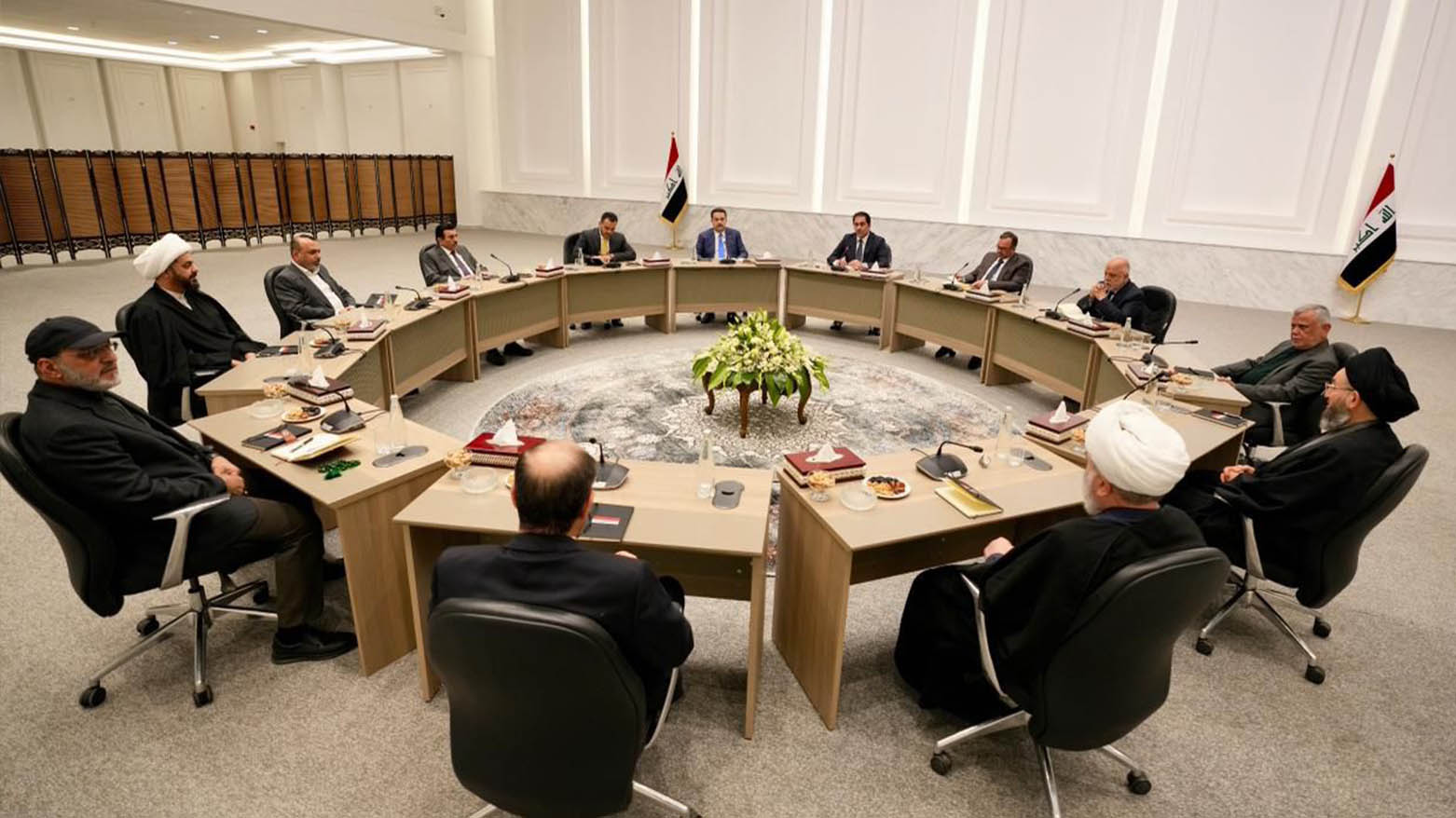
ERBIL (Kurdistan24) — The Shiite Coordination Framework (SCF) convened on Monday evening to discuss the formation of Iraq’s next government, focusing on the selection of the prime minister and the president, according to Said Salam Jazairi in an interview with Kurdistan24. However, he noted that ongoing political deadlock has complicated the discussions, leaving observers uncertain about the outcome.
Jazairi added that prominent figures, including Ammar Hakim, Qais Khazali, Mohammed Shiaa al-Sudani, and Hadi al-Amiri are central to decision-making within the Coordination Framework. While any of the four could influence candidate selection, some are expected to propose alternate candidates if consensus is not reached.
Regarding the potential replacement for former Prime Minister Nouri al-Maliki, Sudani reportedly favors narrowing the options to three main candidates within the framework, though other names such as Hamid Shatri, Qasim al-Araji, Haider al-Abadi, and Mustafa Al-Kadhimi remain under consideration.
Jazairi emphasized that while the framework has both internal and external consultations, final decisions must align with Iraq’s constitutional and national interests.
In parallel, Nouri al-Maliki, head of the State of Law coalition, reaffirmed his intention to remain a candidate for prime minister in a Monday interview with Agence France-Presse. He highlighted the need for a unified state military, a centralized oil policy, and strict protection of Iraq’s sovereignty, emphasizing that no foreign power should dictate Iraq’s political or economic decisions.
In a bullet-point readout of the interview published on al-Maliki's Facebook page, he emphasized that future governments should be civilian-led and that armed factions must disarm to participate.
He further addressed Iraq’s foreign relations, asserting the importance of balanced ties with the United States, Iran, and other major international actors, based on mutual interests.
He warned against any external interference and underscored Iraq’s role in regional security while acknowledging the country’s pressing economic challenges that demand comprehensive reform.
The meeting of the Shiite Coordination Framework reflects the broader struggle among Iraq’s major Shiite factions to reconcile internal divisions while preparing for the next government.
Observers note that the outcome will significantly impact Iraq’s governance, the role of armed groups, and its engagement with regional and global powers.
The ongoing deliberations within the Shiite Coordination Framework take place against a broader backdrop of Iraq’s active engagement in regional diplomacy. In a meeting with U.S. Special Envoy for Syria Tom Barrack on Sunday, Prime Minister Mohammed Shiaa al-Sudani emphasized Iraq’s commitment to dialogue and diplomacy as essential tools for resolving conflicts and preventing escalation in the region.
The Coordination Framework’s internal debates over Nouri al-Maliki’s potential candidacy for prime minister are closely linked to these external dynamics. Analysts note that the positions of domestic factions and international partners, particularly the United States, are influencing deliberations within the framework.
Maliki’s vision for a democratic and civilian-led government, coupled with his emphasis on international partnerships, reflects the broader challenges facing Iraq’s next administration as it seeks to balance internal consensus-building with external expectations.
Overall, Iraq’s engagement with international partners underscores the Coordination Framework’s political deliberations within a larger strategic context, where the formation of the next government intersects with regional stability, counter-terrorism coordination, and the country’s positioning as a central actor in Middle Eastern diplomacy.