Human Cost of Ukraine War Remains Severe After Four Years of Conflict
The verified central development remains the continued resilience and adaptation of individuals and organizations across Ukraine amid the ongoing war.
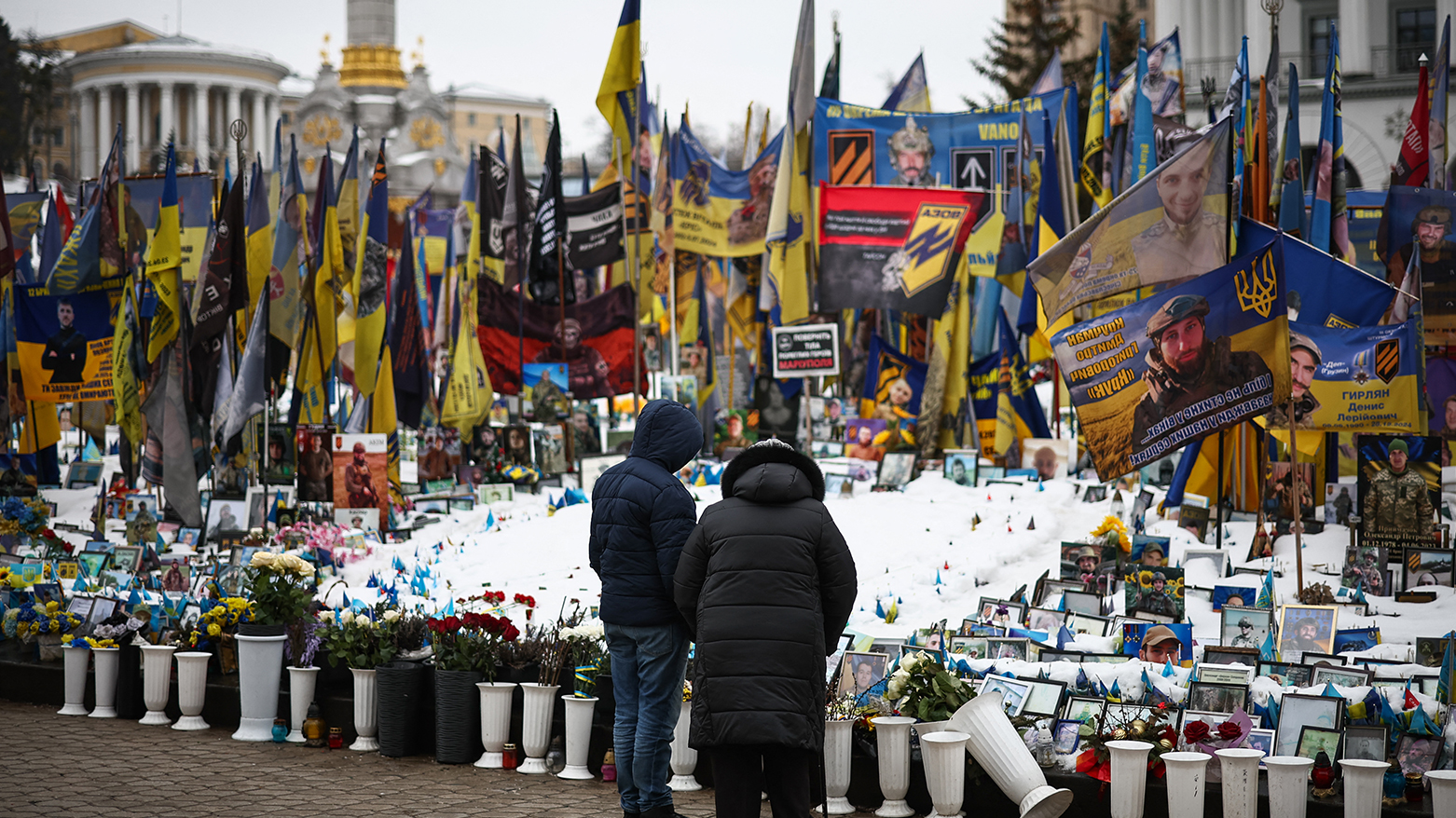
ERBIL (Kurdistan24) - Four years after the Russian invasion of Ukraine, individuals across the country continue to grapple with the human toll of the conflict, according to a report by The Times on Monday. The article profiles a combat medic, a Nobel peace laureate, a former prisoner of war, and a poet, each describing personal experiences during the war and its ongoing impact on Ukrainian society.
Viktor, 28, a combat medic, returned to Ukraine on the second day of the Russian invasion after initially considering remaining in Poland, where he had been working on a strawberry farm.
Previously serving as a medic during Russia’s covert campaign in Donbas, Viktor said his decision to return was driven primarily by concern for his sister, who was serving in a military communications unit in eastern Ukraine.
“That was my only reason for returning at first,” he said. “It was only when I was in Ukraine that feelings of patriotism began to kick in and I wrote to my former brigade that I was coming back.”
Upon arrival at 6 a.m. in Mykolaiv, Viktor encountered active combat between Ukrainian soldiers and Russian saboteurs. He was immediately called to evacuate injured soldiers and civilians, as well as retrieve bodies from the conflict zone.
Viktor recounted his first encounter with a deceased conscript, describing the shock of seeing half of the soldier’s head missing. He said his driver urged him to assist, despite the trauma, using military slang to refer to the casualties.
Over the following years, Viktor evacuated hundreds of dead and injured soldiers and civilians, including a pregnant woman and her five-year-old son killed in a Russian strike in 2023.
“I used to dream about the dead, but then I began closing their eyes as soon as I arrived at the scene, so as not to look into them. And now I don’t dream about them at all,” Viktor said. He noted, however, that when evacuating bodies he knew personally, he would sometimes imagine they were still alive, prompting him to check their pulses repeatedly.
Viktor described developing methods to switch off his emotions during active operations, with tears emerging only in quieter moments. “Any war, no matter how cruel it may be, will never kill the humanity within a person,” he said, reflecting on his experience near Pokrovsk, a town in the besieged Donetsk region.
Oleksandra Matviichuk, a human rights lawyer and Nobel peace laureate based in Kyiv, described a different experience, emphasizing preparedness and organizational response.
According to the report, she anticipated Russia’s full-scale invasion following the 2014 annexation of Crimea and military operations in eastern Ukraine. On the morning of February 24, 2022, she and her husband were informed by a friend that the invasion had begun.
Matviichuk said she initially reacted without shock, even preparing breakfast, while the Centre for Civil Liberties, which she leads, had already implemented an internal plan to shelter staff members together in Kyiv.
Following the withdrawal of Russian forces from areas near Kyiv in May 2022, Matviichuk traveled abroad to raise awareness of Russian war crimes. She recounted a sense of unreality in Western cities contrasted with her war-torn homeland, stating that upon returning to Ukraine, she reconciled the coexistence of these two realities.
The Centre for Civil Liberties received the Nobel peace prize in 2022, sharing the award with Memorial, a Russian human rights group banned by Moscow, and Belarusian activist Ales Bialiatski.
Matviichuk highlighted the ongoing support provided by these organizations to Ukrainian civilians illegally detained in Russia, noting the significance of international cooperation in human rights efforts.
Matviichuk also addressed the impact of international diplomacy, stating that a lack of reaction from the United States to intensified Russian attacks on civilians encouraged further violations. She cited a 28-point peace plan drawn up by U.S. and Russian officials proposing amnesty for Russian war crimes but criticized the absence of measures to protect civilians.
Civilian casualty figures compiled by the United Nations and referenced in the report indicate that as of early 2026, 14,406 adults and 766 children have been killed since February 2022.
Major Serhiy Mandybula, a former communications chief with Ukraine’s 36th Marine Brigade, recounted his capture and three-year imprisonment in Russian custody.
He described being trapped during the defense of Mariupol, where Ukrainian forces faced superior numbers and firepower. Mandybula reported witnessing soldiers burned inside self-propelled artillery and attempting multiple breakouts before being detained.
Initially held near Mariupol and in Donetsk, Mandybula and other Ukrainian soldiers were later transferred to Olenivka detention facility, where they experienced physical abuse from guards, including beatings with sticks, truncheons, fists, and belts.
He described an explosion in a neighboring barracks housing Azov Brigade soldiers, which killed at least 50 detainees. Russian authorities claimed the facility had been targeted by Ukrainian missiles, though Mandybula noted no evidence of incoming munitions.
After Olenivka, Mandybula was sent to a detention facility in Borisoglebsk, Russia, where he endured further torture, including stun guns, prolonged beatings, deprivation of food, and confinement with dogs in attempts to compel allegiance to Moscow.
Over three years in captivity, he received only two letters from family members, including one from his wife in May 2025. Mandybula reported losing over six stone during imprisonment. He was released in September 2025 and is currently undergoing medical and psychological treatment, with plans to return to military service.
Taya Naidenko, a poet and journalist from Odesa, described the psychological impact of sustained conflict on civilians. On the morning of the invasion, her daughters informed her of the attack, which she initially dismissed as unlikely.
Over four years of war, Naidenko noted the normalization of violence, stating that daily life had come to include constant calculations of potential attacks, including drone strikes. She reported that her husband was mobilized for military service and was missing for 18 days in 2024, during which she feared for his survival.
Naidenko described coping strategies involving humor and dark references, such as comparing her husband’s absence to Schrödinger’s theoretical cat simultaneously alive and dead. She emphasized that writing about the war had become difficult, both due to the personal toll and the saturation of wartime reporting.
Despite the hardships, she stated that both she and her husband recognized the social expectation to confront military service despite personal reluctance.
The Times report situates these individual narratives within broader estimates of military and civilian casualties.
According to figures compiled by multiple sources, including Ukrainian President Volodymyr Zelensky and the Center for Strategic and International Studies (CSIS), Ukrainian military fatalities range between 55,000 and 140,000, while Russian military deaths are estimated between 177,430 and 325,000.
Civilian deaths have been documented by the United Nations, with over 15,000 confirmed fatalities as of early 2026.
The conflict has also resulted in significant population displacement. More than nine million people have been forced to flee their homes, including over a third of Ukrainian children, according to the report. Urban centers and towns have been heavily damaged, with residential buildings destroyed and infrastructure disrupted.
Witness accounts and imagery cited in the report illustrate extensive devastation to urban landscapes, including partially collapsed apartment buildings and destroyed civic structures.
Across Ukraine, the impact of the conflict has extended beyond immediate physical destruction. Human rights defenders, medical personnel, and civilians report ongoing psychological and societal challenges.
Viktor’s experience evacuating casualties, Matviichuk’s work in human rights advocacy, Mandybula’s imprisonment, and Naidenko’s daily adjustments to wartime life exemplify the multidimensional consequences of sustained conflict on both military personnel and the broader population.
The report emphasizes that despite the immense human cost, Ukrainians continue to maintain organizational, military, and cultural resilience.
Combat medics and front-line soldiers operate under continuous threat, human rights activists engage in legal and humanitarian advocacy, former prisoners reintegrate into military and civilian life, and civilians adapt to ongoing security risks.
Each individual’s account highlights the persistence of daily routines, strategic responses, and community support mechanisms amid the ongoing conflict.
Humanitarian organizations cited in the report have undertaken efforts to provide medical care, food, legal assistance, and psychological support to those affected. Viktor, for example, recounted the logistical challenges of evacuating bodies and injured personnel from active combat zones, including towns under siege in the Donetsk region.
Matviichuk’s Centre for Civil Liberties facilitated coordinated responses to protect civilians and document war crimes, while also navigating the constraints imposed by ongoing military operations.
The narrative of Major Mandybula underscores the security and legal complexities of prolonged captivity in foreign detention facilities. Reports from Olenivka and Borisoglebsk illustrate patterns of physical abuse, deprivation, and coercion designed to undermine prisoner loyalty and morale.
His experience reflects documented concerns regarding prisoner treatment under Russian custody, including restrictions on communication and limited access to humanitarian support.
Naidenko’s reflections illustrate civilian life under continuous threat of drone and missile attacks, highlighting adaptive strategies employed by individuals and families to maintain personal safety. Her account also emphasizes the emotional strain and psychological adjustment required to coexist with persistent violence and uncertainty.
These civilian experiences occur alongside broader efforts to rebuild and maintain communities affected by ongoing military operations, consistent with the observations of human rights advocates such as Matviichuk.
Military casualty data, as referenced in the report, reflects a wide range of estimates due to differing methodologies and reporting sources.
Ukrainian President Zelensky cited 55,000 military deaths by February 2026, while independent analysis by CSIS estimated between 100,000 and 140,000. Russian military fatalities were reported by multiple sources, including the BBC, Mediazona, Meduza, and CSIS, with estimates ranging from 177,430 to 325,000.
These figures are consistent with the UN’s documentation of civilian casualties, highlighting the scale of human loss and disruption resulting from sustained military engagement.
The humanitarian and operational challenges described in the report further illustrate the ongoing demands placed on medical personnel, volunteer responders, and civil society organizations. Evacuation operations, frontline medical care, prisoner advocacy, and civilian protection efforts all function within a context of active hostilities and persistent threat from Russian forces.
Accounts from Mykolaiv, Pokrovsk, Mariupol, Odesa, and Kyiv demonstrate the geographical breadth of these challenges and the diversity of affected populations.
The cumulative effect of these experiences is a layered portrayal of war’s impact across different societal sectors. From front-line combat medics to detained military personnel, from human rights defenders to civilians coping with continuous attacks, the report provides detailed testimony of both immediate and enduring consequences.
Observations on mental health, community cohesion, and operational readiness provide insight into the multifaceted effects of sustained military conflict, grounded in firsthand accounts and verified reporting.
In addition to the personal experiences documented, the report cites official casualty and displacement statistics to contextualize the scale of the conflict. Over nine million displaced persons, more than a third of whom are children, reflect the widespread societal disruption.
Urban destruction, including damaged residential blocks and infrastructural collapse, underscores the material consequences accompanying human losses.
The Times report also documents the international recognition of Ukrainian civil society efforts, including the joint awarding of the Nobel peace prize to the Centre for Civil Liberties, the Russian group Memorial, and Belarusian activist Ales Bialiatski.
The award highlights the transnational engagement of human rights actors operating under conditions of conflict, censorship, and state repression. Matviichuk emphasized that such cooperation enabled continued assistance to Ukrainian civilians detained abroad and demonstrated a commitment to human rights advocacy amid wartime constraints.
The report emphasizes that, despite the sustained violence, Ukraine continues to maintain its national identity, social cohesion, and operational capacity. Military personnel, civil society organizations, and civilians exhibit varying forms of resilience, from adaptive combat tactics to psychological coping mechanisms and humanitarian assistance initiatives.
The juxtaposition of individual narratives with official casualty statistics and displacement figures provides a comprehensive overview of the ongoing humanitarian and operational landscape in Ukraine.
Through the accounts of Viktor, Matviichuk, Mandybula, and Naidenko, the report illustrates both the immediacy of conflict and the longer-term psychological, social, and logistical challenges faced by Ukrainians. Each narrative highlights personal agency, the effects of trauma, and the continuity of societal structures amid adversity.
These testimonies collectively depict the ongoing human cost of the war while demonstrating the persistence of Ukrainian efforts to mitigate suffering and maintain institutional and communal functions.
The combination of firsthand accounts, statistical reporting, and organizational documentation in the report presents a verified, evidence-based portrait of life during the fourth year of conflict in Ukraine.
It details the intersecting experiences of military personnel, detained soldiers, human rights advocates, and civilians living under sustained threat, providing insight into operational, social, and psychological dynamics without conjecture or interpretation.
As of February 2026, the human cost of the Russian invasion remains profound.
Thousands of military personnel and civilians have been killed or injured, millions have been displaced, and widespread urban destruction continues to affect daily life. Yet, according to the narratives documented, Ukrainians persist in maintaining civil, military, and humanitarian operations despite the ongoing conflict.