KRG Measures Improve Air Quality in Erbil, Environmental Official Says
Dilshad Hirani, director of Erbil’s environmental office, told Kurdistan24 on Friday that while pollution levels had risen in recent years, government intervention has begun to yield tangible results.
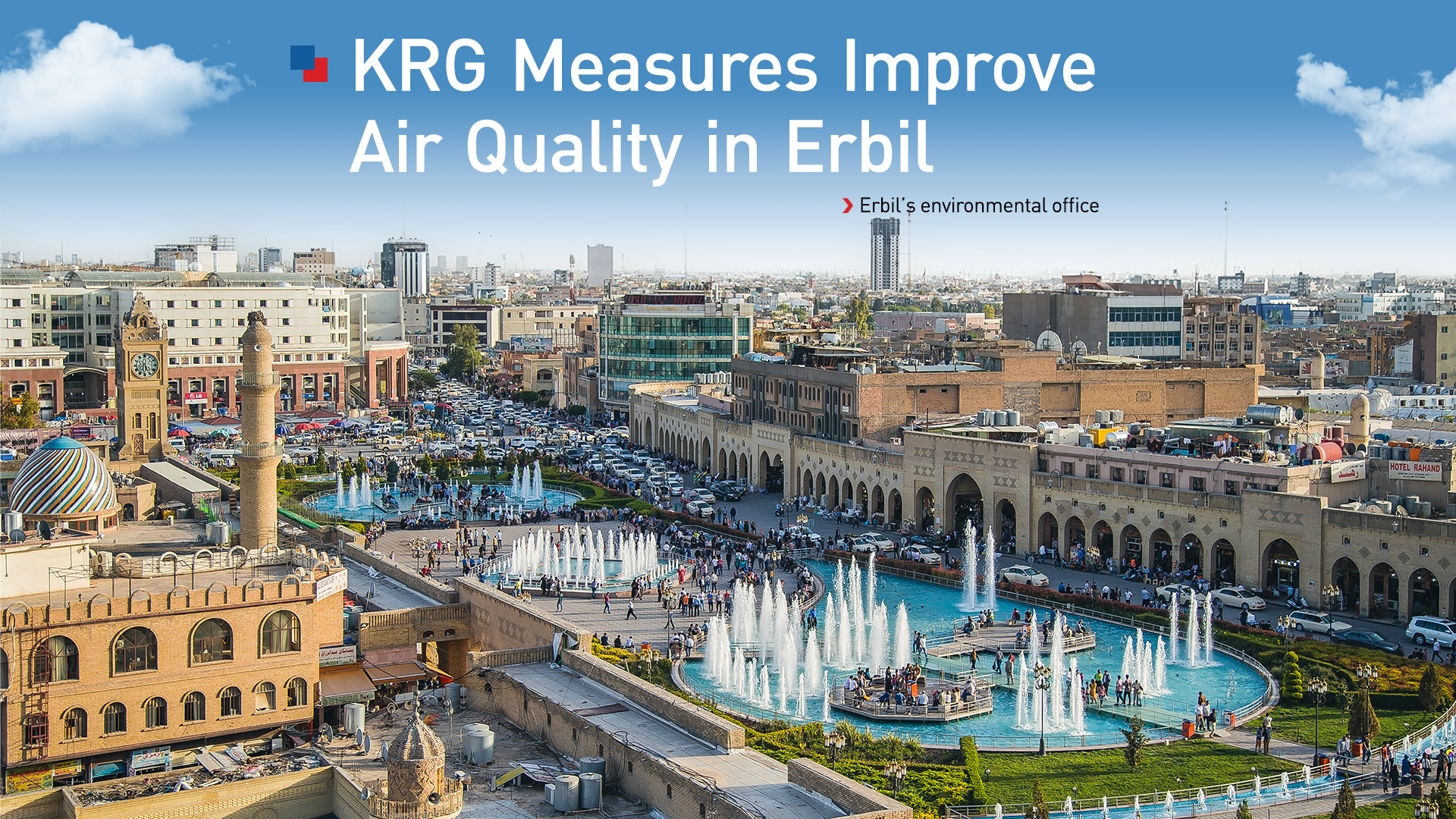
ERBIL (Kurdistan24) — The environment in Erbil has seen noticeable improvements in recent months following a series of measures implemented by the Kurdistan Regional Government (KRG), according to a local environmental official.
Dilshad Hirani, director of Erbil’s environmental office, told Kurdistan24 on Friday that while pollution levels had risen in recent years, government intervention has begun to yield tangible results.
“According to recorded data, the environment in Erbil has become significantly cleaner,” Hirani said. “Last year, pollution indicators were between 170 and 180, but now they range from 70 to 80,” he added, noting a sharp decline in harmful emissions.
Hirani attributed the improvement to several government initiatives, including the gradual closure of private electricity generators, the construction of ponds and dams to support environmental balance, and the implementation of the Runaki program, which aims to provide more stable public electricity and reduce reliance on high-emission generators.
The environmental push was reinforced on January 12, 2025, when Kurdistan Region Prime Minister Masrour Barzani chaired a special meeting to address air pollution in both Erbil and Duhok.
“The issue of environmental protection is a critical part of the KRG’s agenda,” Barzani said during the meeting. “It should be a shared responsibility, and we must ensure that the environment and the beautiful nature of Kurdistan remain clean.”
Key Decisions Announced
During the meeting, several measures were adopted to curb pollution and strengthen environmental oversight:
Industrial Oversight: Any refinery or factory operating outside established environmental regulations and contributing to pollution will face legal action.
Fuel Regulation: Refineries or individuals involved in producing or smuggling harmful vehicle fuel will be banned. Authorities also pledged to limit the burning of associated gas in oil fields.
Generator Compliance: Owners of private generators must comply with government regulations, including installing filters to reduce noise and air pollution. Non-compliance will result in legal consequences.
Wastewater Restrictions: The use of wastewater and sewage for irrigating crops and vegetables has been prohibited to protect public health and environmental safety.
Officials say the measures reflect a broader effort by the KRG to balance economic activity with environmental sustainability, amid growing public concern over air quality and urban pollution in the region.