SCF to Reassess Maliki’s Candidacy Amid Political and International Pressures
Iraq’s Shiite Coordination Framework (SCF) will meet next week to decide whether Nouri al-Maliki remains its prime minister nominee amid internal divisions and U.S. opposition.
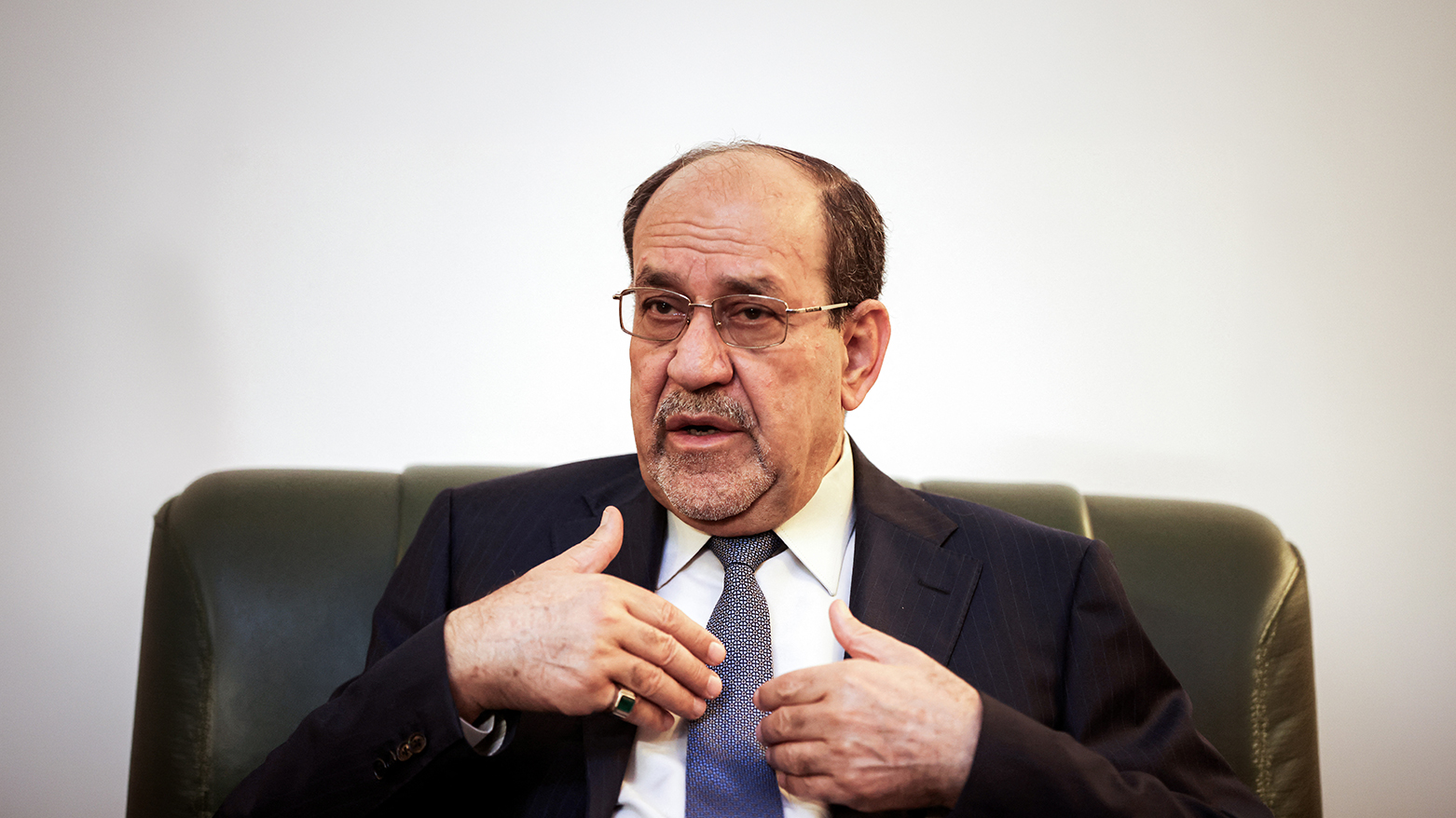
ERBIL (Kurdistan24) - Iraq’s Shiite Coordination Framework (SCF) is scheduled to meet next week to address the nomination of the Prime Minister and President, including a reassessment of former Prime Minister Nouri al-Maliki’s candidacy, amid ongoing internal disagreements and external pressures, officials said Friday.
Ali al-Difai, spokesperson for the Islamic Supreme Council of Iraq, told Kurdistan24 that “the Coordination Framework will meet on Monday to discuss the issue of the President and the Prime Minister candidate.” He noted the meeting would settle the fate of Maliki, the alliance’s nominee for the post of President of the Council of Ministers, and consider the presidential election process.
Bilateral and trilateral consultations among Coordination Framework leaders are ongoing to resolve disputes over the prime ministerial nomination. A meeting held Thursday evening focused on setting the agenda for next week, including three main topics: the presidential issue, the fate of Maliki, and the designation of other potential candidates for the Prime Minister post.
Maliki remains the sole officially confirmed candidate of the Coordination Framework for the premiership. However, domestic opposition from some Shiite leaders and a clear U.S. veto have prevented a final decision, creating a political impasse within the alliance.
Haider Barzanji, head of the Naram Sen Foundation for Dialogue and Community Development, said during a Kurdistan24 program that further deliberations are necessary to maintain flexibility in candidate selection.
“The Coordination Framework must conduct further discussions regarding the Iraqi Prime Minister candidate to maintain the opportunity to replace the nominee; if U.S.-Iran negotiations do not succeed, they cannot remain idle,” he said.
Barzanji added that if the United States does not recognize a Maliki-led government, the European Union would likely follow suit, and he said the positions of several Arab and neighboring countries regarding the matter are clear.
Maliki publicly reaffirmed his candidacy on Monday in an interview with Agence France-Presse, stating that he would not step aside. He pledged that a future government under his leadership would safeguard diplomatic missions and maintain balanced foreign relations.
“All countries can be assured that we will prevent any violation against their embassies or officially recognised interests in Iraq,” Maliki said. “We will not allow any party to target any country that maintains a diplomatic presence — such as embassies — in Iraq.”
He also outlined priorities for a civilian-led government, including a unified state military, a centralized oil policy, and strict protection of Iraq’s sovereignty, emphasizing that no external power should dictate political or economic decisions.
Maliki highlighted the importance of constructive relations with both the United States and Iran, stating that ties with the latter “rest on the principle that Iraq’s sovereignty is respected” and that shared interests define the relationship.
Aqeel Fatlawi, spokesperson for the State of Law Coalition, said that Maliki’s candidacy “remains, up to this moment, the decision of the Coordination Framework and not just the State of Law Coalition alone.”
Only two leaders within the alliance — Ammar al-Hakim of the Hikma Movement and Qais al-Khazali of the Sadiqoun bloc — have expressed opposition, but Fatlawi said the alliance has not abandoned its nominee.
Meanwhile, Aqeel al-Rudaini, spokesperson for the Nasr Alliance, said the Coordination Framework lacks consensus on Maliki’s candidacy and that future meetings would focus on whether Maliki remains the nominee or another candidate is designated.
He noted that smaller tripartite and quadripartite meetings among leaders are being held to resolve disagreements, including consultations led by Humam Hamoudi, head of the Islamic Supreme Council of Iraq.
The political debate over Maliki’s candidacy has intensified following statements from the United States.
A senior White House official reiterated Washington’s support for Iraq’s stability and prosperity while rejecting a Maliki-led government, warning that a government influenced by Iran would not serve Iraq’s national interests or U.S.-Iraq partnerships.
Potential measures under consideration include sanctions, restrictions on access to U.S. dollar reserves, and blocks on Iraqi oil revenues held in New York, according to reports.
U.S. Secretary of State Marco Rubio reportedly communicated with Prime Minister Mohammed Shia al-Sudani, warning that a government backed by Iran would not succeed and signaling the possibility of sanctions targeting Iraqi individuals and institutions if Maliki’s nomination proceeds.
U.S. Special Envoy Tom Barrack met with Iraqi officials to stress the importance of effective leadership aligned with stabilization policies, cautioning that any government “established under external dominance” would fail to meet public expectations or strengthen partnership with Washington.
The Coordination Framework’s deliberations coincide with ongoing constitutional and political deadlock following Iraq’s November 2025 parliamentary elections.
Meetings of the framework have focused not only on Maliki but also on identifying a consensus candidate for the presidency, reflecting internal divisions among key figures including Ammar Hakim, Qais Khazali, Mohammed Shia al-Sudani, and Hadi al-Amiri.
Observers note that Maliki’s continued candidacy is linked to broader regional and international considerations. Sources from the Reconstruction and Development Alliance indicated that his nomination faces opposition both within the Coordination Framework and from external actors.
Sudani has reportedly conveyed to Maliki that if he remains a candidate, he would not extend support, urging the framework to reassess candidate selection mechanisms to reduce reliance on personal or partisan considerations.
Parallel to political discussions, Iraq’s National Security Advisor Qasim al-Araji convened an urgent security meeting to assess regional developments and their potential impact on domestic stability, highlighting the intersection of internal political decisions with broader security concerns.
Internal communications within the Coordination Framework also addressed historical guidance from Grand Ayatollah Ali al-Sistani. Al-Rudaini clarified that no new statement has emerged regarding Maliki’s candidacy, and references to Sistani’s previous 2014 guidance were intended to provide historical context rather than current instruction.
Maliki’s statements on diplomatic protection and balanced foreign policy follow prior incidents in which foreign missions and interests in Iraq faced security challenges. His public affirmations aim to address both domestic concerns and international apprehensions while maintaining his position within the Coordination Framework.
The Coordination Framework is expected to convene next week to finalize its stance on the premiership nomination. Until those deliberations conclude, Maliki remains the officially reaffirmed candidate of the State of Law Coalition and, according to coalition representatives, of the Coordination Framework as a whole.
The upcoming meeting will determine whether Nouri al-Maliki remains the framework’s nominee or if an alternative candidate is designated. The decision will shape Iraq’s political trajectory amid ongoing internal divisions and international pressures.