Iraq’s SJC President Meets U.S. Envoy to Discuss Constitutional Oversight
The Iraqi Supreme Judicial Council (SJC) and U.S. envoy agreed that judicial oversight will remain pivotal in ensuring constitutional processes continue without political interference.
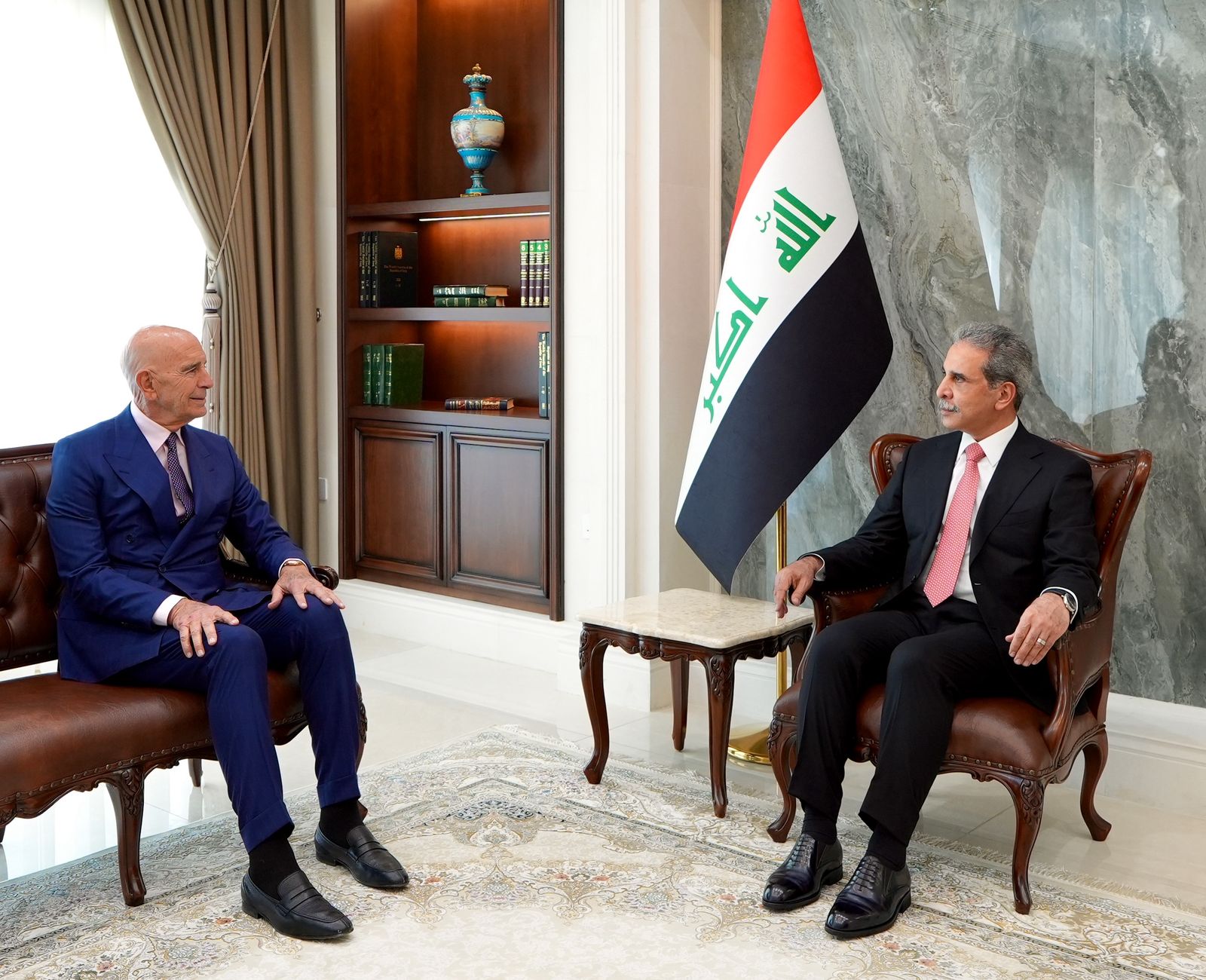
ERBIL (Kurdistan24) - Faiq Zidan, President of Iraq’s Supreme Judicial Council (SJC), met with Tom Barrack, U.S. Presidential Special Envoy for Syria, in Baghdad on Monday to discuss the judiciary’s role in implementing constitutional mandates during Iraq’s next phase, the council said in a communiqué.
The meeting focused on the judiciary’s responsibility to ensure constitutional processes are upheld and insulated from political disputes, officials said. Both sides emphasized the importance of legal institutions in safeguarding Iraq’s constitutional framework amid ongoing government formation discussions.
Zidan and Barrack addressed the oversight and enforcement functions of the Supreme Judicial Council, highlighting its role as a primary guarantor for protecting constitutional entitlements. Officials noted that the judiciary’s involvement is critical as Iraq navigates unresolved constitutional files and political negotiations.
The meeting follows prior engagements by Barrack with Iraq’s executive leadership. Earlier in the week, he met with Prime Minister Mohammed Shia al-Sudani to discuss Baghdad’s efforts to advance regional stability, particularly in Syria. The Prime Minister’s Media Office reported that the discussions emphasized dialogue and diplomacy as essential tools for conflict resolution and the prevention of escalation in the region.
During the session with al-Sudani, Barrack and the Prime Minister exchanged views on Iraq’s pivotal role in facilitating regional solutions, mitigating tensions, and combating terrorism. Both sides also reviewed prospects for economic cooperation and initiatives aimed at supporting comprehensive development and long-term stability.
The U.S. envoy also met with Foreign Minister Fuad Hussein on Monday to review bilateral relations, regional security developments, and ongoing counter-terrorism cooperation. The ministry said discussions covered Iraq’s coordination with multiple countries on the repatriation of foreign nationals involved in terrorism, including Turkish citizens, and the importance of reinforcing Iraqi sovereignty in managing detention and prosecution procedures.
Officials reported that the meeting addressed the recent agreement between the Syrian Democratic Forces and the transitional government in Syria. Both parties expressed support for the implementation of the arrangement, citing its impact on regional security and stability.
Discussions additionally covered ongoing U.S.-Iran negotiations, with Minister Hussein highlighting the risks of potential conflict and underscoring Iraq’s preference for peaceful resolution. He noted support for the upcoming Geneva talks scheduled for next Thursday, mediated by Oman and involving representatives of the United States and Iran.
The meetings with Barrack coincided with internal political deliberations over Iraq’s government formation. The Coordination Framework, a Shiite political alliance, continues to debate the nomination of candidates for prime minister and the presidency. Nouri al-Maliki, leader of the State of Law Coalition, remains a candidate for the premiership, though some domestic factions and regional actors have raised objections to his potential appointment.
Officials reported that discussions within the Coordination Framework are ongoing, with bilateral and multilateral meetings among leaders aimed at resolving disagreements over the prime ministerial nomination. The framework also plans to address the presidential selection and broader governmental appointments in upcoming sessions.
Zidan’s meeting with Barrack emphasized the judiciary’s independent role in ensuring that constitutional procedures remain intact during these political negotiations. The council’s statement underlined that judicial oversight is essential for preventing external or partisan influences from affecting the legal process.
The U.S. envoy reiterated that the United States values Iraq’s adherence to constitutional mandates and supports measures that reinforce institutional integrity. Officials said Barrack acknowledged Iraq’s steps to uphold legal frameworks in counter-terrorism and repatriation procedures, noting coordination with international partners, including Türkiye, to manage the return of foreign fighters.
Minister Hussein emphasized the continued importance of international communication and coordination throughout the government formation process. Officials stated that the meeting reinforced Iraq’s commitment to maintaining positive engagement with international partners while ensuring internal decision-making aligns with constitutional and national priorities.
The meetings over the past several days reflect ongoing efforts by Iraqi authorities and U.S. representatives to address both domestic governance issues and regional security concerns. They underscore the judiciary’s role in maintaining constitutional order as the country navigates leadership appointments and external pressures.
The U.S. delegation expressed appreciation for Iraq’s recent actions in transferring ISIS detainees from foreign detention centers to Iraqi custody, framing these steps as measures reinforcing national sovereignty and legal accountability. Officials highlighted the significance of continuing such coordination to support broader counter-terrorism efforts.
Discussions also reaffirmed the necessity of adherence to signed agreements in Syria, with both sides emphasizing that regional stability is closely linked to compliance with established arrangements and the prevention of cross-border security threats.
Overall, the meeting between Faiq Zidan and Tom Barrack emphasized judicial oversight and constitutional compliance as central components of Iraq’s governance, while parallel discussions with executive leadership addressed regional stability, counter-terrorism cooperation, and ongoing diplomatic coordination.
The sessions collectively reinforced Iraq’s commitment to upholding constitutional mandates and advancing security and diplomatic objectives in coordination with international partners.