PM Barzani Issues Executive Order Defining Peshmerga Command Authorities
Prime Minister Masrour Barzani has defined the command authorities for regional Corps and Divisions, advancing the Peshmerga unification process and establishing structured administrative, legal, and financial oversight.
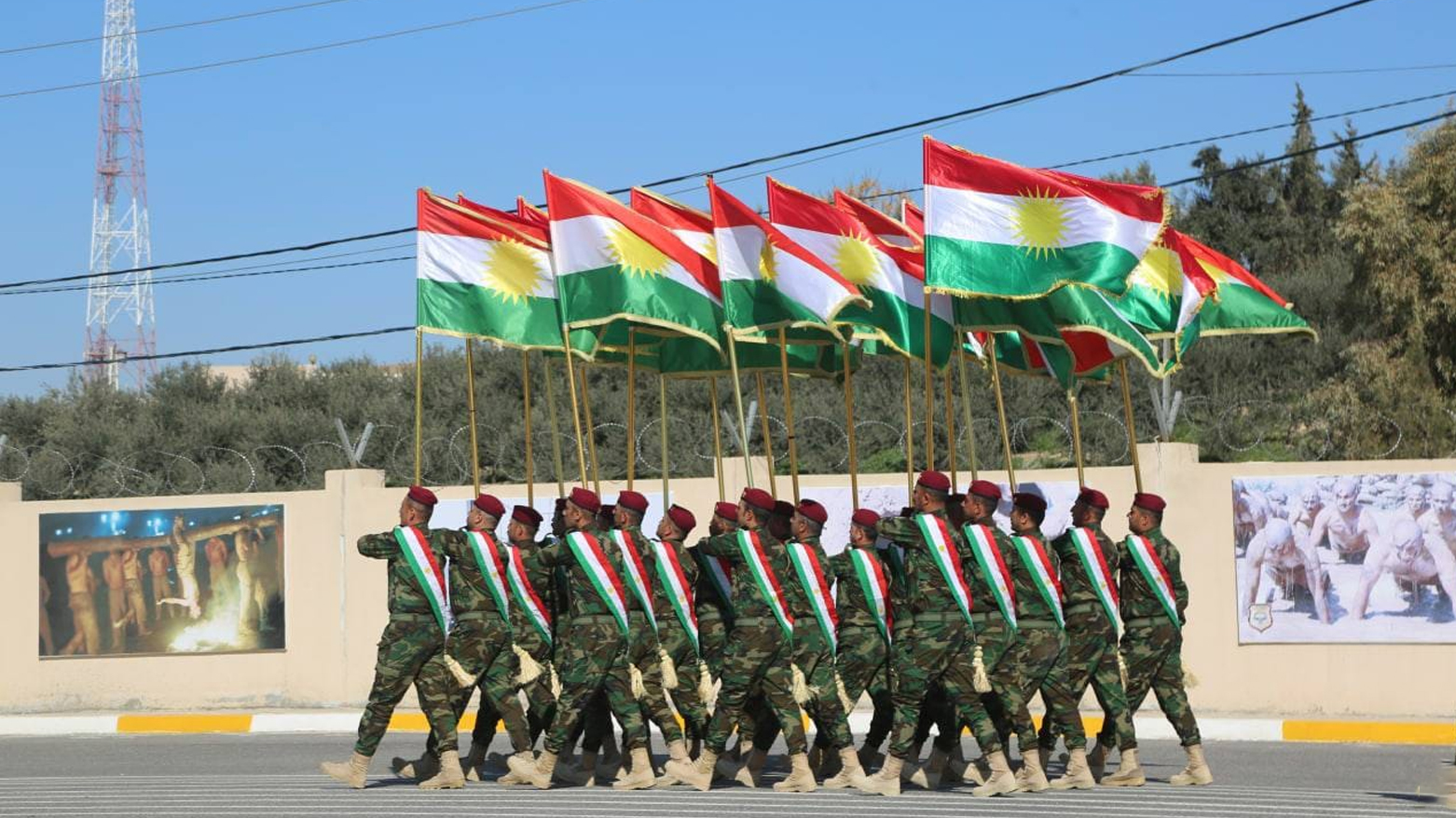
ERBIL (Kurdistan24) - Kurdistan Regional Government (KRG) Prime Minister Masrour Barzani has defined the command authorities for regional Corps and Divisions as part of ongoing efforts to unify the Peshmerga forces, officials said.
The Department of Media and Information announced on Friday, that Prime Minister Barzani issued Executive Order No. 703 on Feb. 26, specifying administrative, legal, and financial authorities for Corps and Division commands under the Ministry of Peshmerga Affairs.
The order is intended to support the reorganization of the Peshmerga in line with Reform Law No. 2 of 2020 and the agenda of the Ninth Cabinet of the Regional Government.
Officials said the decree delineates responsibilities across multiple areas, including command administration, legal oversight, budgeting, media affairs, and coordination with federal forces. The measure aims to institutionalize the Peshmerga and create a modern, unified military system.
Peshawa Hawramani, spokesperson for the KRG, earlier on Thursday emphasized that the move aligns with broader reform efforts within the Peshmerga and the Ninth Cabinet’s strategic program. "The decree responds to the demands of coalition partners within the Ministry of Peshmerga and aligns with the strategic agreement to unify the forces," he said.
According to the statement, the executive order grants regional commands expanded powers to manage their administrative, financial, legal, and communication affairs. Officials noted that this delegation is part of a structured process to strengthen coordination, efficiency, and operational unity across the security sector.
The Peshmerga unification initiative is a core component of the Ninth Cabinet’s reform agenda, which has prioritized modernizing the forces and consolidating command structures previously divided along regional lines.
The decree formalizes the authority of Corps and Division leaders, ensuring a clearer chain of command and enhanced accountability for operational and administrative matters.
Officials indicated that the order is intended to accelerate ongoing efforts to standardize procedures, streamline administrative processes, and integrate multiple regional units into a cohesive national military system.
The reforms include provisions for oversight of legal compliance, budget management, and public relations functions, ensuring that regional commands operate within a defined regulatory framework.
Hawramani highlighted that Prime Minister Barzani has consistently supported initiatives to unify the Peshmerga, emphasizing sustained political and administrative backing throughout the reform process.
"Continuous political support and administrative measures have been dedicated to achieving this goal," he said, noting that the decree reflects a key milestone in the institutionalization of the Peshmerga.
Officials also described the decree as essential for enhancing coordination between the Ministry of Peshmerga Affairs and federal forces, underlining the need for clear channels of communication and joint operational planning.
The order specifies the scope of media and public communication authorities, enabling regional commands to conduct official interactions while adhering to the KRG’s strategic priorities.
Background reports noted that the Peshmerga unification plan has been gradually implemented over several years, with the ministry focusing on aligning operational protocols, training standards, and administrative practices across regional units.
The recent executive order represents a significant advancement by granting codified authority to Corps and Division commands, ensuring that local leadership has defined responsibilities and accountability mechanisms.
Officials emphasized that the decree reinforces institutional structures and supports the strategic goal of a single, cohesive Peshmerga force capable of meeting contemporary security and defense requirements. By formally defining legal, administrative, and financial powers, the KRG seeks to reduce fragmentation, prevent overlapping authority, and enhance overall military efficiency.
Hawramani further stated that the reform process included consultations with coalition partners within the Ministry of Peshmerga Affairs, ensuring that regional and operational considerations were incorporated into the final executive order.
He noted that the Ministry has made sustained efforts throughout the process to balance operational autonomy with centralized oversight.
The decree is expected to facilitate improved planning, coordination, and execution of military operations while maintaining compliance with national regulations. It also aims to provide a clear framework for personnel management, budgeting, and logistical support, addressing longstanding challenges associated with fragmented command structures.
Officials said the decision follows broader efforts to modernize the security sector within the Kurdistan Region, reinforcing the KRG’s commitment to professionalizing the Peshmerga and ensuring readiness for both internal and regional security responsibilities.
The Prime Minister’s office noted that the issuance of Executive Order No. 703 is part of a series of measures designed to institutionalize the Peshmerga, enhance operational coherence, and maintain alignment with the strategic priorities of the Ninth Cabinet.