U.S. War Secretary Says Iran Campaign Is “Only Just the Beginning” as Strikes Continue
The U.S.-led strikes on Iranian targets continue in their second week, with War Secretary Pete Hegseth stressing that operational measures and airstrikes are only beginning.
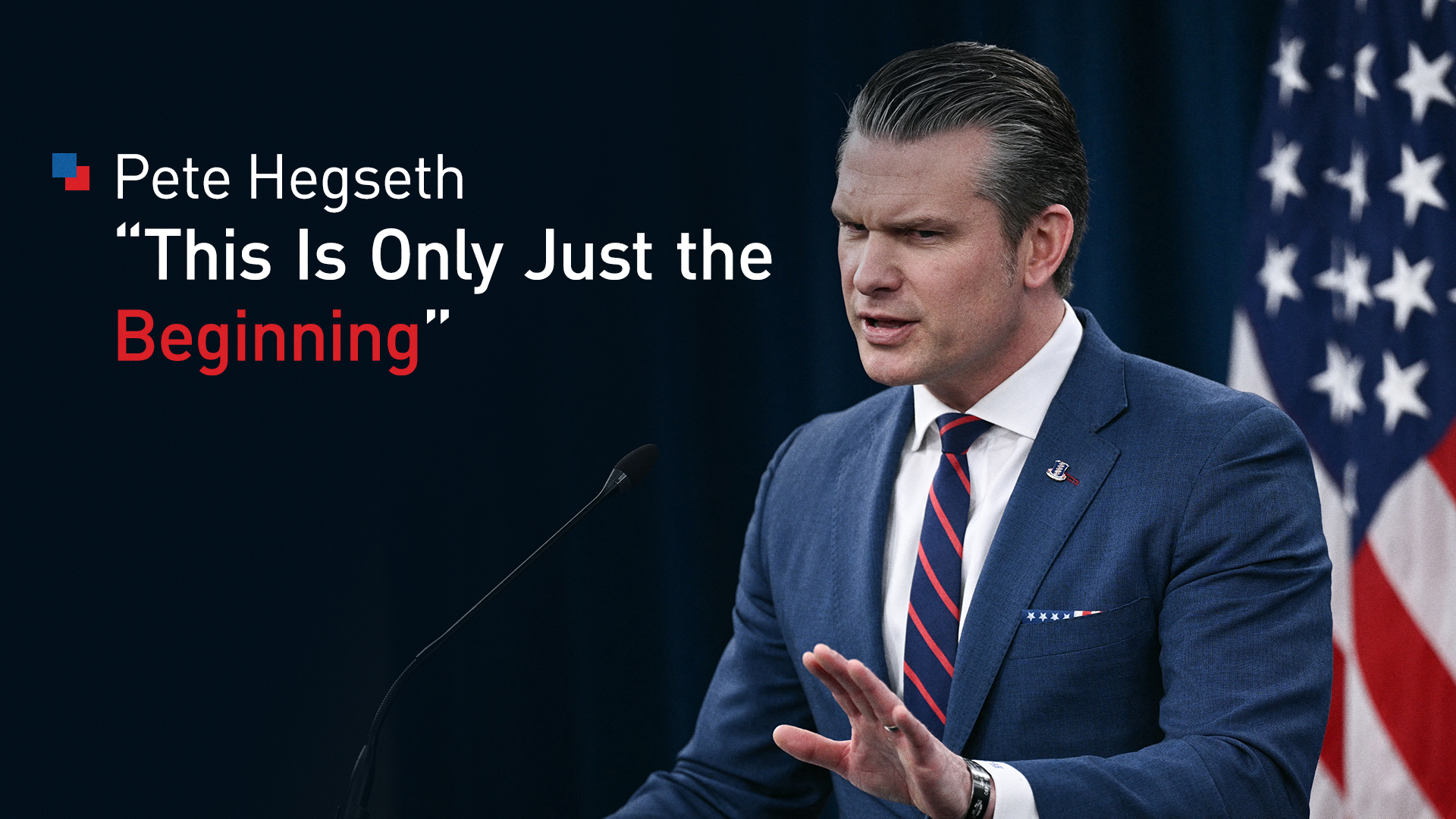
ERBIL (Kurdistan24) - War Secretary Pete Hegseth said Sunday that the U.S.-led military campaign against Iran is “only just the beginning,” as American and Israeli forces enter the second week of strikes targeting Iranian sites. According to Pentagon officials, the operation, called “Operation Epic Fury,” involves more than 50,000 U.S. personnel and has hit over 3,000 locations across Iran.
Hegseth made the remarks in an interview with CBS News correspondent Major Garrett, emphasizing that the campaign remains ongoing and that the military has not yet employed the full range of conventional munitions, including 500-pound, 1,000-pound, and 2,000-pound bombs on military targets. “We haven’t even really begun to start that effort of the campaign, which is gonna showcase even more how we will execute on those objectives,” he said.
The war secretary characterized the operation as deliberately asymmetric, noting that U.S. and Israeli air forces are vastly superior to Iranian capabilities. He declined to provide operational specifics or discuss potential ground troop deployments. “We reserve the right to take any particular option, whether it included boots on the ground or no boots on the ground,” Hegseth said.
The campaign has produced casualties on both sides. Six U.S. Army reservists were killed in a drone attack in Kuwait last Sunday, and one additional service member’s death was announced on Sunday afternoon. President Donald Trump and Hegseth attended the dignified transfer of the fallen at Dover Air Force Base, according to the Pentagon. Hegseth said the administration expects additional casualties during ongoing operations.
Iranian fatalities reported by human rights groups have surpassed 1,600, including 168 civilians, mostly children, at a school in southern Iran in an area under attack at the time, Hegseth said. He stressed that investigations are underway regarding potential civilian casualties. “Unlike our adversaries, the Iranians, we never target civilians,” he said.
Hegseth also addressed the sequence of events that led to the campaign, confirming that intelligence provided by Israeli authorities on February 23 regarding the locations of senior Iranian officials, including Supreme Leader Ali Khamenei, was verified by U.S. intelligence before action was taken. He emphasized that the decision to launch strikes was controlled by the U.S. administration to advance American interests and protect U.S. personnel.
The campaign has coincided with Iranian missile and drone attacks against nearly a dozen Middle Eastern countries, including U.S. allies Qatar, Bahrain, and Saudi Arabia. Bahraini authorities reported that an Iranian drone strike on the Sitra area early Sunday injured 32 citizens, including four in critical condition, and that specialized medical teams were monitoring the injured. Falling debris from the missiles reportedly damaged a university building in Muharraq and a nearby water desalination plant. Saudi Arabia and the United Arab Emirates also reported intercepting drones and missiles targeting critical infrastructure and oil facilities.
Disruptions have extended to global energy flows. Shipments through the Strait of Hormuz, a key transit for approximately 20 percent of the world’s crude and gas supply, have stalled since the onset of hostilities. U.S. gas prices have risen by an average of almost 50 cents per gallon. Hegseth said the U.S. is taking measures to secure maritime transit, noting that the Iranian navy’s ability to project force has been “diminishing” due to ongoing strikes.
The administration has also coordinated efforts to assist regional allies facing shortages in missile interceptors. Hegseth said CENTCOM projections show Iran’s missile launch capacity has decreased by approximately 90 percent, and that U.S. forces are prepared to crossload munitions to partners as necessary while prioritizing American personnel and installations.
Hegseth characterized the campaign as focused on neutralizing Iranian combat capabilities, including nuclear programs, rather than pursuing conventional regime change. He cited persistent nuclear ambitions by Iran and said the U.S. remains determined to prevent the development of nuclear weapons. International monitors estimate that Iran still possesses more than 970 pounds of near-bomb-grade uranium, despite prior U.S. claims of having destroyed its nuclear infrastructure. Hegseth said multiple strategies exist to ensure that nuclear ambitions are not realized but declined to provide operational details.
The secretary addressed questions about potential Russian intelligence support to Iran, stating that U.S. commanders are aware of all communications and that risks are being mitigated. He said President Trump maintains relationships with world leaders that allow direct or indirect messaging to ensure operational security. Hegseth added that no additional danger to U.S. personnel is anticipated from external intelligence sharing.
While Iran has announced that a son of its slain leader will succeed him, Hegseth maintained that the military campaign is not a regime-change operation in the traditional sense. He distinguished the current campaign from previous conflicts in Iraq and Afghanistan, emphasizing that U.S. objectives are limited to neutralizing threats and are not intended to restructure Iranian political or social systems.
Hegseth also addressed President Trump’s stated interest in protecting certain individuals within Iran who might assume leadership roles. He said the ongoing military and intelligence operations are the primary means of protection. “What you see right now between American efforts and Israeli efforts is a generational opportunity for the people of Iran,” he said.
Hegseth said U.S. forces remain prepared to act decisively as needed, and emphasized that the campaign is ongoing and that operational measures will continue. He reiterated that U.S. forces retain flexibility in targeting and deployment, and that the use of airpower and munitions has only just begun. “What I want your viewers to understand is this is only just the beginning,” Hegseth said.
The military campaign, ongoing since the start of the week, continues to involve joint operations with Israeli forces and coordination with regional partners. Hegseth emphasized that American forces are implementing measures to protect both U.S. personnel and allied interests, including munitions resupply, maritime security, and monitoring for potential threats posed by external intelligence activity.
Despite rising casualties and regional escalations, officials said the campaign maintains strict operational focus on military targets and nuclear facilities. Investigations into civilian casualties continue, and officials emphasized that no deliberate targeting of civilians has occurred.
Hegseth underscored that all operational decisions are managed at the highest levels of the U.S. administration, with strict adherence to strategic objectives and force protection. The secretary noted that, while U.S. forces retain options for potential future escalation, current operations prioritize airpower and coordination with allied forces.
The war secretary’s remarks concluded by reiterating the central message of ongoing military commitment. “This is only just the beginning,” Hegseth said, emphasizing that the campaign will continue according to operational plans and strategic priorities established by U.S. command authorities.