Israel Preparing for Weeks of Fighting With Iran, Senior IDF Official Says
The Israeli military said it is preparing for at least a month of continued fighting as operations targeting Iran’s missile infrastructure and military capabilities continue.
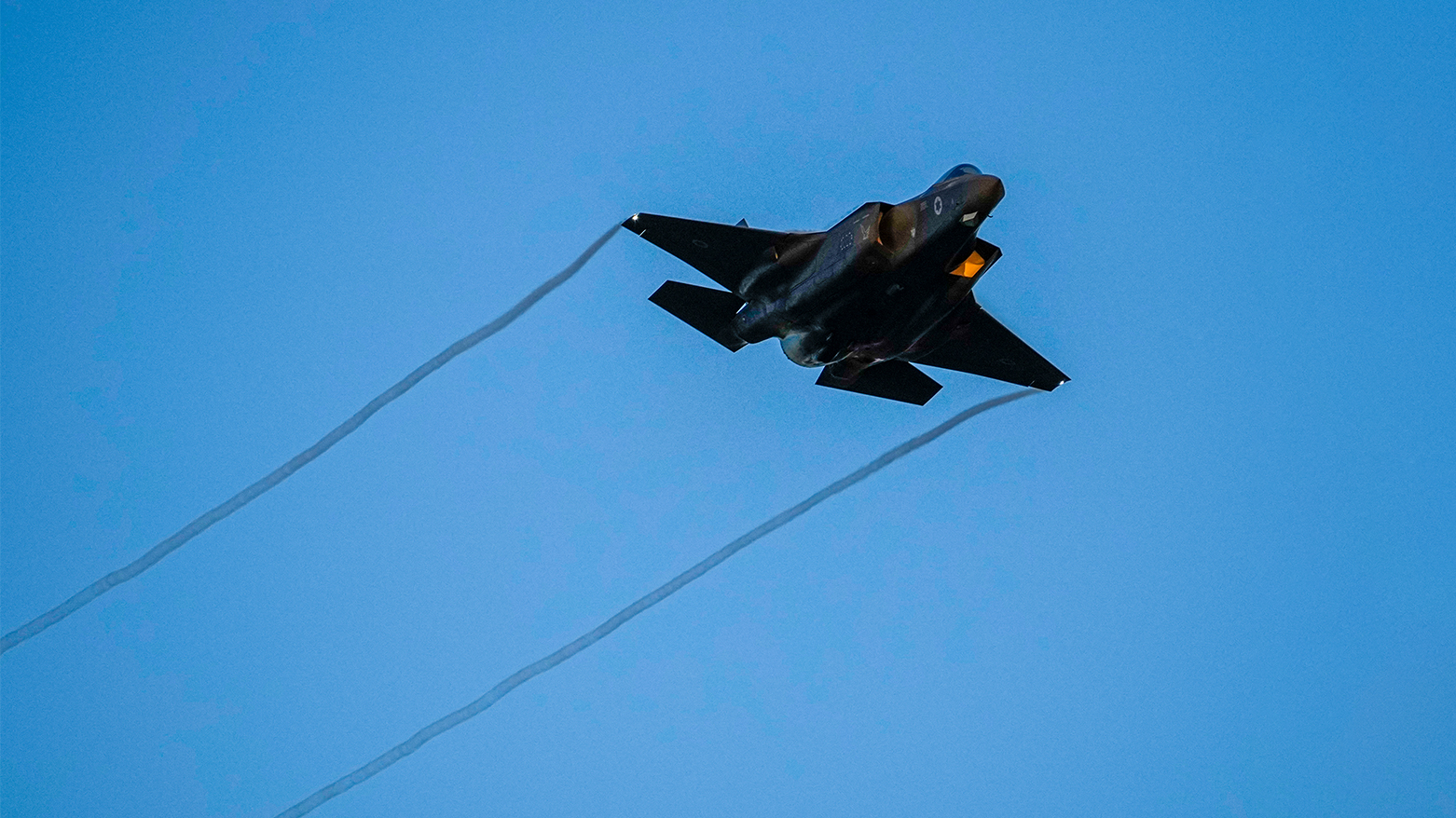
ERBIL (Kurdistan24) - Israel’s military is preparing for a campaign that could last at least a month as fighting with Iran continues, a senior Israeli Defense Forces (IDF) official said, outlining plans to intensify operations targeting Iran’s missile infrastructure and military capabilities.
According to the official, Israeli military planning anticipates several more weeks of combat operations as Israel continues its strikes on Iranian targets. The official said Israeli commanders are preparing for an extended campaign and emphasized that the current phase of operations requires sustained military pressure.
“Trump spoke about four weeks. We are also preparing for at least a month,” the senior officer said, referring to remarks by former U.S. President Donald Trump calling for Iran’s “total surrender.”
The official’s remarks reflect internal planning within the Israeli military as the conflict between Israel and Iran enters its next stage, with Israeli commanders preparing for expanded operations and closer coordination with the United States.
Israeli defense officials said the campaign’s primary objective is to significantly reduce Iran’s ballistic missile capabilities. According to Israeli military estimates, Iran began the conflict with approximately 460 missile launchers. Officials said that number has been reduced to roughly 150 through Israeli strikes.
Despite the reduction, Israeli officials said the remaining missile capacity continues to pose a significant threat. One official said surface-to-surface missiles remain a central challenge for Israel’s defense planning.
“The Iranians are trying to clear the ‘blockages’ we created by striking the tunnels and restore launch capabilities, but they are not succeeding,” the official said.
Israeli Air Force officials said ongoing operations have targeted command structures and operational infrastructure supporting Iran’s missile forces. According to the officials, commanders and headquarters associated with missile units have been struck, launch sites damaged, and underground facilities disrupted.
“There are entire surface-to-surface missile commands that cannot function,” Israeli Air Force officials said, describing the effects of the strikes. They added that these operations are continuing alongside other military activities conducted as part of the broader campaign.
Israeli officials said the next stage of the conflict is expected to focus on systematic attacks against Iran’s military, industrial, and technological infrastructure. The IDF plans to expand its operational scope while continuing to target capabilities linked to missile production and military logistics.
“We are continuing the pounding and expanding into additional areas, while systematically thwarting military capabilities,” General Staff officials said.
Israeli military leaders have described the current stage of the conflict as a rare moment in which strategic conditions allow Israel and its allies to inflict substantial damage on Iran’s military capabilities.
“It is impossible to miss this opportunity. We must not take our foot off the gas until this regime collapses — neither we nor the United States. This is an opportunity we will not get again,” a senior IDF General Staff officer said.
Israeli officials also emphasized the level of coordination with the United States during the campaign. According to a senior defense official, Israel and the United States have divided operational sectors, targets, and missions as part of the joint effort.
The official described the cooperation as “excellent coordination,” noting that both countries are working together in planning and executing the campaign’s next phases.
During the first week of the conflict, Israeli officials said the majority of offensive operations were conducted by Israel. However, they indicated that U.S. forces are expected to take a larger role in upcoming stages.
“The Americans are bringing an enormous mass of capabilities, and we will see that in their strikes,” a General Staff official said. “They are not operating according to a munitions economy — they are using what they have.”
Israeli officials said the expanding role of U.S. forces will significantly increase the scale of operations targeting Iranian military infrastructure.
Meanwhile, Israeli military actions against Iranian targets have continued. According to an Israeli military statement, fighter jets carried out extensive airstrikes on several Iranian cities, including Tehran, Isfahan, and Shiraz.
The statement said a command center belonging to the Islamic Revolutionary Guard Corps (IRGC) Quds Force was targeted in Tehran. In Isfahan, missile manufacturing and storage facilities were struck during the operations.
Israeli aircraft also attacked military positions on the outskirts of Shiraz in southern Iran, according to the statement.
The Israeli military said that during a single night of operations it struck six strategic military airports inside Iran. According to the statement, the strikes resulted in the destruction of a number of military aircraft and IRGC attack helicopters.
Israeli officials said these operations are aimed at weakening Iran’s air power capabilities and disrupting Tehran’s ability to deliver weapons and ammunition to allied forces in the region.
The military also announced the start of a broader wave of airstrikes following the completion of the initial phase of operations, signaling an expansion of the campaign.
Iranian officials have rejected Israeli and U.S. assessments regarding the impact of the strikes on Iran’s missile capabilities.
Ali Mohammad Naini, spokesperson for the IRGC, said claims that Iran’s missile forces had been significantly reduced were inaccurate.
“Now, stronger than in the early days of the war, Iranian missiles with sizes and explosive warheads exceeding one ton are being launched toward U.S. and Israeli bases,” Naini said.
The IRGC spokesperson also rejected statements by Trump that commercial and military vessels were moving through the Strait of Hormuz without difficulty.
Naini said U.S. naval forces had moved away from the region due to concerns about Iranian missile and drone capabilities.
He said U.S. fleets including the Abraham Lincoln and Gerald Ford had “fled a thousand kilometers away for fear of Iranian missiles.”
Naini also said that U.S. soldiers in the region were not operating under normal conditions, adding that they had taken shelter in regional facilities.
The IRGC spokesperson further warned that Iran has the capability to expand the conflict.
“Security is either for everyone or there will be no security for anyone,” he said, adding that Iran would determine how the war concludes.
Despite the ongoing military operations, Israeli defense officials said that military action alone may not be sufficient to bring about political change inside Iran.
“However successful a military move may be, it will ultimately require action by the Iranian public as well,” a security official said.
The official added that Israeli planners remain optimistic about the outcome of the joint military effort with the United States.
Israeli officials also warned that ending the campaign prematurely could allow Iran to rebuild its missile capabilities.
“If we stop now, they will rebuild the missile array,” one official said.
The official added that external support could enable Iran to restore its missile infrastructure in a relatively short time if the campaign ended before achieving its stated objectives.
Military officials said Israeli operations will therefore continue to focus on systematically targeting the infrastructure supporting Iran’s missile program, including launch sites, command centers, and production facilities.
IDF Chief of Staff Lt. Gen. Eyal Zamir also warned that the conflict may continue for an extended period.
“Israel has been in a state of ongoing emergency for two years,” Zamir said during a situation assessment Sunday evening.
“What we need now above all is persistence and patience. It will take more time — however long it takes, it will take,” he said.
Zamir described the conflict as a decisive moment for Israel’s long-term security.
“This is the war of our generation, and it will determine our future and our security here for many years to come,” he said.
Israeli officials said preparations for an extended campaign are continuing as military operations against Iranian targets expand.