Tehran Declares U.S.-Iran Negotiations Track Closed, Pledges Ongoing Military Measures
Iran’s Foreign Minister Abbas Araghchi said U.S. strikes have failed, asserting, “We are well prepared to continue attacking them with our missiles as long as needed and as long as it takes.”
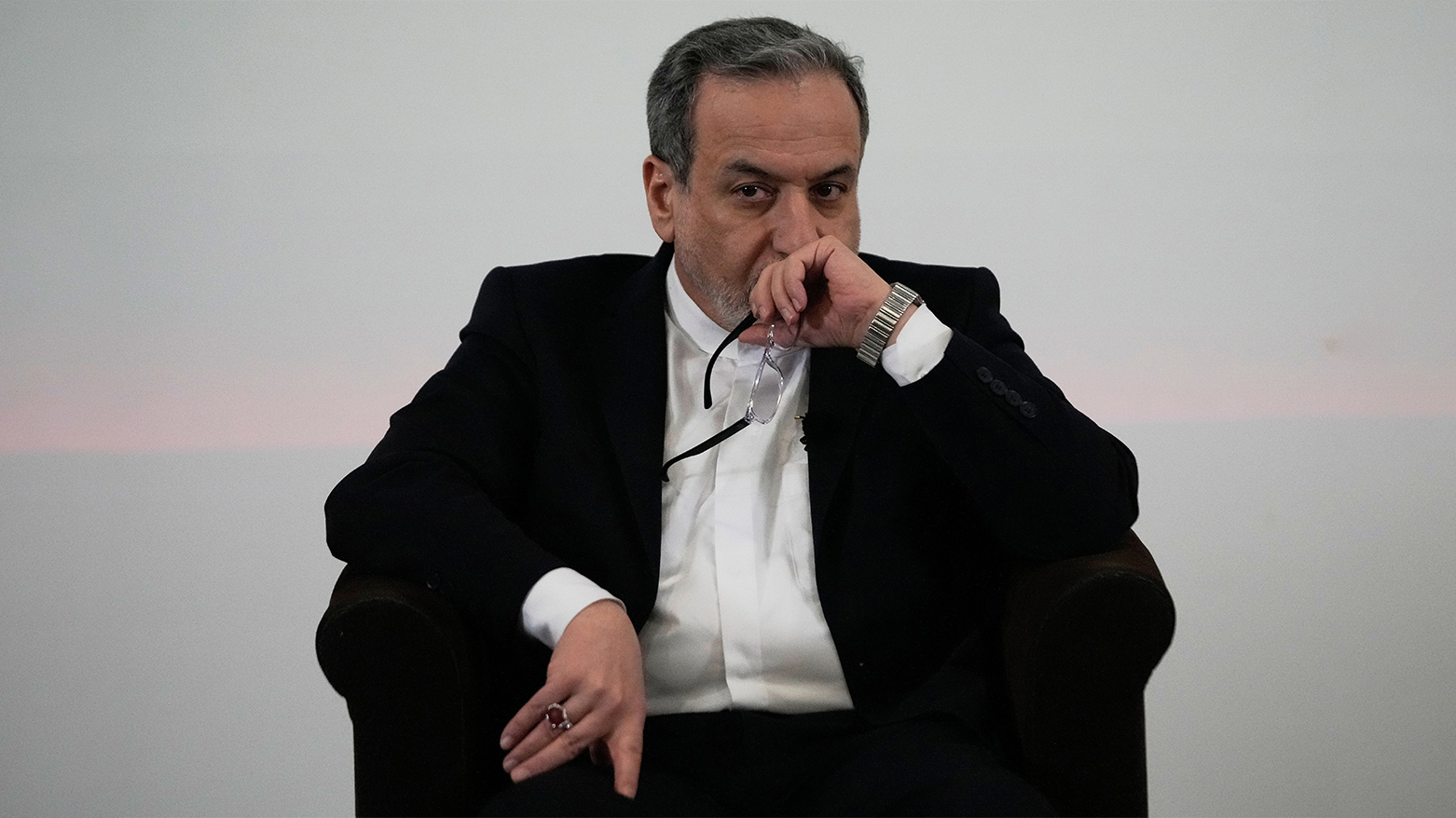
ERBIL (Kurdistan24) - Iran’s Foreign Minister Abbas Araghchi said Monday that U.S. military strikes against Iran have failed to achieve their objectives and reaffirmed Tehran’s commitment to continue defending itself “as long as it takes,” following the selection of Mojtaba Khamenei as the country’s new supreme leader. Speaking from Tehran in a televised interview with PBS News, Araghchi characterized recent attacks on Iranian infrastructure and civilians as unlawful acts of aggression, and dismissed the prospect of renewed negotiations with Washington.
“The option plan A was a failure, and now they are trying other plans, but all of them have failed as well,” Araghchi said, referring to U.S. and Israeli military operations. He said that the attacks targeted residential areas, hospitals, schools, and infrastructure, resulting in destabilization across the region and disruptions to global oil markets. “The oil production, the transportation of oil has been slowed down or stopped not because of us, because of the attacks and aggression made by Israelis and Americans against us,” he said.
Araghchi rejected the idea that Iran would reopen talks with the United States, citing previous negotiations in June 2025 that were followed by U.S. attacks. “We finally accepted [negotiations]. But, again, after three rounds of negotiation, and after the American team in the negotiation said itself that we made a big progress, still they decided to attack us. So I don't think talking with Americans anymore would be on our agenda anymore,” he said.
The foreign minister also addressed the deadly strike on a girls’ school in Minab, southern Iran, in which more than 170 students were killed. Araghchi disputed public statements from U.S. officials denying involvement, saying, “It is now a consensus that the attack is made by the United States, and they are in charge of the killing of 168 schoolgirls who were absolutely innocent.” He contrasted this with Iranian military operations abroad, saying civilians were not targeted intentionally and that any collateral damage was unplanned.
In response to regional criticisms, including from Saudi Arabia, regarding Iranian strikes on oil facilities in neighboring countries, Araghchi asserted Tehran’s right to self-defense. “If [other nations] have all rights to take all necessary measures to protect their facilities, I think we have more rights to take all necessary measures to defend ourselves, to protect our people,” he said. “This is not our war. This is not our choice. This war is imposed on us.”
Araghchi provided additional details on Iranian military capabilities and ongoing operations, noting that despite attacks on nuclear and missile facilities, Tehran has maintained its program and remains prepared for continued action. “They have attacked many of our facilities. They have attacked our nuclear facilities, but they couldn’t destroy our nuclear program because it is technology advanced and developed by ourselves. They have also attacked our missile facilities, but they have not been able to stop firing missiles against themselves,” he said.
He characterized public support within Iran as strong and widespread. “We have now millions of people in the streets right now in support of the Islamic Republic, in support of the new supreme leader, in support of the military armed forces. People are angry about this aggression. They are supporting our armed forces. They are in the streets with the Iranian flags everywhere,” Araghchi said.
The foreign minister’s comments followed the March 5 selection of Mojtaba Khamenei as the new supreme leader, which Araghchi described as demonstrating continuity and stability within Iran’s leadership. When asked whether the new supreme leader would engage with the United States, he said it was too early for any official statements but reiterated that the U.S.-Iran negotiations track was effectively closed.
Araghchi emphasized that Iran views its operations in the region as defensive and legally justified under international law. He said the U.S. and Israel’s actions had generated instability in the Persian Gulf, affecting shipping and oil deliveries. “We have not closed the Strait of Hormuz. We have not – we are not preventing them to navigate in that strait. But this is the result of the aggression by Israelis and Americans, which has made the whole region insecure, unstable. And the consequences are huge for not only us, but for the whole region, and now for the international community,” he said.
The foreign minister outlined Iran’s stance on military retaliation, noting that attacks on foreign installations were a response to aggression rather than preemptive or strategic targeting of civilian areas. “We are facing an act of aggression, which is absolutely illegal. And what we are doing is the act of self-defense, which is legal and legitimate,” he said. Araghchi indicated that Iranian forces could continue operations against U.S. and Israeli regional bases as a defensive measure, stressing that the escalation was not initiated by Tehran.
Regarding reports of attacks on oil facilities in neighboring states, Araghchi said Iran had warned regional governments that U.S. strikes on Iranian territory would compel a defensive response, which could include military action affecting infrastructure abroad. “Since we cannot reach the American soil, we have to attack their bases in the region, their facilities, their installations, their assets. And as a result, the war would be spread into the whole region,” he said.
The interview also addressed recent statements by U.S. officials suggesting the targeting of Iranian nuclear and military infrastructure might be intended to weaken domestic support for the regime. Araghchi rejected this premise, noting high public mobilization and support for the armed forces, and said any protesters were aligned with national defense rather than opposition to the government.
Araghchi repeatedly stressed that Iranian operations were defensive in nature. “We are well prepared to continue attacking them with our missiles as long as needed and as long as it takes,” he said. He reiterated that U.S. military actions, including strikes on civilian facilities, had exacerbated regional instability and disrupted international oil markets.
The PBS News interview concluded with Araghchi reiterating Iran’s position on the ongoing conflict, the defense of its territory, and the continuity of its leadership under Mojtaba Khamenei. “Thank you indeed. Thank you for having me,” he said.
Iranian officials maintain that U.S. and Israeli operations have failed to achieve their objectives, have inflicted civilian casualties, and prompted Tehran to continue defensive military measures, while ruling out renewed negotiations with Washington.