Iraq Vows Legal Action After Drone Strikes Target Diplomatic Missions in Erbil
Iraq’s Supreme Judicial Council and Ministry of Foreign Affairs confirmed ongoing legal and security measures to protect diplomatic missions and state institutions.
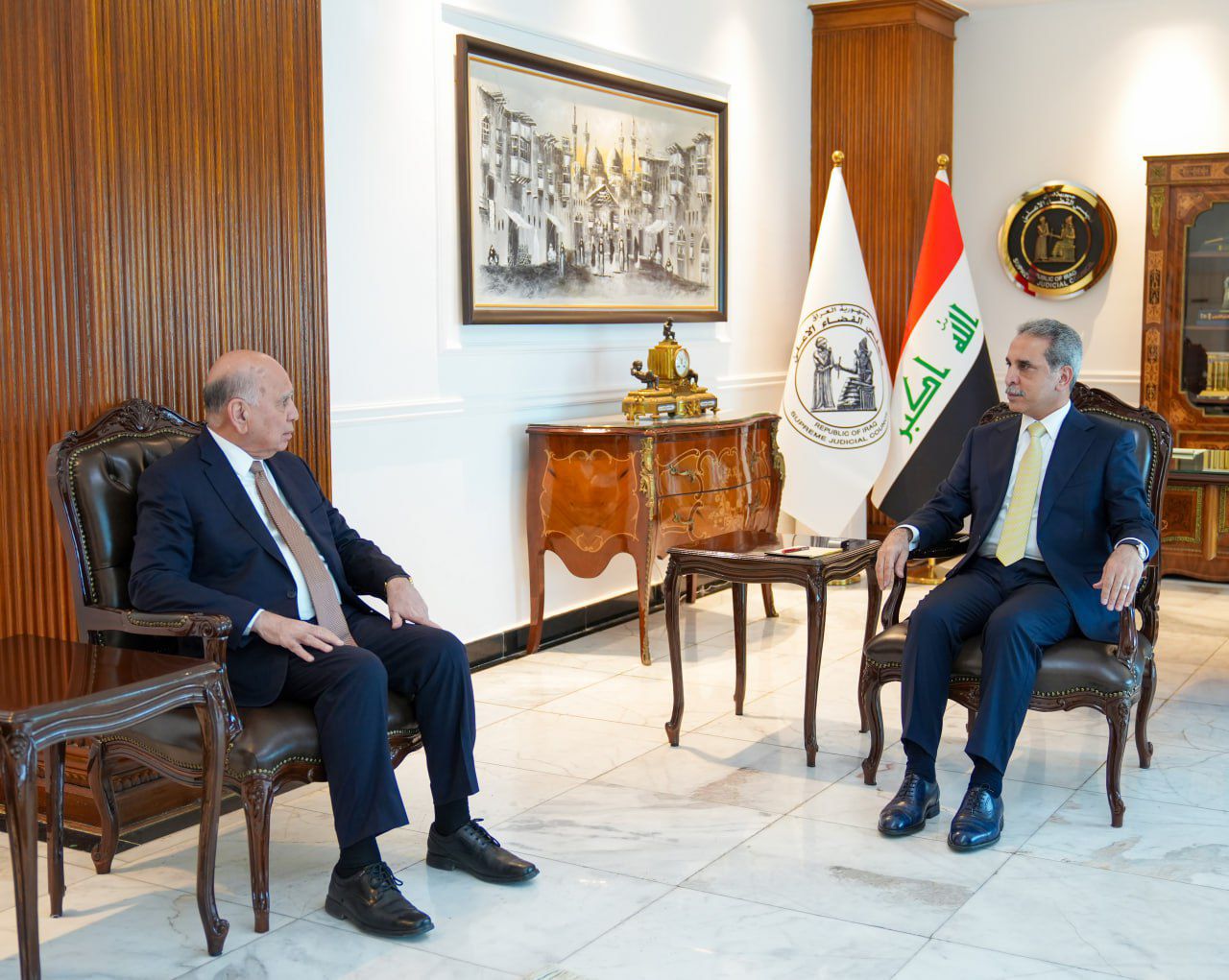
ERBIL (Kurdistan24) - Faiq Zidan, President of Iraq’s Supreme Judicial Council, said Tuesday that legal action will be pursued against individuals responsible for attacks on diplomatic missions and state institutions, following a meeting with Iraqi Foreign Minister Fuad Hussein in Baghdad.
The meeting, according to a statement from the Media Office of the Supreme Judicial Council, addressed judicial and legal procedures against perpetrators of terrorist crimes targeting diplomatic missions, government facilities, and citizens in Iraq.
The announcement follows an attempted attack on diplomatic missions in the Kurdistan Region late Monday, which was thwarted by Coalition forces. At 10:24 PM on March 9, 2026, three explosive-laden drones were intercepted and shot down over Erbil, the Kurdistan Counter-Terrorism Directorate reported.
Fragments from one drone fell near the Consulate of the United Arab Emirates, though no casualties were reported. The Council and Foreign Ministry emphasized that such attacks represent violations of Iraqi sovereignty and underscored Iraq’s commitment to protecting foreign missions.
Earlier Tuesday, the Popular Mobilization Forces (PMF/Hashd al-Shaabi) reported fatalities and injuries in a separate attack targeting their units in Kirkuk Province.
According to the Security Media Cell of the Joint Operations Command, several fighters were killed in the Dibis district following a bombardment, with additional personnel wounded and transported to hospitals for treatment.
The statement condemned the incident as a “criminal aggression” against the PMF and reiterated that the attacks constituted violations of Iraqi territorial integrity.
Kurdistan24 correspondents in Kirkuk reported that the headquarters of the PMF’s 40th Brigade, also known as the Imam Ali Battalions, was bombarded twice by fighter jets. Jawdat Assaf, the PMF spokesperson in Kirkuk, said there were no deaths at the base in the initial attack, though a Kirkuk police source reported five wounded personnel.
Soran Kamaran, Kurdistan24 correspondent in Kirkuk, later confirmed that the bombardment resulted in five deaths and 18 injuries, with the wounded transferred to Altun Kupri (Pirdê) hospital and described as being in critical condition.
PMF personnel in Anbar province were also wounded, with four reported injured due to the ongoing attacks.
The Dibis district, located northwest of Kirkuk, hosts PMF and Iraqi Army forces tasked with securing the area against residual ISIS elements and safeguarding regional security.
PMF bases along the Kirkuk border have previously been subject to attacks, but the use of airstrikes in the latest incident marked a first for the area. The Joint Operations Command emphasized that the bombardment was not aimed solely at specific units but violated Iraqi sovereignty.
Separately, Iraqi Foreign Minister Fuad Hussein held a telephone discussion with Kaja Kallas, the European Union High Representative for Foreign Affairs and Security Policy, regarding regional security developments and the impact of the ongoing war on Iraq.
According to a Foreign Ministry statement, Kallas expressed the EU’s concern over attacks on Iraqi soil and stressed the importance of respecting Iraqi sovereignty. Both officials discussed international and regional efforts to reach a ceasefire, limit conflict expansion, and mitigate negative effects on regional and European security and economies.
They agreed to continue communication and coordination to monitor developments and support initiatives aimed at reducing tensions.
Prime Minister Mohammed Shia al-Sudani also spoke by phone with U.S. Secretary of State Marco Rubio regarding regional security and strategic issues, according to a statement from the Prime Minister’s office.
Sudani reiterated Iraq’s full commitment to protecting diplomatic missions, embassies, and consulates within its borders, and emphasized that the Iraqi armed forces are charged with defending these centers.
He noted that all authorities and political forces in Iraq agree that the country should not be drawn into military conflicts while firmly rejecting violations of its airspace by any party.
Tommy Pigott, Deputy Spokesperson for the U.S. Department of State, confirmed the call and said Secretary Rubio strongly condemned terrorist attacks carried out by Iran and its affiliated militia groups within Iraq, including in the Kurdistan Region. The U.S. official emphasized support for Iraq’s sovereignty and security amid ongoing regional hostilities.
The meeting between Zidan and Hussein, combined with the recent thwarted drone attack, reflects heightened concerns over the safety of diplomatic missions in Iraq.
Security officials noted that the intercept of three explosive-laden drones over Erbil prevented potential casualties and damage to consular facilities. Coalition forces’ actions were coordinated with Iraqi security authorities, highlighting cooperation between national and international actors in counterterrorism efforts.
The attacks on the PMF in Kirkuk and Anbar, along with the attempted drone strikes over Erbil, underscore continuing security threats in Iraq.
The Dibis district’s strategic location northwest of Kirkuk has made it a recurrent target for attacks on both Iraqi Army and PMF forces. Local and national authorities continue to maintain heightened vigilance to prevent further assaults and ensure the protection of personnel and civilians in these areas.
According to the Supreme Judicial Council, legal measures against attackers of diplomatic missions will involve judicial investigations and prosecution of individuals responsible for terrorist activities.
The Council and Ministry of Foreign Affairs emphasized that protecting foreign missions is a central responsibility of Iraqi security forces, and all measures will be pursued in line with domestic law and international obligations.
The Joint Operations Command reiterated its condemnation of attacks on PMF units and highlighted the importance of safeguarding Iraq’s sovereignty and security infrastructure.
The incidents in Kirkuk and Anbar, including fatalities and injuries among fighters, demonstrate the continuing threat posed by militant groups and the need for coordinated security responses.
International officials have highlighted the broader implications of attacks on Iraq’s territory.
The EU and U.S. have both expressed concern over the destabilizing impact of ongoing regional hostilities and the potential spillover effects on civilian populations and regional stability.
Hussein and Kallas emphasized the need for ongoing diplomatic and security coordination to monitor developments and support measures aimed at reducing tensions.
Security officials in the Kurdistan Region stressed that the recent thwarted attack on diplomatic missions demonstrates the ongoing risk posed by terrorist actors.
The interception of explosive-laden drones over Erbil, without casualties, indicates the effectiveness of counterterrorism measures but also highlights the persistent threats facing Iraq’s urban centers and foreign missions.
The PMF, tasked with securing border regions and combating residual terrorist activity, continues to operate under challenging conditions, with bases in Kirkuk and Anbar targeted in successive attacks.
Authorities confirmed that casualties from recent bombardments have been hospitalized, and investigations into the incidents are ongoing. Security forces continue to assess risks and maintain operational readiness to prevent further incidents.
Efforts by Iraq’s judicial and security institutions to address attacks on state institutions and diplomatic missions reflect an integrated approach to countering threats.
Legal measures, military readiness, and international coordination form part of a multi-layered response to recent escalations. Both domestic and international officials have stressed the importance of adherence to Iraqi sovereignty, the protection of personnel and infrastructure, and the pursuit of legal accountability for attacks.
The ongoing focus on safeguarding diplomatic missions coincides with broader regional concerns over conflict escalation. Iraqi authorities continue to engage with international partners to monitor threats, coordinate security efforts, and support initiatives aimed at stabilizing the region.
Iraqi officials reiterated that all measures to protect diplomatic missions, PMF bases, and state institutions are consistent with national law and international obligations.
Security authorities have confirmed ongoing investigations into attacks and have pledged to pursue legal action against those responsible, including perpetrators of recent drone strikes over Erbil.
Iraq’s Supreme Judicial Council and Ministry of Foreign Affairs emphasized the centrality of protecting diplomatic missions as part of their core mandate. Judicial proceedings and security operations aim to deter future attacks, hold perpetrators accountable, and uphold the sovereignty and safety of Iraq’s institutions.