Kurdistan Marks 123rd Birth Anniversary of Kurdish Leader Mulla Mustafa Barzani
Kurdistan marked the 123rd anniversary of Mulla Mustafa Barzani’s birth, honoring the Kurdish leader who led decades of uprisings, secured autonomy, and shaped the modern Kurdish national movement.
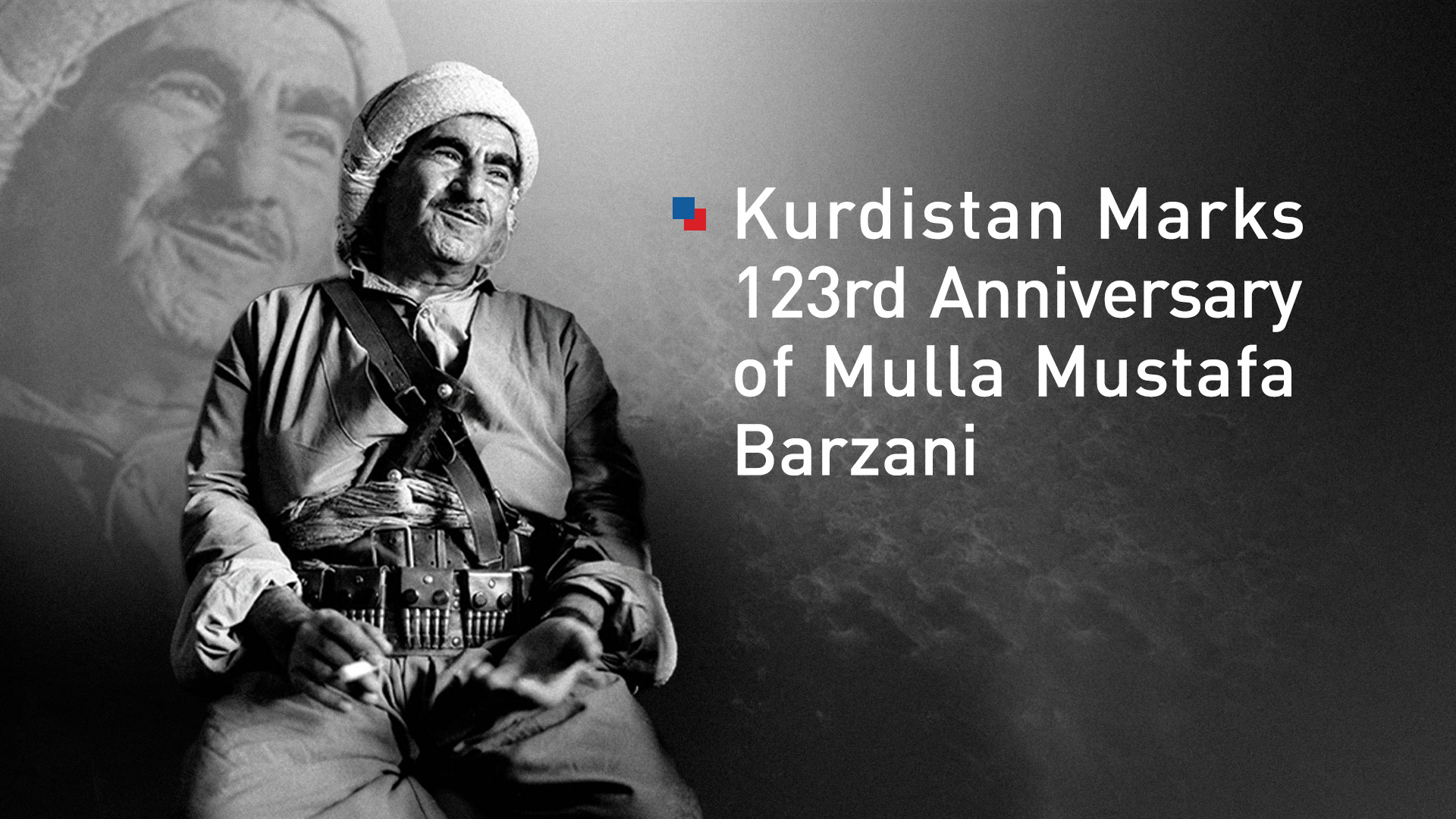
ERBIL (Kurdistan24) - Kurdistan marked the 123rd anniversary of the birth of Mulla Mustafa Barzani on Saturday, honoring the late Kurdish leader who led decades of political and military efforts to secure the rights and autonomy of the Kurdish people. Barzani, born on March 14, 1903, in the village of Barzan, was recognized as a central figure in the Kurdish liberation movement, whose life and career became emblematic of the modern Kurdish struggle.
Barzani, the son of Sheikh Mohammad Barzani, experienced imprisonment and exile from a young age. At three, he and his mother, Khadija Khan, were placed in Mosul’s prisons, an early experience of displacement and repression that officials said shaped his later leadership and revolutionary character.
Over the course of the 20th century, Barzani emerged as a key figure in multiple Kurdish uprisings and military campaigns, defending Kurdish autonomy and fostering national cohesion.
During the short-lived Republic of Kurdistan in Mahabad in 1946, Barzani was appointed as a General and Commander of the Peshmerga forces. Officials noted his role in providing the primary defense of the republic and coordinating the republic’s military efforts.
Following the collapse of Kurdistan Republic in Mahabad, Barzani and approximately 500 Peshmerga forces undertook a strategic retreat across the Aras River, traversing hostile territories in Iraq, Iran, and Türkiye to reach the Soviet Union.
The maneuver has been cited in historical accounts as a significant military operation demonstrating logistical skill and perseverance.
After returning to Iraq in 1958, Barzani led what is known as the Great September Revolution, beginning on September 11, 1961, in response to renewed government oppression.
The movement, officials said, was the largest nationwide Kurdish uprising of the era, encompassing a broad coalition of communities, including Muslims, Christians, Yezidis, Turkmens, and Arabs.
The revolution culminated in the signing of the March 11, 1970 Accord, which granted formal recognition of Kurdish cultural and linguistic rights and established the principle of regional autonomy for the Kurdish population within Iraq.
Barzani was described by contemporaries as both a military strategist and an intellectual leader.
He emphasized peaceful coexistence, tolerance, and the protection of civilians and prisoners of war. Reports note that he instituted strict guidelines for Peshmerga forces to limit harm to noncombatants and maintain humanitarian standards, shaping the Kurdish liberation struggle with a codified ethical framework.
Barzani spent more than five decades advancing the Kurdish national cause.
He died on March 1, 1979, in the United States following an illness. His remains were repatriated first to East Kurdistan in Iran and, after the 1991 Spring Uprising, to the Kurdistan Region, where they were interred in his birthplace in the Barzan area.
Officials and local leaders marking the anniversary highlighted Barzani’s enduring influence on contemporary Kurdish politics.
The current Kurdish leadership, including President Masoud Barzani, continues to reference his principles in efforts to safeguard the Kurdistan Region’s political entity, consolidate social coexistence, and advance constitutional and national rights within a federal Iraq, according to statements issued by regional authorities.
Saturday’s commemoration included public ceremonies and official tributes across the Kurdistan Region, emphasizing the symbolic and historical importance of Barzani’s legacy. Observers noted that the anniversary serves both as a remembrance of past struggles and as a reaffirmation of ongoing commitments to the principles he championed.
As 123 years have passed since his birth, Mulla Mustafa Barzani remains a defining figure in Kurdish history, recognized for his leadership in military, political, and social spheres and for establishing a framework for the Kurdish national movement that continues to influence regional governance and identity.