Israel Targets Top Palestinian Islamic Jihad Commander in Iran
Israel says it struck Akram al-Ajouri, head of Palestinian Islamic Jihad’s military wing, in Iran. The commander, linked to Gaza operations and Iran, was targeted but his fate remains unconfirmed, Israeli officials reported.
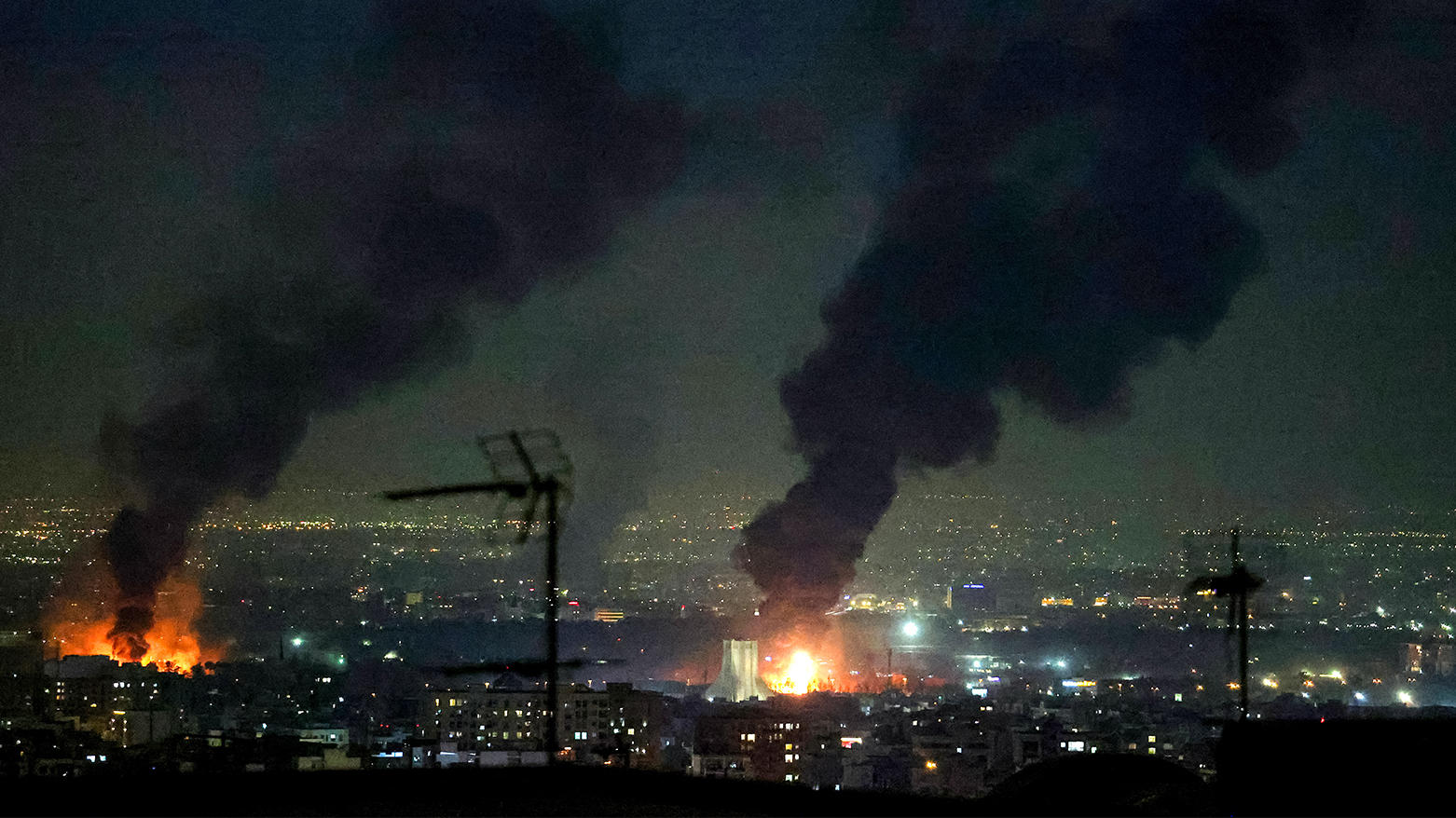
ERBIL (Kurdistan24) - Israel’s military said Tuesday, March 17, 2026, that it targeted Akram al-Ajouri, head of the military wing of the Palestinian Islamic Jihad (PIJ), in a strike in Iran. A military official told reporters during a briefing, “We conducted a strike against Akram al-Ajouri,” adding that the “senior commander in the Islamic Jihad of Gaza” had been living in Iran and had not been confirmed killed.
Palestinian Islamic Jihad, an ally of Hamas backed by Iran, played a key role in the October 7, 2023 attack on Israel that sparked the current conflict in Gaza, the military official said. The operation marks the latest in Israel’s series of targeted strikes against figures it considers central to militant operations against the country, AFP reported.
The announcement came amid further developments in the region.
Israel’s Defense Minister Israel Katz said that Iran’s national security chief, Ali Larijani, and the head of the Revolutionary Guard’s Basij militia, Gen. Gholam Reza Soleimani, were killed in overnight airstrikes. “I have just been updated by the Chief of Staff that Larijani, Secretary of the Supreme National Security Council, and the head of the Basij – Iran's central repression apparatus – (Soleimani), were eliminated last night,” Katz said, according to AFP reporting.
Iranian state media did not immediately confirm the deaths but said a message from Larijani’s office would be published shortly.
Israeli media had reported earlier that Larijani was the target of an overnight strike. Public broadcaster Kan described the incident as an “assassination attempt,” while television station N12 said the outcome of the strike was “still being reviewed.”
Israel’s military chief, Lt. Gen. Eyal Zamir, issued a statement noting that “significant preventive achievements were recorded overnight,” without providing further details on the target or casualties. AFP also reported on Katz’s statement, emphasizing official confirmation of the strike’s objectives.
Larijani, a former parliamentary speaker and senior adviser to Iran’s late Supreme Leader Ayatollah Ali Khamenei on nuclear negotiations, headed the Supreme National Security Council, overseeing Iran’s intelligence and strategic operations.
Soleimani commanded the Basij, a paramilitary force within the Islamic Revolutionary Guard Corps described by Israel as an “armed apparatus of the Iranian terror regime.”
The Basij has been central in suppressing domestic protests, and Israel’s military noted its involvement in widespread arrests and violent repression of demonstrators. The U.S. Treasury and the European Union have sanctioned Soleimani for his role in these activities.
The overnight strikes coincided with intensified Iranian attacks across the Gulf region, AP reported. Tehran launched missiles and drones at the United Arab Emirates, Saudi Arabia, Qatar, and Israel. Dubai briefly closed its airspace after intercepting incoming missiles, while debris from a missile downed over Abu Dhabi killed one person.
Iran also struck an oil facility in the Emirate of Fujairah, with no injuries reported, and a tanker anchored off the UAE coast sustained minor damage. These actions have disrupted shipping in the Strait of Hormuz, a critical global oil route.
Israel also reported a “wide-scale wave of strikes” across Tehran, targeting command centers, missile launch sites, and air defense systems. In Lebanon, Israeli forces intensified attacks on Hezbollah positions. The Lebanese military confirmed that two soldiers were seriously wounded in an airstrike on the village of Kfar Sir.
More than 1,300 people have been killed in Iran since the start of the conflict, according to the Iranian Red Crescent. The Lebanese government reported roughly one million displaced persons and at least 850 fatalities from the strikes.
The strikes are part of a pattern of operations targeting high-ranking Iranian officials and military assets.
They follow the February 28, 2026, U.S.-Israel offensive that killed Iran’s Supreme Leader Ayatollah Khamenei and other key figures within Tehran’s leadership, AP reported. Israeli officials have not released casualty figures for Larijani or Soleimani, and independent verification remains unavailable.
The developments have also intensified global energy market concerns. The near-closure of the Strait of Hormuz has curtailed oil exports, affecting shipping from the Gulf.
Iran’s parliamentary speaker, Mohammad Bagher Qalibaf, said the country had “no choice” but to continue pressure on shipping routes. Brent crude remained over $100 per barrel, up more than 40% since the conflict began.
U.S. President Donald Trump requested several nations to send warships to maintain navigation through the strait, though no immediate commitments were reported.
Iranian attacks have continued inside Iraq.
The U.S. Embassy in Baghdad was struck by drones, which Iraqi air defenses intercepted, and a separate strike hit a house in the Presidential Compound in Baghdad’s al-Jadriya district, though the responsible party remains unclear. Iran-aligned militias have regularly targeted U.S. positions in Iraq since the start of the conflict, AP noted.
The reported deaths of Larijani and Soleimani would remove two central figures in Iran’s military and security hierarchy.
Larijani’s oversight of intelligence and strategic planning, combined with Soleimani’s control over internal repression via the Basij, could affect Tehran’s command and control of domestic security and paramilitary operations. Israeli officials have emphasized that the strikes achieved their preventive objectives, although casualty figures and broader operational impacts remain under review.
Lt. Gen. Eyal Zamir said Israel’s army is “determined to deepen the operation until all of our objectives are achieved,” signaling ongoing military engagement in both Iran and Lebanon.
Early Tuesday, Iran launched missile salvos toward Tel Aviv and areas south of the Sea of Galilee, while additional launches were reported from Lebanon. Twelve Israeli civilians and at least 13 U.S. military personnel have been killed during the current escalation, AP reported.