U.S. Reviews Troop Options as Iran Conflict Approaches Fourth Week
The United States is considering additional troop deployments and preparing contingency plans as the conflict with Iran continues, with no final decision announced on ground operations.
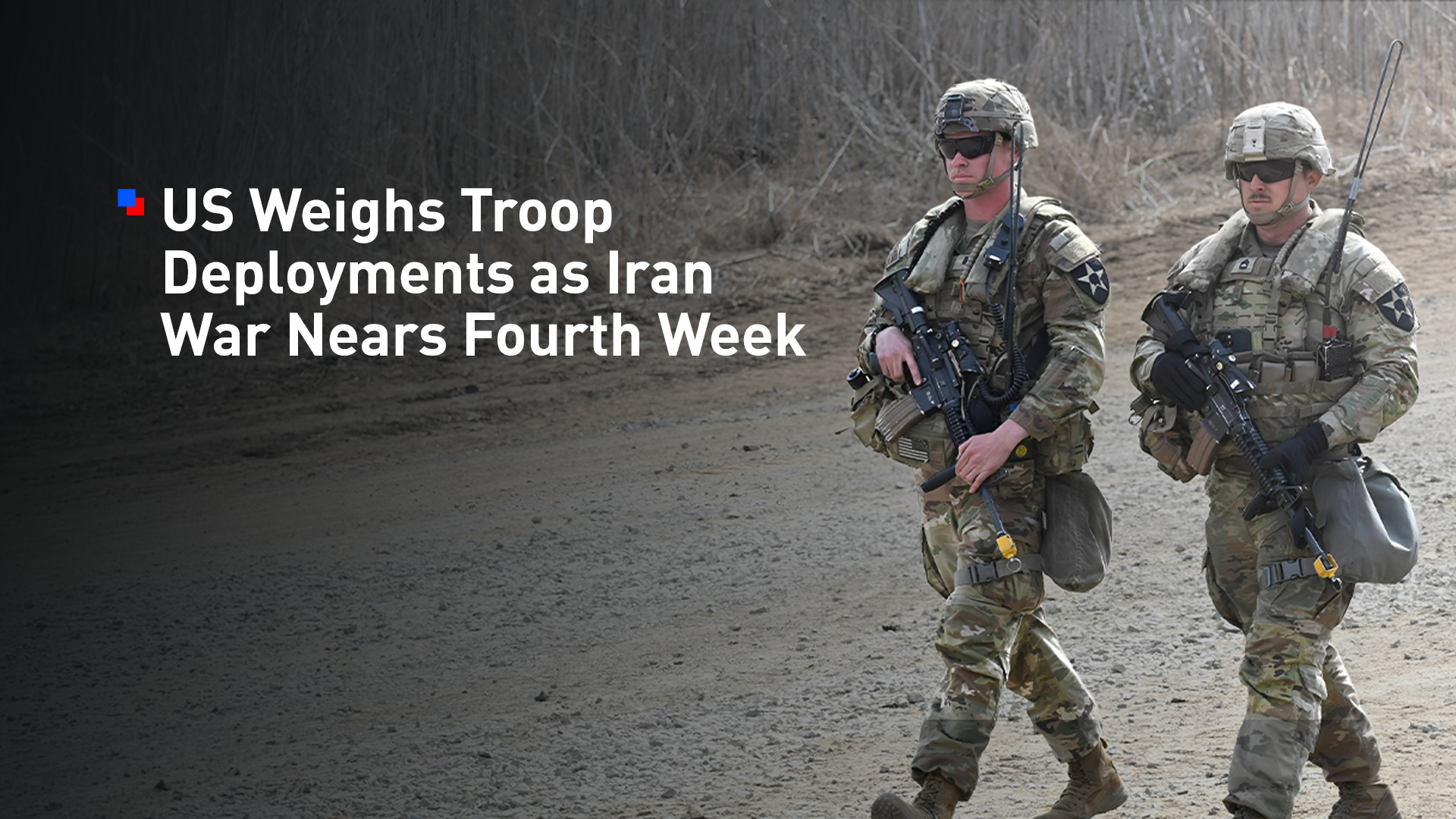
ERBIL (Kurdistan24) - The United States is considering deploying thousands of additional troops to the Middle East as part of ongoing military planning related to the war with Iran, according to U.S. officials and reporting by Reuters and CBS News.
The potential deployment, which has not been formally approved, comes as the conflict approaches the end of its third week and amid continued disruptions to maritime traffic through the Strait of Hormuz, a critical global energy route. Officials cited by Reuters said additional forces could be tasked with securing the passage of oil tankers through the waterway, where roughly 20 percent of the world’s oil supply typically transits daily.
According to Reuters, Iran has halted traffic through the strait, contributing to disruptions in oil shipments and rising global energy prices. Commercial vessels carrying goods such as pharmaceuticals and electronic components have also been affected, the report noted.
U.S. officials told Reuters that one possible scenario under consideration involves deploying troops near Iran’s shoreline to support maritime security operations. Another option discussed includes sending forces to Kharg Island, identified as a central hub for Iran’s oil exports, where approximately 90 percent of the country’s crude shipments are processed. Officials cited in the report described such an operation as carrying significant risk due to Iran’s missile and drone capabilities.
A third option under discussion involves securing Iran’s highly enriched uranium stockpiles, which experts cited by Reuters described as a highly complex and dangerous undertaking, even for specialized units.
Despite these considerations, U.S. officials have emphasized that no final decision has been made. “There has been no decision to send ground troops at this time, but President Trump wisely keeps all options at his disposal,” a White House official told Reuters.
Separate reporting by CBS News indicated that Pentagon officials have made detailed preparations for the potential deployment of ground forces, with senior military commanders submitting specific operational requests. Sources briefed on the discussions told CBS News that planning has included contingencies for detaining Iranian military personnel in the event of ground operations.
President Donald Trump, speaking to reporters in the Oval Office, said, “No, I'm not putting troops anywhere,” but added, “If I were, I certainly wouldn't tell you,” according to CBS News. The White House press secretary, Karoline Leavitt, stated that military preparations are part of routine planning to provide the president with options and do not indicate a decision has been made.
Military movements in the region are already underway. According to CBS News, the United States is preparing to deploy elements of the 82nd Airborne Division, while Marine units have been dispatched from the United States. One expeditionary unit, consisting of approximately 2,200 Marines and supported by three warships, departed California earlier this week, while another unit sent from the Pacific is still en route.
The preparations involve components of the Army’s Global Response Force and the Marine Corps’ expeditionary units, according to the report. Officials said these deployments are part of broader efforts to expand operational flexibility.
Reuters also reported that it remains unclear how many additional troops could ultimately be deployed, as well as the timing and location of any potential deployment. Sources cited in the report said they do not expect an immediate deployment of additional ground forces into Iran.
The deliberations come as the conflict continues to expand across the region. According to figures cited in the reports, at least 13 U.S. military personnel have been killed since the start of hostilities on February 28. More than 1,300 people in Iran have been killed, while Israeli operations have displaced more than one million people in Lebanon, according to the Lebanese government, which also reported 968 fatalities. In Israel, 15 people have been killed in Iranian missile attacks.
The reports also highlighted domestic political considerations in the United States. Recent polling cited by Reuters indicates that a majority of Americans oppose military action against Iran, while some political allies of President Trump have expressed caution about deploying ground troops.
At the same time, administration officials have reiterated that current military actions are tied to broader objectives. A statement attributed to the White House in the Reuters report said the president is focused on achieving the defined goals of the operation, including targeting Iran’s military capabilities and preventing it from acquiring nuclear weapons.
CBS News reported that U.S. Central Command referred inquiries about potential troop deployments to the White House and the Pentagon, both of which declined to provide detailed comment on operational planning.
The evolving military posture reflects a widening set of options under review by U.S. leadership as the conflict continues without a defined timeline for resolution. Officials cited in both Reuters and CBS News reports emphasized that planning efforts are ongoing and that no final decisions have been announced regarding the use of ground forces.