UK Deploys HMS Anson to Northern Arabian Sea as Iran Threatens Shipping Lanes
The Royal Navy submarine is now positioned in the northern Arabian Sea, fully armed and ready for potential operations while UK and US officials continue to monitor the evolving situation.
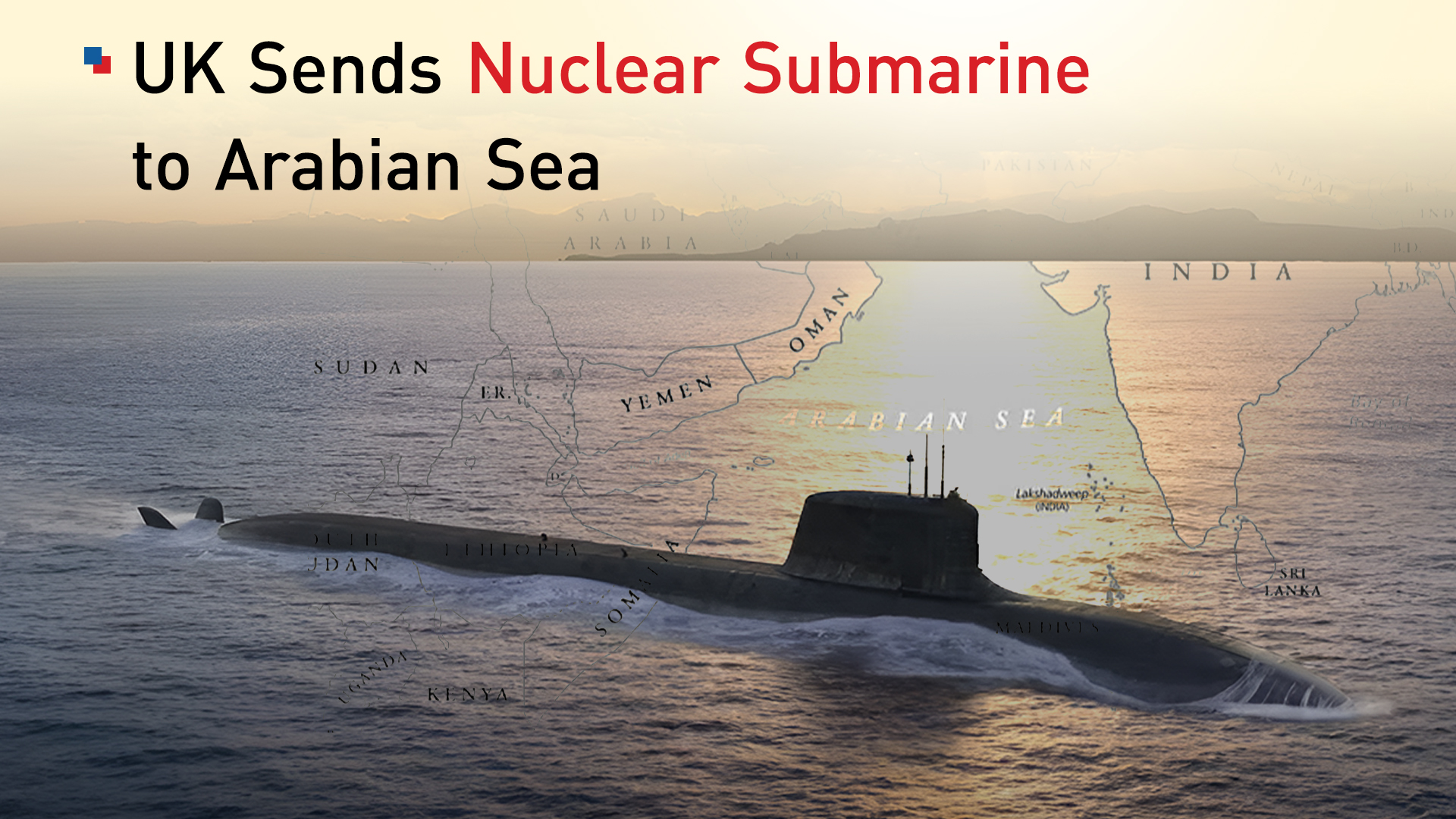
ERBIL (Kurdistan24) - A nuclear-powered Royal Navy submarine, HMS Anson, has arrived in the Arabian Sea, providing the United Kingdom with the capability to launch long-range cruise missile strikes, military sources confirmed. The vessel, equipped with Tomahawk Block IV land-attack missiles and Spearfish heavyweight torpedoes, left Perth, Australia, on March 6 and is now believed to be positioned in the northern Arabian Sea, according to the report by the Daily Mail. The deployment comes as tensions in the region escalate following Iranian attacks on international shipping and threats to close the Strait of Hormuz.
HMS Anson’s arrival coincides with recent approval by the UK government to allow United States forces to use British bases for potential offensive operations against Iranian targets in the region. Downing Street announced on Friday that Prime Minister Sir Keir Starmer had expanded previously granted permissions, which had limited US access to defensive measures protecting British interests, to include broader action under the framework of collective self-defense to safeguard commercial shipping in the strait.
Defence sources said that the submarine, which has travelled approximately 5,500 miles from the west coast of Australia, surfaces briefly each day to communicate with the UK’s military headquarters at Northwood, London. Lieutenant General Nick Perry, chief of joint operations at the Permanent Joint Headquarters (PJHQ), would be responsible for authorizing any missile launch upon instructions from the Prime Minister. The vessel’s state-of-the-art systems, including a nuclear reactor and advanced water and air purification capabilities, allow it to operate submerged for extended periods without refueling, although its onboard supplies of food and essentials are limited to three months for 98 crew members.
Military officials described HMS Anson’s deployment as covert, noting that while the Prime Minister and Commander Maritime Operations are informed of its position, operational details are tightly controlled. “Anson will be quietly lurking… her location won’t be widely known,” one source said, adding that the submarine can operate silently for weeks, with restricted onboard amenities to maintain stealth. The Ministry of Defence declined to provide details on the vessel’s specific location, stating in a spokesperson’s note that operational deployments are continuously reviewed.
The deployment occurs in a highly contested maritime environment. Iranian forces maintain a diverse and technologically capable arsenal in the Persian Gulf, including Ghadir-class mini-submarines capable of launching torpedoes and anti-ship cruise missiles, speedboats equipped with torpedoes and missiles, explosive-laden drones, and sea mines, the Daily Mail reported. These assets have been positioned along the northern Persian Gulf and within strategic chokepoints near the Strait of Hormuz, which serves as the sole passage for vessels carrying oil and gas from Iraq, Kuwait, Bahrain, Qatar, Saudi Arabia, and the UAE to international markets.
Recent intelligence indicates Iran has stationed at least 17 submarines in Bandar Abbas, including Kilo-class and Fateh-class vessels. The Fateh-class, reportedly the most operational submersible, is equipped with multiple torpedo tubes and poses significant risks to surface vessels. Former Royal Navy officers emphasized the potential threat posed by even a small number of submarines in the confined waters of the region, highlighting the challenges for maritime commanders. The IRGC’s focus on asymmetric warfare leverages speed, maneuverability, and concealed positions along the coast and islands to threaten shipping lanes and military assets.
Iranian authorities have reportedly reinforced the strait with an array of sea mines, including influence mines activated by proximity sensors and magnetic limpet mines attachable by divers or small boats. Additionally, Iranian forces have developed fast-attack and unmanned surface vessels capable of deploying missiles and explosive payloads to counter superior naval forces. Analysts at the International Institute for Strategic Studies noted that such capabilities complicate any military operation aimed at ensuring freedom of navigation, requiring coordination across air, sea, and land assets.
The United States has also positioned amphibious assault forces in the region. The USS Tripoli, a 50,000-ton vessel en route from Japan, and the USS Boxer, which departed San Diego last week, carry Marine Expeditionary Units and Osprey tilt-rotor aircraft capable of transporting troops to key islands such as Qeshm, Hormuz, or Larak. These forces are positioned to secure strategic locations, including Iran’s Kharg Island oil export terminal, although their deployment depends on degradation of Iranian coastal capabilities and broader operational planning. Military analysts indicated that the operation could involve combined arms tactics, with Marines and amphibious vehicles establishing positions to disrupt Iranian control over shipping lanes and drone operations.
The strategic importance of the Strait of Hormuz has increased following Iranian threats to block oil shipments and attacks on shipping. General Sardar Jabbari, a senior IRGC commander, reportedly stated that Tehran will “not let a single drop of oil leave the region,” underscoring the economic stakes. Iran’s use of intermediate-range ballistic missiles, including the Shahab series, and satellite capabilities further extends its capacity to threaten regional and distant targets, raising concerns among European and American defense planners.
While the deployment of HMS Anson and the authorization of US strikes from British bases underscore London’s strategic positioning, military sources emphasized that operations remain fluid. The Royal Navy has limited surface vessels in the area, with the last minehunter, HMS Middleton, retired earlier this year. The submarine’s presence provides a deterrent and operational flexibility, but officials noted that engagement decisions rest on authorization from national leadership and the evolving situation on the ground.
The complexity of the operational environment in the Arabian Gulf, characterized by Iran’s layered maritime defenses, mined waters, and asymmetric capabilities, presents significant challenges. Analysts have highlighted the need for coordinated surveillance, intelligence, and strike planning to ensure both military effectiveness and the safety of commercial shipping in one of the world’s busiest oil corridors.
The Royal Navy’s deployment of HMS Anson, combined with expanded UK support for US operations and the ongoing positioning of US Marine forces, reflects an international effort to monitor and, if necessary, respond to Iranian actions threatening the Strait of Hormuz. British and American officials maintain that the measures are focused on safeguarding navigation and protecting commercial and allied interests in the region.
HMS Anson remains submerged in the northern Arabian Sea, maintaining readiness to launch long-range strikes while communication with the UK’s Permanent Joint Headquarters continues daily. The vessel’s advanced systems, nuclear propulsion, and onboard endurance allow it to operate discreetly, providing both a deterrent and operational option should further escalation occur in the Gulf.
The deployment of HMS Anson to the Arabian Sea reinforces London’s operational posture in the Persian Gulf and complements broader allied efforts to ensure freedom of navigation through the Strait of Hormuz, amid heightened tensions and Iran’s demonstrated naval capabilities.