Israel Says Iran Fired 400 Missiles, With 92% Intercepted Since Start of War
Israel’s military reiterated Sunday that Iran has launched more than 400 missiles since the start of the war, with most intercepted by its air defense systems.
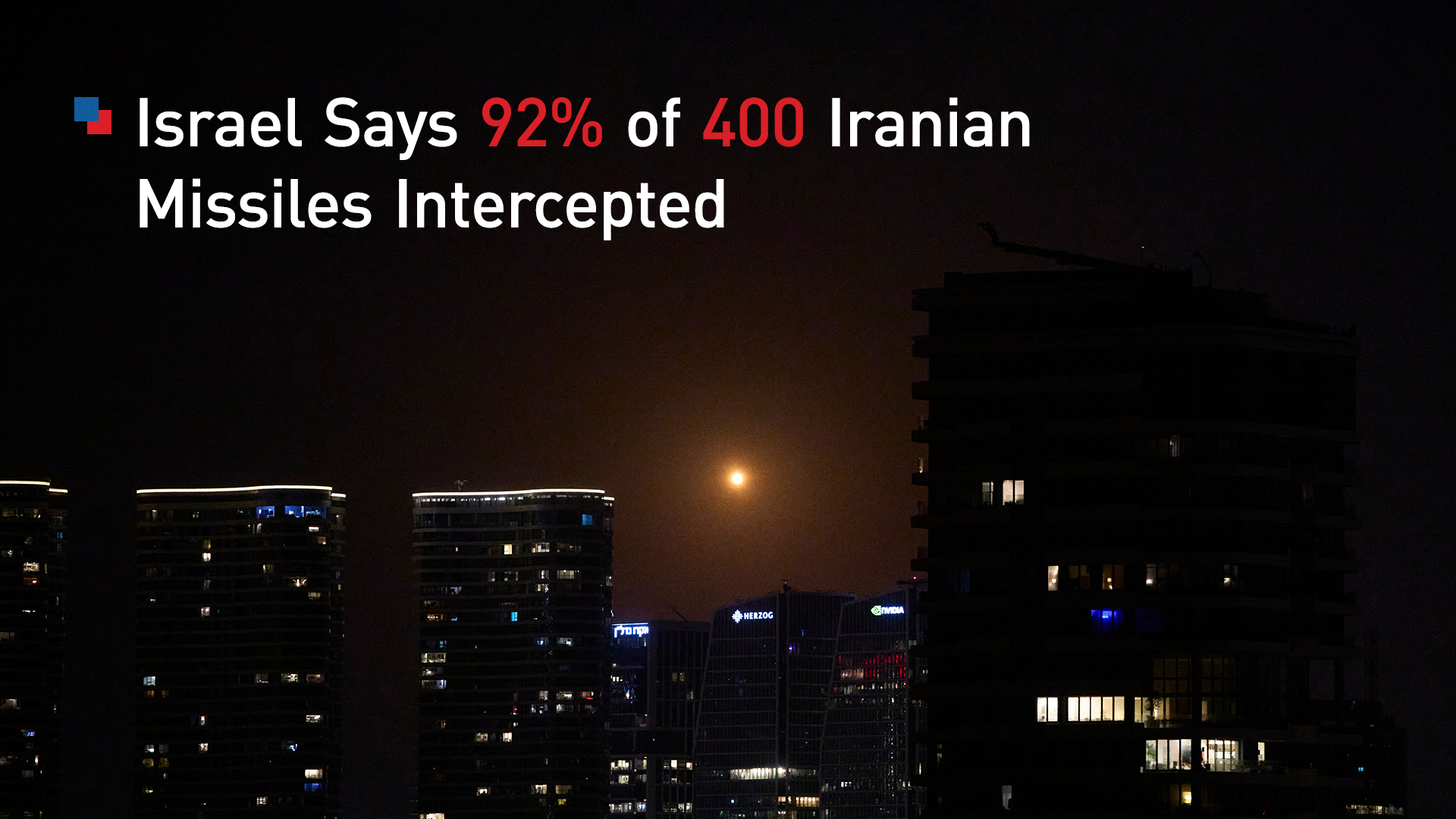
ERBIL (Kurdistan24) - Israel’s military said on Sunday that Iran has fired more than 400 ballistic missiles at Israeli territory since the start of the ongoing conflict, with approximately 92 percent intercepted by air defense systems, according to remarks cited by AFP.
“Iran has fired over 400 ballistic missiles. We have had great interception rates. We have approximately a 92 percent successful interception rate,” Israeli military spokesman Lieutenant Colonel Nadav Shoshani told journalists, outlining the scale of missile activity and the performance of defensive systems.
The statement comes amid continued exchanges of fire across multiple fronts as the conflict enters its fourth week, with regional actors increasingly drawn into the hostilities, according to officials and reports compiled by AFP, AP, and The Wall Street Journal.
Israeli authorities said that despite the high interception rate, some missiles have reached populated areas. According to AFP, Iranian missile strikes on Saturday hit two towns in southern Israel, leaving around 175 people requiring medical treatment. Emergency services responded to the affected areas, where damage to infrastructure and residential buildings was reported.
Separate reporting from AP indicated that the cities of Arad and Dimona were struck, with dozens of casualties recorded in each location. Rescue teams were deployed to search damaged buildings, while medical services transported the wounded to nearby hospitals, officials said.
Israeli military officials confirmed that air defense systems were activated during the attacks, though at least one missile was not intercepted. Brigadier General Effie Defrin, speaking to media outlets cited by AFP and AP, said the incident would be investigated.
The missile attacks were described by Iranian officials as a response to earlier strikes on Iranian territory, including reported attacks on nuclear-related facilities. According to AP, Iranian authorities stated that a strike on the Natanz enrichment facility did not result in radiation leakage, a finding also supported by the International Atomic Energy Agency, which reported no abnormal radiation levels.
The broader conflict has extended beyond Israel and Iran, with regional countries reporting aerial threats and defensive responses. Officials in the United Arab Emirates said air defense systems were actively intercepting incoming missiles and drones, while Saudi Arabia reported intercepting at least one ballistic missile targeting Riyadh and downing several drones, according to statements carried by AFP and AP.
Maritime security has also been affected. Reports from AP indicated that a projectile struck near a commercial vessel north of Sharjah, though no injuries were reported. The incident added to concerns over disruptions in the Strait of Hormuz, a critical global energy transit route.
According to AFP, multiple countries have agreed to coordinate efforts to secure the waterway, citing concerns over attacks on commercial shipping and energy infrastructure. The situation has been described by officials as a significant disruption to maritime traffic, although Iranian authorities have denied restricting passage.
The United States has also signaled potential escalation. According to reporting by The Wall Street Journal and AP, President Donald Trump warned that Iran must reopen the Strait of Hormuz within 48 hours or face further military action. In statements cited by both outlets, Trump said the United States would target Iranian power plants if maritime routes remained restricted.
The Wall Street Journal reported that potential targets could include natural gas-powered electricity facilities, which account for a substantial portion of Iran’s energy production. Data from the International Energy Agency cited in the report indicated that approximately 80 percent of Iran’s electricity generation is derived from natural gas.
At the same time, U.S. military deployments to the region have increased. According to AP, the Pentagon has sent additional warships and thousands of Marines, though officials have not confirmed whether ground forces will be involved in combat operations.
Diplomatic tensions have also intensified. AP reported that Saudi Arabia ordered several Iranian diplomats to leave the country, while regional leaders warned that continued hostilities could further destabilize the region. Indirect diplomatic contacts between the United States and Iran have been reported, though no direct negotiations have been confirmed.
Casualty figures across the conflict continue to rise. AP reported that more than 1,500 people have been killed in Iran, over 1,000 in Lebanon, and additional casualties recorded in Israel and among U.S. forces. Millions have been displaced, particularly in Iran and Lebanon, according to the same report.
As military operations persist across air, land, and maritime domains, officials from multiple countries have indicated that hostilities remain ongoing, with continued missile exchanges and defensive operations reported throughout the region.