South Korea Urges Iran to Guarantee Safe Passage Through Strait of Hormuz Amid Regional Tensions
The call from South Korea’s foreign minister underscores the urgency of securing safe passage through the Strait of Hormuz amid ongoing conflict and disrupted global oil flows.
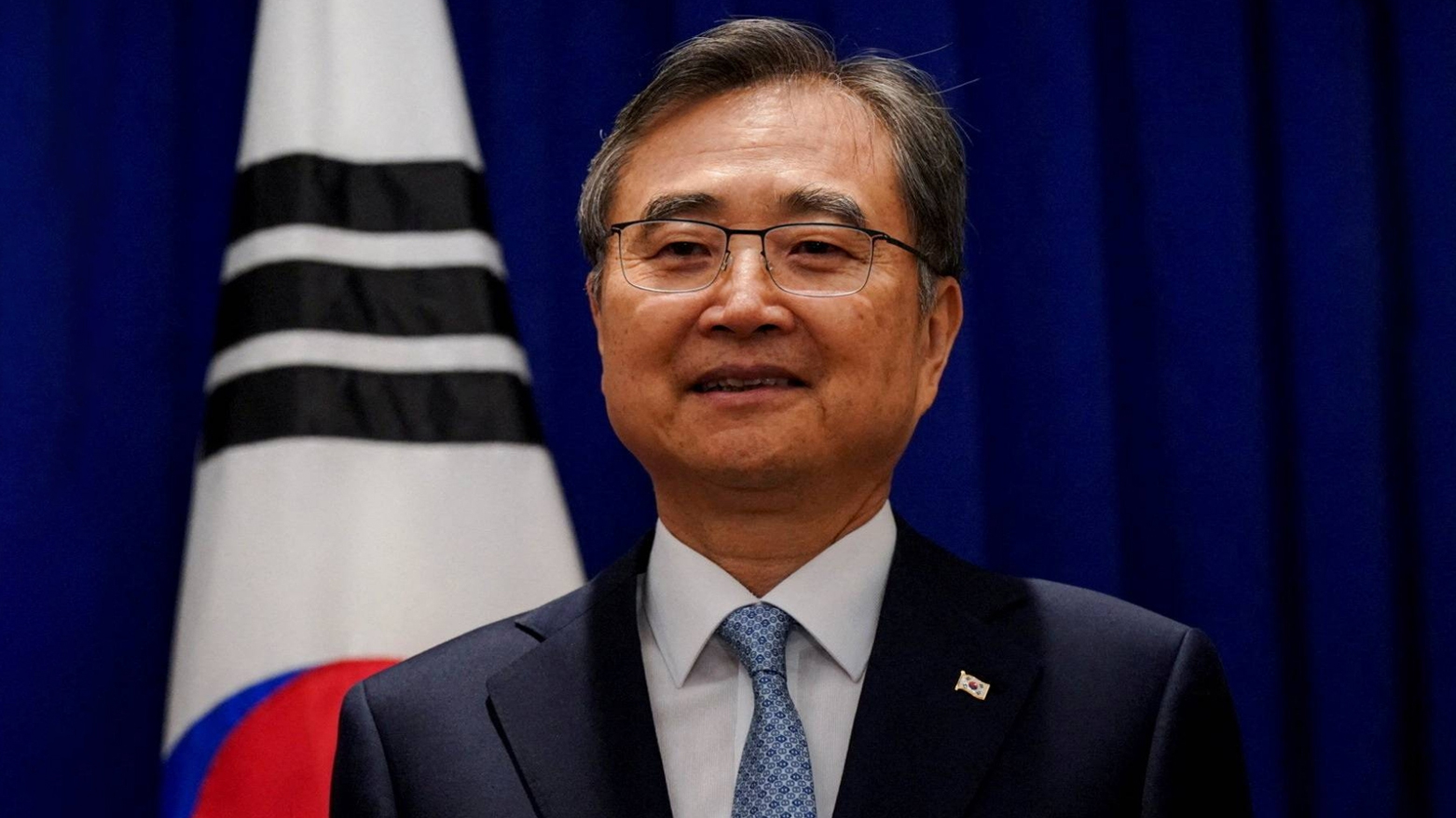
ERBIL (Kurdistan24) - South Korea’s Foreign Minister Cho Hyun called on his Iranian counterpart Abbas Araghchi on Monday to ensure the safe passage of vessels through the Strait of Hormuz, as Seoul faces mounting risks to its energy supplies due to the ongoing conflict in the region, AFP reported.
The call comes after the strategic waterway has been effectively disrupted since late February, following U.S. and Israeli attacks on Iranian targets.
The Ministry of Foreign Affairs in Seoul said Cho emphasized the importance of halting attacks on civilians and civilian facilities in Gulf countries, ensuring secure navigation through the strait, and taking steps to stabilize global energy supplies.
He noted that “multiple vessels of various nationalities, including SKorea's,” remain anchored in the strait, which accounts for roughly one fifth of global oil and gas shipments.
South Korea imports approximately 70 percent of its crude oil via the Strait of Hormuz. The disruption has led the country to impose a fuel price cap for the first time in nearly three decades. According to Worldometer, South Korea consumed around 2.5 million barrels of oil per day as of the end of 2024.
The diplomatic initiative coincides with sharply contrasting accounts between Washington and Tehran regarding potential military action. A senior Iranian security official told Tasnim News Agency on Monday that no negotiations are underway with the United States and attributed the postponement of planned strikes to credible Iranian deterrence measures and economic pressures.
“No negotiations with Trump are taking place,” the official said, adding that multiple messages sent to Tehran since the beginning of the conflict had consistently been met with a commitment to continue defensive measures until the necessary level of deterrence was achieved.
The Iranian official also cited market pressures and threats to U.S. and Western financial instruments as additional factors influencing Washington’s decision to delay attacks.
“With this method of psychological warfare, neither will the situation in the Strait of Hormuz return to its pre-war state, nor will calm return to the energy markets,” he said, also referring to Trump’s previous ultimatum demanding the strait’s reopening as a demonstration of continued U.S. pressure.
President Donald Trump, however, described the decision to postpone strikes via his Truth Social platform as the result of “very good and productive conversations” with Tehran.
He instructed the Department of War to delay planned attacks on Iranian power plants and energy infrastructure for five days, noting that the postponement would remain contingent on the outcome of ongoing discussions expected to continue throughout the week.
The tension between Washington and Tehran has coincided with continued regional military activity. Iranian missile and drone operations have extended beyond Israel into the Gulf, where air defense systems in the United Arab Emirates and Saudi Arabia intercepted incoming threats on Sunday, according to AFP and AP.
The UAE Ministry of Defense said its air defenses were actively responding to missile and drone activity, while Saudi officials reported intercepting a ballistic missile aimed toward Riyadh and several drones targeting the kingdom’s eastern region, according to AP.
Missiles launched from Iran also struck southern Israel, hitting Arad and Dimona and causing dozens of injuries and structural damage to residential buildings, AP reported.
Israeli military officials confirmed that air defense systems were activated but did not intercept at least one incoming missile. Iranian authorities said the attacks were in response to prior strikes on Iranian territory, including an alleged incident at the Natanz nuclear facility.
Iranian authorities and the International Atomic Energy Agency confirmed no abnormal radiation levels were detected after the incident.
The broader conflict has also affected maritime activity and global energy markets. The United Kingdom Maritime Trade Operations center reported that a projectile struck near a commercial vessel north of Sharjah, raising concerns about shipping security, according to AP.
AFP further reported that a coalition of 21 countries, including the UAE, is supporting efforts to secure the Strait of Hormuz, which remains a critical transit route for global oil supplies. While officials described the strait as effectively closed, Iran denied restricting access and maintains that navigation continues under wartime conditions.
Global oil markets have responded to the disruption. Brent crude briefly exceeded $110 per barrel, while West Texas Intermediate surpassed $100 per barrel before easing slightly. U.S. Treasury Secretary Scott Bessent said a temporary easing of sanctions on certain Iranian oil shipments already at sea would allow approximately 140 million barrels of oil to enter global markets, according to AP.
Meanwhile, the Pentagon has deployed additional military assets to the region, including three warships and roughly 2,500 Marines, marking the second such deployment within a week, AP reported. Officials have not confirmed whether these forces will participate in combat operations.
The conflicting narratives regarding the existence and scope of diplomatic engagement, along with ongoing military deployments, underline the volatility of the situation in the Gulf. Both Washington and Tehran maintain public positions that diverge on whether formal negotiations are underway, while regional and global actors continue to monitor maritime security and energy market stability.