Trump Says US Is “Very Intent on Making a Deal With Iran”, CNBC News Reports
President Trump’s instruction to postpone military strikes highlights both the urgency of diplomatic engagement and the potential for continued volatility in energy supply routes, particularly the Strait of Hormuz, as regional and global actors monitor developments closely.
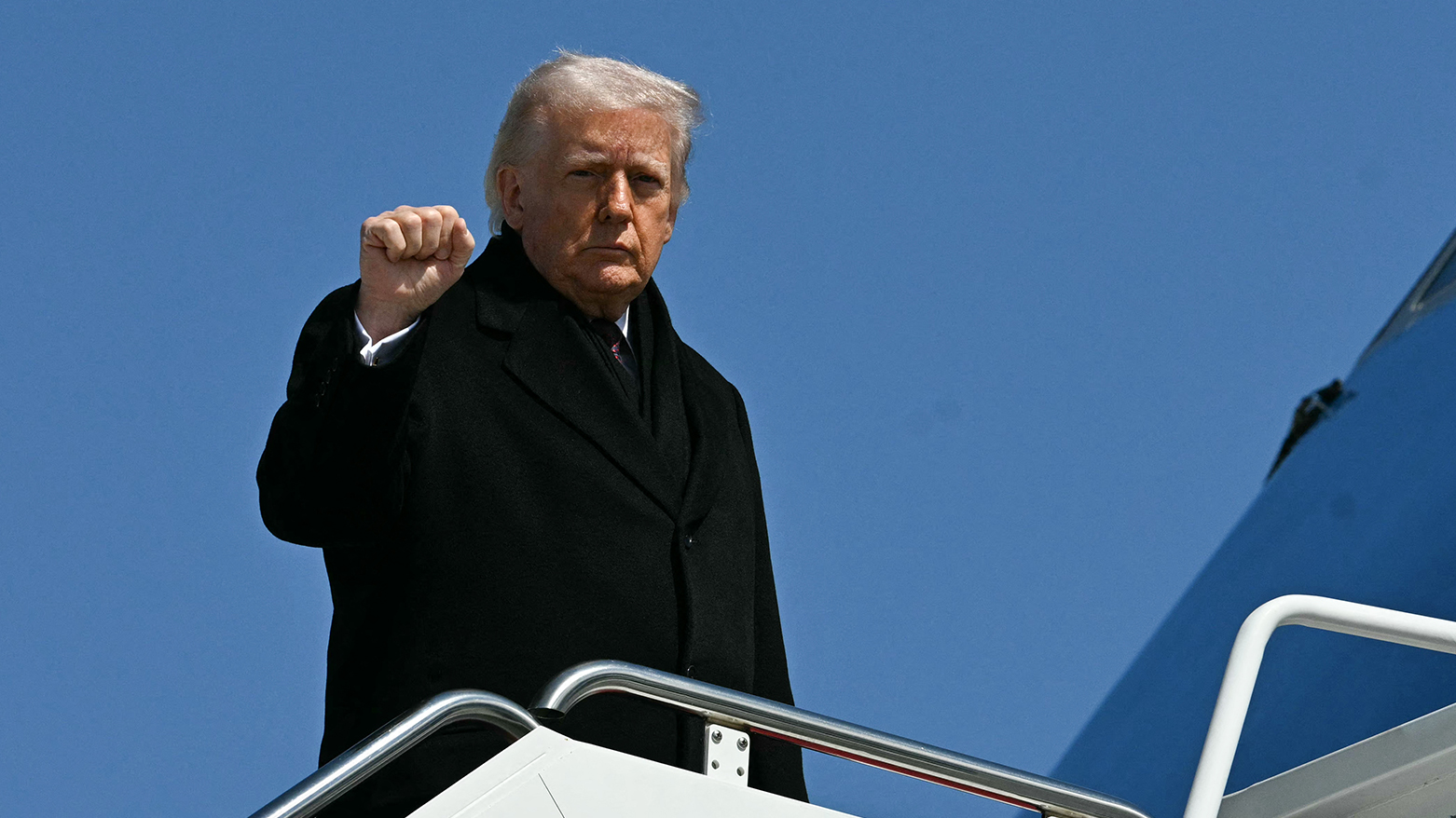
ERBIL (Kurdistan24) - U.S. President Donald Trump announced Monday that he has instructed the Department of War to postpone planned strikes on Iran’s power plants and energy infrastructure for five days following discussions with Iranian authorities, CNBC reported. Trump described the talks as “very intent on making a deal with Iran” and “very good and productive” regarding the resolution of hostilities in the Middle East, emphasizing that discussions would continue through the week.
Speaking to CNBC’s Joe Kernen in a phone interview, Trump said the conversations had been intense and expressed hope that substantive progress could be achieved.
Earlier on Monday, he posted on his Truth Social platform that the U.S. and Iran had held “VERY GOOD AND PRODUCTIVE CONVERSATIONS REGARDING A COMPLETE AND TOTAL RESOLUTION OF OUR HOSTILITIES IN THE MIDDLE EAST,” and that the postponement of military action would remain contingent on the outcome of ongoing meetings.
Trump’s decision follows a 48-hour ultimatum issued Saturday directing Tehran to reopen the strategically vital Strait of Hormuz or face strikes on its energy facilities.
The narrow waterway connects the Persian Gulf and the Gulf of Oman, with roughly 20 percent of global oil and gas transiting through it. Iranian authorities, including Parliament spokesperson Mohammad Baqer Qalibaf, had warned that critical infrastructure and energy facilities across the Gulf region could be “irreversibly destroyed” if Iranian power plants were targeted.
While the U.S. administration has framed the pause as part of ongoing productive dialogue, Iranian state media contradicted the account. Citing a senior security official, the report on Telegram stated, “There is been no negotiation and there is no negotiation, and with this kind of psychological warfare, neither the Strait of Hormuz will return to its pre-war conditions nor will there be peace in the energy markets.”
The official denied that direct or indirect talks had taken place between Washington and Tehran, asserting that Iran would continue its defense measures until a “necessary level of deterrence” is achieved.
Trump’s announcement triggered immediate reactions in financial markets, with U.S. stock futures rallying and oil prices declining. Global oil futures experienced sharp movements as the postponement of strikes alleviated fears of further disruptions to supply from Iran’s energy infrastructure.
The military situation remains volatile.
Fox News reported that Iran has continued missile and drone operations targeting neighboring states, including Israel, the United Arab Emirates, and Saudi Arabia. The UAE said its air defenses intercepted threats Monday afternoon, while Saudi officials reported downing a ballistic missile aimed at Riyadh and intercepting multiple drones targeting the kingdom’s eastern region.
Iranian missile strikes on southern Israel have caused injuries and damage to residential structures, with Israeli authorities confirming that at least one incoming missile was not intercepted.
Iranian officials stated that the attacks were in response to prior strikes on Iranian territory, including reported incidents at the Natanz nuclear facility, with no abnormal radiation detected according to the International Atomic Energy Agency.
The geopolitical friction has further disrupted maritime operations and global energy flows. The Strait of Hormuz, although reportedly still navigable under wartime conditions, has been described as effectively closed by a coalition of 21 countries, including the UAE, supporting efforts to secure the waterway, AFP reported.
The disruption has contributed to higher oil prices, with Brent crude surpassing $110 per barrel and West Texas Intermediate exceeding $100 before easing slightly. U.S. Treasury Secretary Scott Bessent noted that a temporary easing of sanctions on certain Iranian oil shipments already at sea would allow approximately 140 million barrels of oil to enter global markets.
In addition to diplomatic and economic measures, the Pentagon has deployed further military assets to the Gulf, including three warships and roughly 2,500 Marines, marking the second deployment within a week, according to AP reporting cited by Fox News.
Officials have not confirmed whether these forces will engage in combat operations.
Iranian Foreign Minister Abbas Araghchi acknowledged a phone conversation on Monday with his Turkish counterpart Hakan Fidan.
Türkiye has previously served as an intermediary in communications between Tehran and Washington. The phone call was reported as part of ongoing regional engagement amid heightened tensions, while the U.S. continues to frame Trump’s directives as contingent on productive talks.
The unfolding situation has also drawn attention from other global actors. Indian Prime Minister Narendra Modi on Monday compared the current crisis to challenges experienced during the COVID-19 pandemic, highlighting the need for preparedness in power supply and energy management.
Modi emphasized that India’s power plants have sufficient coal reserves and that all power systems are being monitored as summer approaches. He also noted adequate fertilizer stocks and urged all sides to resolve hostilities peacefully, stating, “This war is not in the interest of humanity.”
Trump’s approach comes amid broader U.S. efforts to manage energy market disruptions caused by the conflict, including temporary waivers of shipping regulations and coordination with allied nations to stabilize oil flows. The president also reiterated in his interview with CNBC that the current operations in Iran could be described as regime change.
Iran’s state media framed Trump’s announcement as a U.S. retreat, asserting that the American president “backs down following Iran’s firm warning.”
The public divergence between Washington and Tehran reflects sharply differing narratives on the existence and scope of diplomatic engagement. U.S. officials maintain that discussions are ongoing and constructive, while Iranian authorities continue to emphasize defensive measures and deterrence as primary considerations.
The conflict has entered its fourth week, with continued missile, drone, and air defense activity across the region, creating uncertainty for global shipping and energy markets. The temporary halt of strikes on Iranian energy infrastructure represents a pause in direct military escalation, contingent on ongoing communications and the outcome of discussions that will continue throughout the week.