Kurds Mark 50 Years of Migration in Nashville, Reflecting on Community and Achievements
Kurds in Nashville marked five decades of migration on Monday, celebrating Newroz in what has become known as “Little Kurdistan.” The city now hosts an estimated 15,000–20,000 Kurds, supported by thriving cultural, professional, and educational networks, as documented by Mohammad Qazi.
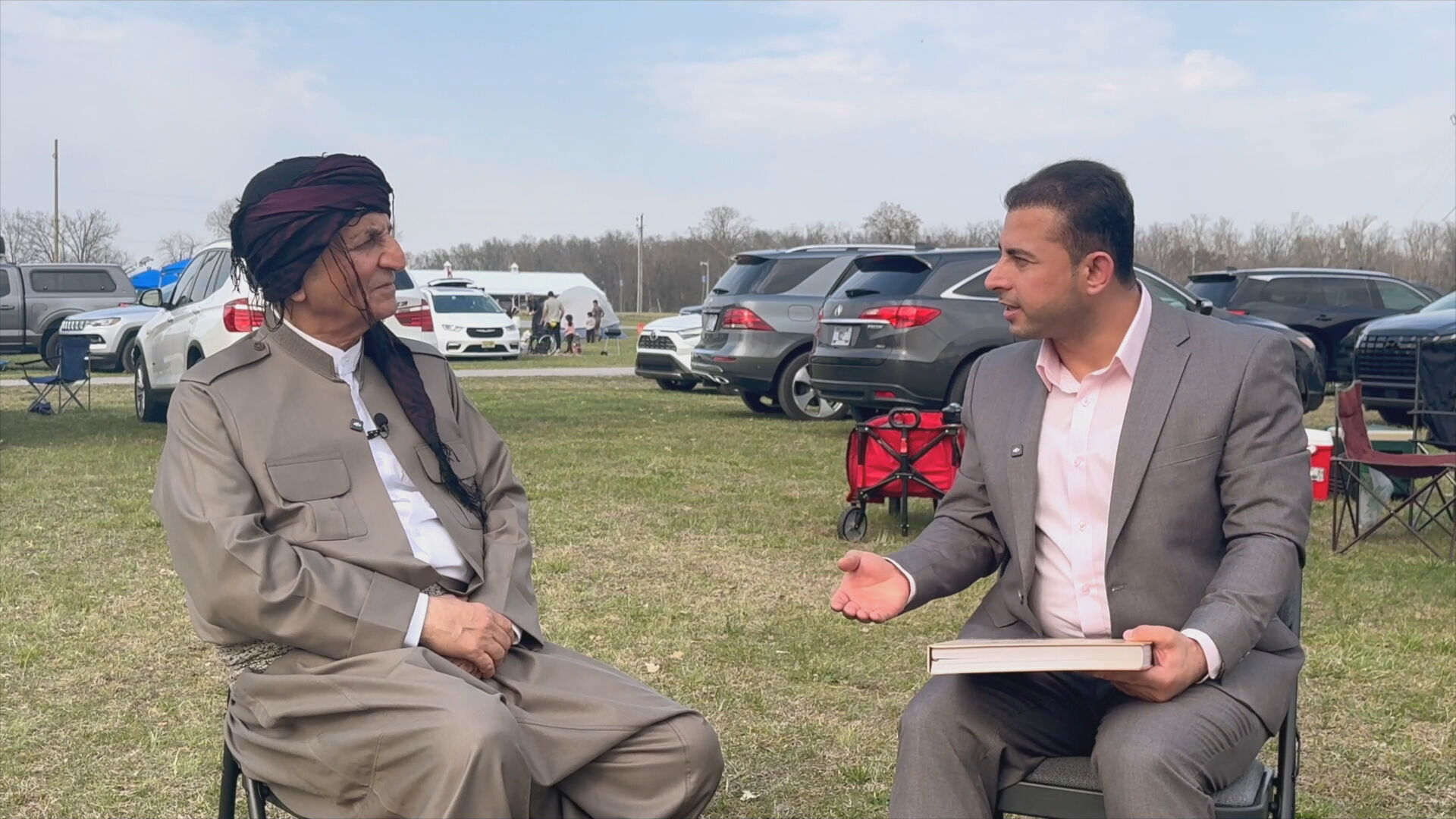
ERBIL (Kurdistan24) - Kurds in Nashville, Tennessee, celebrated Newroz on Monday, marking 50 years since the first organized wave of Kurdish migration to the city, which has become known as “Little Kurdistan,” Kurdistan24 reported. The anniversary coincides with reflections on the community’s growth, integration, and contributions in the United States over the past half-century.
In a dialogue hosted by Kurdistan24's Essan Hassan from Nashville, writer and researcher Mohammad Qazi, recognized for his documentation of Kurdish history in the United States, outlined the trajectory of Kurdish migration to the city and the broader American context.
Qazi, who arrived in the United States in 1977 and later settled in Nashville in 1979, recounted that the first significant group of Kurdish migrants reached America in 1976, primarily from Iran. This initial group was dispersed across multiple U.S. cities, with a few families and single young men establishing roots in Nashville.
“I arrived on September 30, 1977, in New York with the last batch of that group; then we moved to Chicago and stayed there for two years. In 1979, we moved to Nashville because of the presence of a good Kurdish community here, and my family has been settled in this city ever since,” Qazi said during the broadcast.
While large-scale migration began in the mid-1970s, Qazi noted that earlier Kurdish arrivals existed. He documented the arrival of Kurdish individuals in 1892, primarily from North Kurdistan (Türkiye), and highlighted the case of “Sheikh Mahmoud,” the first Kurdish student known to have studied in America in 1935, earning a master’s degree.
Nevertheless, Qazi emphasized that the modern Kurdish diaspora in the United States took shape largely through migration waves after 1976, with notable influxes in 1991, 1996, 1999, and following 2000.
Estimating the current size of the Kurdish population in Nashville, Qazi stated, “There are between 15,000 to 20,000 Kurds in Nashville alone.” He added that Kurdish communities have also been established in other U.S. cities, including Dallas, Detroit, and areas within Virginia, California, and Texas.
Qazi discussed his motivation for writing his book documenting the history of Kurds in America. “This book is the first of its kind to document the history of Kurds in America in the Kurdish language, and we are currently working on its English translation. The main goal is the preservation of memory,” he said.
He explained that the work aims to provide younger generations of Kurds in the United States with an understanding of their origins, the political and social reasons behind their migration, and knowledge of Kurdish geography and historical struggles.
Addressing the integration and achievements of Kurds in America, Qazi highlighted the community’s professional and academic successes.
“The Kurdish community here is very successful. Today, we have young generations of whom we are proud. There are hundreds of doctors, engineers, and holders of master’s and doctoral degrees. We have professors at prestigious universities like Harvard and scientists working for NASA, in addition to prominent doctors in major American hospitals,” he said.
Beyond individual accomplishments, Qazi emphasized the community’s cultural and social contributions. He cited Nashville’s Salahadeen Center as a central hub for the Kurdish diaspora, providing a gathering space and serving as a cultural beacon for the community.
Qazi noted, however, that efforts remain to enhance political advocacy in the United States.
“There is still much for us to provide, especially in the field of forming a strong and influential Kurdish lobby in America to support the just causes of our people and convey their voice to decision-makers. We possess the energy and the expertise, and we must direct them to serve our Kurdish cause more effectively,” he said.
The dialogue also covered the symbolic significance of Newroz within the Kurdish community. Qazi conveyed his wishes for peace and stability, saying, “I hope that this year will be a year of goodness and peace for Kurdistan and that our people will enjoy stability far from suffering.” The celebration in Nashville reflected both a commemoration of historical migration and a reaffirmation of cultural identity.
Kurdistan24’s broadcast highlighted the broader context of Kurdish presence in the United States, noting that the diaspora has evolved into an active and engaged community, contributing to American society while maintaining strong cultural and social ties to Kurdistan.
The coverage also emphasized that the book authored by Qazi serves as a documentary reference for those seeking to understand the history of Kurdish migration to America, preserving narratives that had previously been largely undocumented in the Kurdish language.
Qazi’s account included personal and collective experiences that underscore the resilience and adaptability of Kurdish migrants over the past fifty years.
Early Kurdish families in Nashville faced challenges in establishing a sense of community, navigating unfamiliar social and economic environments, and integrating into the broader American society. Over time, these efforts have resulted in a thriving diaspora that maintains both professional excellence and cultural cohesion.
In addition to the United States, Kurdish communities worldwide have sought to preserve language, culture, and political awareness, but Nashville’s Kurdish population stands out as one of the most organized and institutionally established groups in North America.
Through centers like Salahadeen, as well as educational and professional networks, Kurds in Nashville have cultivated a platform for cultural preservation and community advocacy.
The city’s nickname, “Little Kurdistan,” reflects both the demographic concentration of Kurds and the cultural visibility of the community. Annual events such as Newroz celebrations reinforce connections within the diaspora and provide opportunities for younger generations to engage with their heritage.
Qazi stressed the importance of these events, stating that they serve not only as cultural observances but also as vehicles for intergenerational education and community solidarity.
Through systematic documentation, Qazi’s book also traces the evolution of Kurdish identity in the American context, exploring how political, social, and economic factors shaped the diaspora. His research incorporates archival records, personal testimonies, and historical data, emphasizing the importance of preserving the memory of Kurdish migration experiences.
In conclusion, the Newroz celebrations in Nashville on Monday marked a significant milestone: 50 years of Kurdish migration that has transformed a small community into a vibrant and influential diaspora. The dialogue with Mohammad Qazi provided insights into the historical journey, the professional and social achievements of Kurds in America, and ongoing efforts to strengthen cultural and political presence in the United States.
The anniversary underscores the continuing commitment of Kurds in Nashville to honor their heritage while contributing meaningfully to American society.
Kurdistan24 correspondent Essa Hassan in Washington contributed to this report.