Fuad Hussein Labels INIS Assault Internal, Urges Action Against Armed Groups
Iraq continues to investigate and address attacks on the INIS, PMF positions, and U.S. facilities, while officials call for strict deterrence and enforcement measures to maintain the country’s sovereignty and protect diplomatic missions.
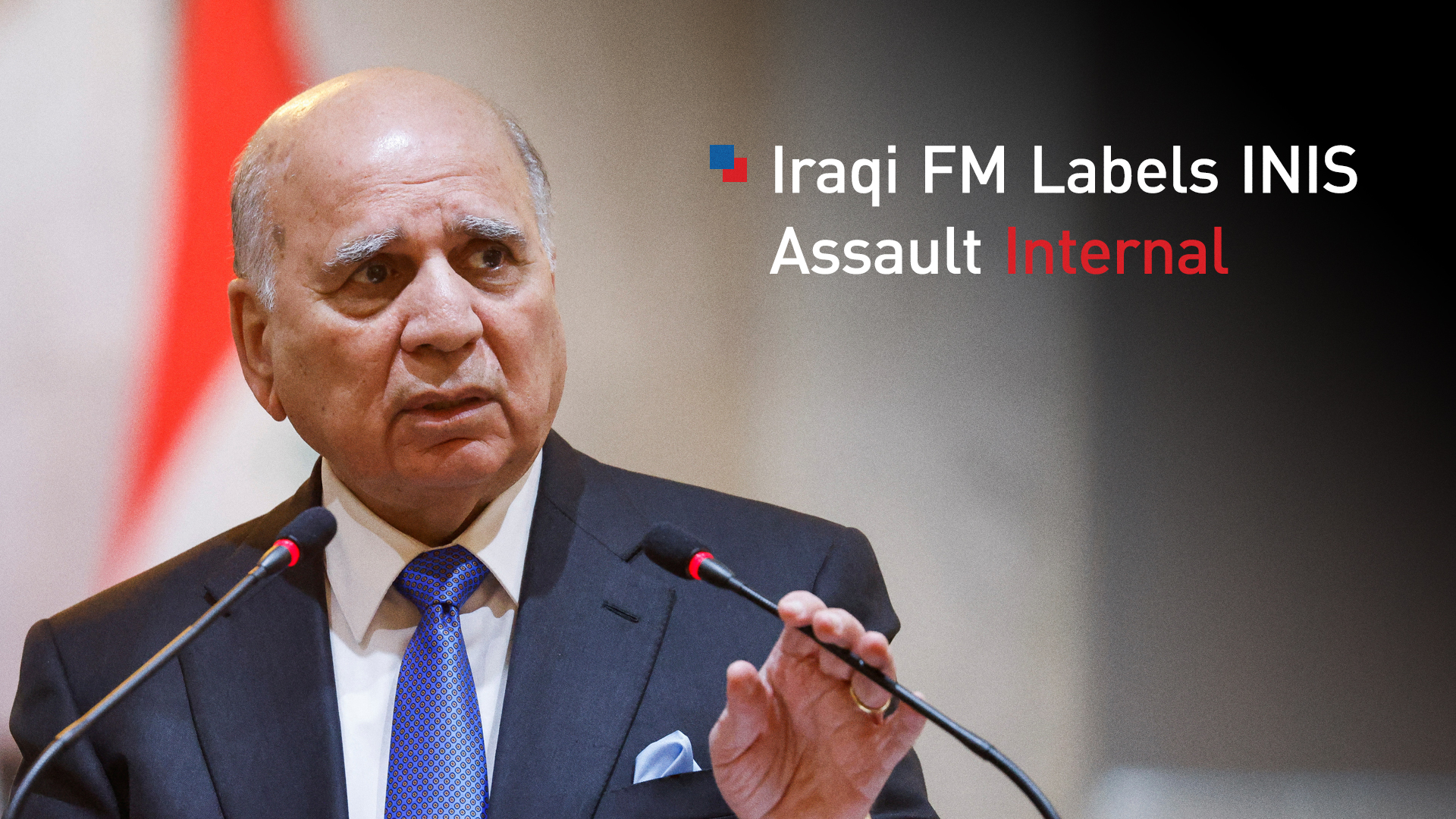
ERBIL (Kurdistan24) - Iraq’s security apparatus remains under acute strain following a series of attacks targeting government institutions and U.S. facilities, with Iraqi Foreign Minister Fuad Hussein describing the assault on the Iraqi National Intelligence Service (INIS) as an internal act and urging stricter measures against armed groups operating within the country.
Hussein made the remarks on Monday, emphasizing that the parties behind recent assaults on INIS, as well as other bases, headquarters, and governmental institutions, had exceeded acceptable limits.
“The government must take strict measures and implement real deterrence, as this situation cannot be allowed to continue in this manner,” he said.
The Foreign Minister noted that the armed groups involved possess not only military capabilities but also organizational and parliamentary standing, enabling them to extend their operations beyond the Kurdistan Region and diplomatic premises into the central structures of the state.
“They possess power—military, organizational, and parliamentary. This is a clear and obvious fact,” Hussein stated.
The Foreign Minister’s comments coincide with broader investigations into attacks on diplomatic missions, which have been classified as terrorist acts under Iraq’s Law No. 13 of 2005. Sabah al-Nu’man, spokesperson for the Commander-in-Chief of the Iraqi Armed Forces, said Sunday that authorities are actively reviewing the incidents to assess their impact on Iraq’s diplomatic standing.
“These actions are condemned because they weaken Iraq’s diplomatic standing and cause embarrassment for the government before the international community,” he told Iraqi media.
Al-Nu’man stressed that the Iraqi government has consistently sought to preserve and restore the country’s international dignity, citing Iraq’s recent roles in regional and international forums, including the presidency of the Arab Summit and participation in several global organizations, as evidence of international confidence in Iraq’s position.
He warned that any deterioration in security within Iraq could have adverse consequences for the broader region, including neighboring countries and Gulf states. Authorities have withheld specific details regarding the identities of the perpetrators, citing the integrity of ongoing investigations, while emphasizing coordination between security and judicial bodies to determine responsibility.
Meanwhile, the Popular Mobilization Forces (PMF), Iraq’s state-sanctioned paramilitary coalition which includes pro-Iranian factions, reported that positions of its 15th Brigade in the Northern and Eastern Tigris Operations Command sector were struck by air raids on Monday.
A PMF Commission statement said the assault, carried out by “U.S. and Israeli” fighter jets, resulted solely in material damage and no casualties. The communiqué highlighted the organization’s ongoing commitment to regional security and territorial sovereignty despite repeated attacks on its units.
The strikes follow a series of incidents over the weekend targeting both PMF units and U.S. facilities. AFP reported that three strikes late Sunday targeted PMF locations south of Baghdad, while a U.S. Diplomatic Logistics Center at Baghdad International Airport was simultaneously struck multiple times.
According to the PMF and local emergency crisis cells, the strikes involved drones and air attacks across three separate locations, leaving no personnel injured as the positions were deserted at the time.
The U.S. Diplomatic Logistics Center experienced six attacks within a 24-hour period from Saturday evening to early Sunday, employing drones and Katyusha rockets.
Kurdistan24 correspondent Shvan Jabari reported that across the attacks, 18 drones and rockets targeted the facility in western Baghdad, causing damage to the compound and triggering fires.
A vehicle discovered in the nearby Jihad neighborhood carried a launcher equipped with ten Katyusha rockets, though it remained unclear whether the car had been destroyed during the launch or targeted by U.S. air forces.
The sustained targeting of U.S. facilities marks part of an ongoing conflict that began with the joint U.S.-Israeli war against Iran on February 28, 2026. Since the conflict’s inception, over 433 attacks have been carried out by the Islamic Resistance in Iraq against U.S. diplomatic facilities and the embassy in Baghdad, with some operations extending to Erbil.
In response, U.S. air forces have conducted at least 32 strikes on PMF bases and positions, resulting in 27 fatalities and 57 wounded, according to PMF statements.
Kataeb Hezbollah, a key pro-Iranian faction within the PMF, announced a five-day extension to its temporary suspension of attacks on the U.S. Embassy in Baghdad on Sunday.
Abu Mujahid al-Assaf, the group’s security chief, reaffirmed that “no new government will be formed without the approval of the Islamic Resistance in Iraq” and warned that any “enemy violations” would prompt a response. The statement criticized certain Iraqi political figures for condemning attacks by the so-called Iraqi Resistance while issuing statements regarding strikes on PMF bases, urging restraint in trading “the blood of the nation’s freedom fighters.”
Earlier, on March 19, Kataeb Hezbollah had outlined conditions for suspending attacks, including a halt to Israeli bombardments in Lebanon, a U.S. commitment not to target residential areas in Baghdad and other provinces, and the withdrawal of CIA personnel stationed outside the embassy compound, except in the Kurdistan Region. The group’s announcement follows repeated missile and drone attacks on U.S. Embassy facilities within Baghdad’s heavily fortified Green Zone.
The escalation of hostilities has placed Baghdad at the center of a complex security landscape, in which pro-Iranian armed groups operate within state-sanctioned frameworks while carrying out operations that challenge the Iraqi government’s ability to maintain internal security.
Both the U.S. and allied Israeli forces have responded with airstrikes and countermeasures targeting these factions, contributing to an intensifying cycle of attacks and retaliatory measures.
Officials have stressed the potential international ramifications of these incidents. Al-Nu’man underscored that protecting embassies and ensuring the safety of diplomatic personnel is a key responsibility of Iraqi security forces and that failure to address such threats could isolate Iraq diplomatically.
Authorities have indicated that ongoing investigations involve multiple agencies, including the armed forces and judicial authorities, tasked with identifying the perpetrators and clarifying motives.
The attacks and subsequent government and paramilitary responses reflect the deepening security challenges facing Iraq as it contends with internal armed groups, ongoing U.S.-Israeli strikes, and pressures from international stakeholders seeking stability in the country and the broader region.