Mohsen Rezaee Threatens to “Paralyze” U.S. and Israel if Iran Is Attacked
Iran’s Mohsen Rezaee, a former IRGC commander and a member of Iran's Expediency Discernment Council, warned Tehran would “paralyze” the U.S. and Israel if attacked, as both sides escalate threats and military activity, with diplomacy uncertain despite a temporary pause in planned U.S. strikes.
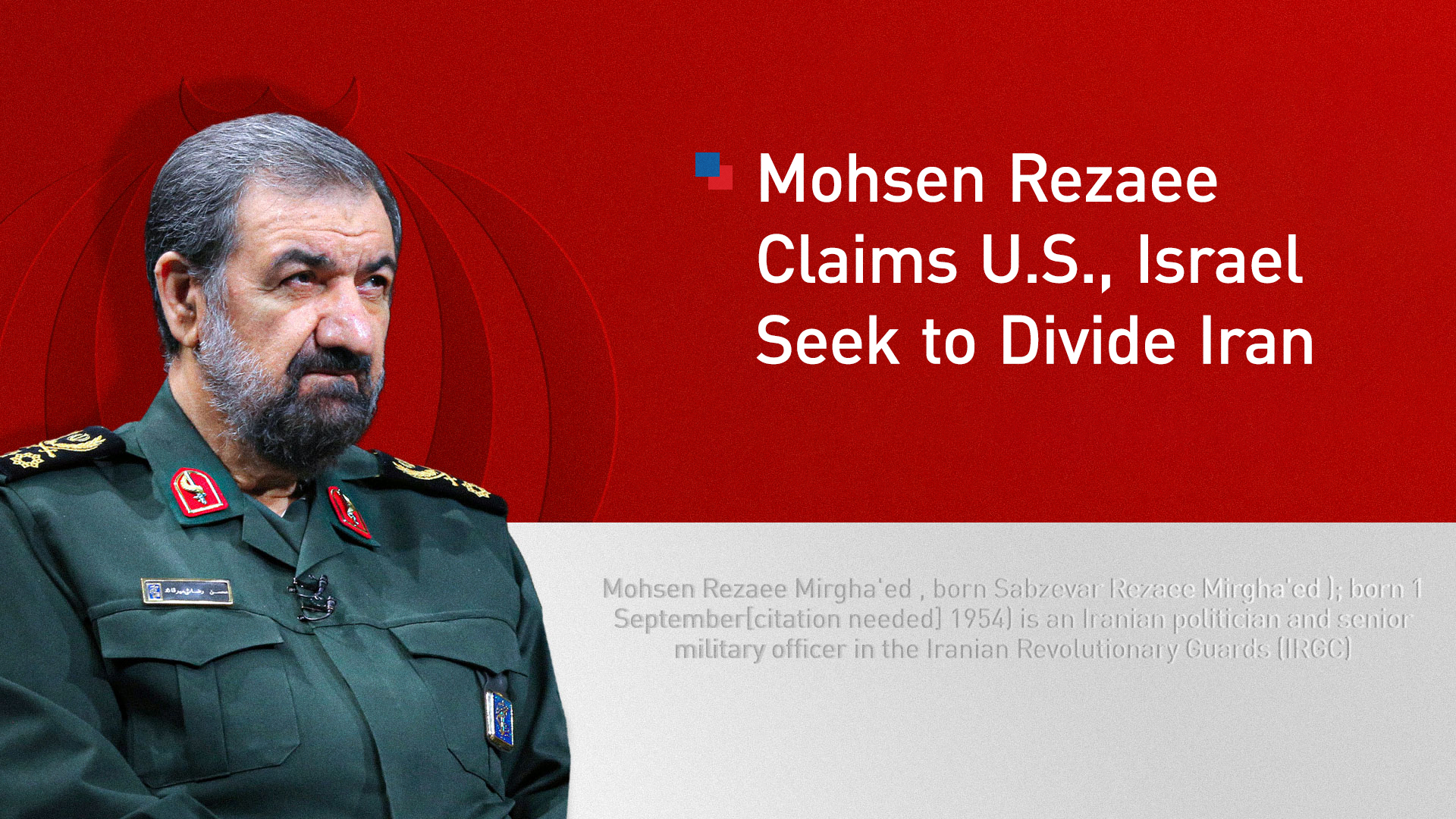
ERBIL (Kurdistan24) - Mohsen Rezaee, a former commander of Iran’s Islamic Revolutionary Guard Corps (IRGC) and a member of the Expediency Discernment Council, warned in a televised interview, and cited by Fars News Agency, that Iran would escalate its response against the United States and Israel if its infrastructure were targeted, stating that Tehran would “paralyze” its adversaries and “drown” them in the Gulf.
He said the conflict would continue until Iran’s conditions, including compensation for war damages, the lifting of sanctions, and guarantees against U.S. interference, were met.
Rezaee said, “If you attack the infrastructure of the Islamic Republic of Iran, our response will no longer be an eye for an eye, but rather a head for an eye; we will paralyze you and drown you in the Gulf.”
He added that the continuation of the war was contingent on achieving specific outcomes, stating: “The war will continue until Tehran receives full compensation for war damages, all economic sanctions are lifted, and the United States provides a guarantee not to interfere in Iran's internal affairs; this is the decision of the people, the Leader, and our armed forces.”
In the same interview, Rezaee outlined what he described as the intentions of the United States and Israel, alleging that both countries sought to occupy Iran and divide it into multiple regions. He said: “The plot is to turn the oil-rich provinces of Khuzestan, Bushehr, and Ilam into another Venezuela and hand their oil over to the Americans.”
He also characterized the relationship between U.S. President Donald Trump and Israeli Prime Minister Benjamin Netanyahu as aligned but strategically distinct, describing them as “conjoined twins” who “differ in strategy.”
Rezaee further stated that a ceasefire had been anticipated following the killing of Iran’s Supreme Leader, but claimed that control over military developments had shifted.
“Now control of the field has fallen into the hands of Netanyahu rather than Trump,” he said, adding that “Netanyahu wants to create a ‘Greater Israel’ and occupy Iraq and Syria; currently, he is dragging Trump behind him and has seized control of the battlefield.”
Addressing regional countries, Rezaee urged Arab states not to align with U.S. and Israeli policies, stating: “Do not fall into the trap of this plan. If you knew the depth of this map, you would not stand behind America and Israel and would instead come to aid Iran.”
He added that the objective of Washington and its allies was not to establish a new balance of power but to create instability and reshape international norms.
Rezaee also predicted a divergence between U.S. and Israeli interests, drawing a parallel to historical tensions, and said a similar rift could emerge in the current conflict.
His remarks come amid ongoing military operations and heightened regional tensions. The U.S. Central Command (CENTCOM) said its campaign, known as Operation Epic Fury, has involved more than 9,000 combat flights since its launch on Feb. 28 and has struck over 9,000 targets across Iran.
According to CENTCOM, the operation has damaged or destroyed more than 140 Iranian vessels and targeted a range of military assets, including command and control centers, IRGC headquarters, intelligence sites, ballistic missile facilities, and weapons production infrastructure.
CENTCOM said the campaign has utilized a broad array of military assets, including B-1, B-2, and B-52 bombers, as well as fighter aircraft such as F-15, F-22, F-35, and F-18 jets.
The operation has also incorporated reconnaissance and electronic warfare aircraft, MQ-9 drones, naval platforms including aircraft carriers and submarines, and missile defense systems such as THAAD and Patriot interceptors.
Officials stated that the strikes are aimed at neutralizing threats to regional and international security and limiting Iran’s operational capabilities.
At the same time, the IRGC announced that it had launched the 78th wave of its ongoing “Operation True Promise 4,” targeting multiple locations in Israel and U.S. military installations in the region.
According to the IRGC statement, the strikes involved Emad missiles, long-range ballistic missiles, and one-way attack drones. The targets included the Israeli cities of Eilat, Dimona, and Tel Aviv, as well as unspecified U.S. bases.
The IRGC said a significant portion of its forces had not yet been deployed and warned that all IRGC and Basij units could be mobilized if the conflict escalates further. Israeli defense authorities reported that missile launches were detected in advance and that air defense systems were activated.
The Home Front Command issued alerts to residents in affected areas, instructing them to remain in protected locations.
Parallel to these developments, U.S. military officials are considering potential deployments to support operations related to Iran, according to a report published by The New York Times.
Defense officials said discussions include the possible deployment of a combat brigade from the 82nd Airborne Division, including elements of its headquarters staff. The forces under consideration are part of the division’s Immediate Response Force, which is capable of deploying globally within 18 hours.
Officials also said that planning scenarios include the potential seizure of Kharg Island, Iran’s primary oil export hub, as well as a possible assault involving approximately 2,500 troops from the 31st Marine Expeditionary Unit, which is currently en route to the region. A
ccording to the report, no final decision has been made, and both the Pentagon and CENTCOM declined to comment.
Meanwhile, Israeli Prime Minister Benjamin Netanyahu said Monday that Israel would continue its military operations targeting Iran and affiliated groups.
In a statement, Netanyahu said he had spoken with President Trump and that both sides were seeking to leverage military actions to achieve war objectives within a potential agreement.
“In parallel, we continue to attack both in Iran and Lebanon,” Netanyahu said, adding that Israel was “methodically dismantling the missile program and the nuclear program” and continuing operations against Hezbollah.
Netanyahu also referenced the recent killing of two nuclear scientists and said Israel would safeguard its strategic interests in any agreement. His remarks followed Trump’s announcement of a temporary five-day pause in planned U.S. strikes on Iranian energy infrastructure to allow for preliminary discussions with Iranian interlocutors.
Trump said the discussions had been “very, very good” and indicated that further communication would continue during the pause. However, Iranian officials have denied that formal negotiations are taking place.
Iranian Parliament Speaker Mohammad Bagher Qalibaf said that “no type of negotiation has been conducted with the United States of America,” while Foreign Ministry spokesperson Esmail Baqaei stated that exchanges through intermediaries did not constitute dialogue.
Baqaei also warned that any attack on Iranian energy infrastructure would trigger a “decisive, immediate, and effective response,” reiterating Tehran’s position on the Strait of Hormuz and conditions for ending the conflict.
A senior Iranian security official, cited by Tasnim News Agency, said that “no negotiations with Trump are taking place” and attributed the U.S. decision to delay strikes to deterrence measures and broader economic considerations.
The developments reflect ongoing military operations and diplomatic messaging among the United States, Israel, and Iran, with each side maintaining distinct positions on the nature of engagement and escalation.
Rezaee’s statements underscore Iran’s position that continued hostilities are tied to specific political and economic demands, while military activity across the region remains active.