U.S. Weighs Iranian Parliament Speaker as Potential Negotiating Partner, Politico Reports
The report said that at least some officials within the White House view Qalibaf, 64, as a “workable partner” who could play a role in negotiations during the next phase of the conflict.
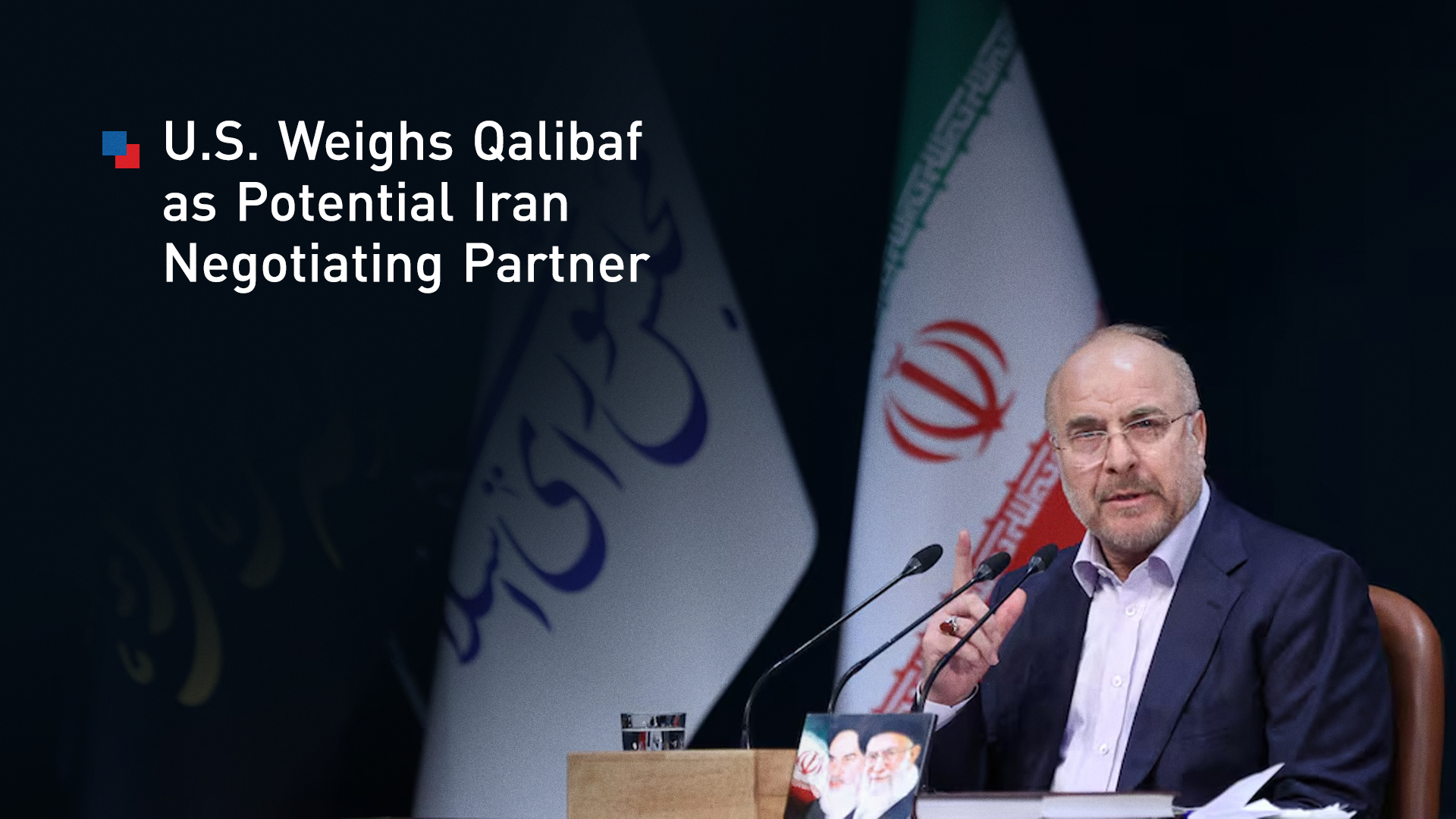
ERBIL (Kurdistan24) - The Trump administration is considering Iranian Parliament Speaker Mohammad Baqer Qalibaf as a potential negotiating partner and possible future leader as part of efforts to shift toward a diplomatic resolution with Tehran, according to a report published by Politico on Monday.
The report said that at least some officials within the White House view Qalibaf, 64, as a “workable partner” who could play a role in negotiations during the next phase of the conflict. The assessment comes as U.S. President Donald Trump signaled a temporary pause in military action and indicated interest in pursuing discussions aimed at ending hostilities.
According to Politico, two U.S. administration officials, speaking on condition of anonymity, said the White House is evaluating multiple figures within Iran’s political system rather than committing to a single candidate. “He’s a hot option,” one official said, adding that no final decision has been made and that potential candidates are being “stress tested.”
The same report noted that the administration’s internal deliberations reflect a broader effort to identify a viable interlocutor capable of engaging in negotiations while maintaining authority within Iran’s existing political structure. Officials cited in the report said the approach is aimed at identifying individuals who could both consolidate power domestically and reach an agreement with Washington.
White House press secretary Karoline Leavitt declined to comment directly on the report’s claims, stating that “these are sensitive diplomatic discussions and the United States will not negotiate through the news media,” according to Politico.
President Trump indicated Monday that the United States had initiated preliminary contacts with figures inside Iran and announced a five-day pause on planned strikes targeting Iranian energy infrastructure. He described the individuals involved as “very solid” and said the discussions were part of a broader effort to reach a settlement, the report noted.
According to Politico, economic considerations, particularly related to oil markets, are a central factor in the administration’s approach. One official cited in the report said Trump was reluctant to target Kharg Island, Iran’s primary oil export hub, due to the potential for a future agreement involving energy cooperation.
The report also referenced internal comparisons drawn by U.S. officials to previous policy approaches in Venezuela. One administration official described a model in which a figure within the existing system could remain in power while cooperating with the United States on key economic and political issues.
However, Politico reported that some individuals close to the administration expressed skepticism about the feasibility of identifying a suitable partner within Iran’s leadership. One person familiar with internal discussions described the approach as “posturing,” while acknowledging that exploratory contacts through intermediaries could represent an attempt to find a path toward de-escalation.
A Gulf official cited in the report suggested that the administration may be overstating progress in discussions as part of efforts to stabilize markets and create flexibility around previously announced military timelines.
Analysts cited by Politico also questioned whether Qalibaf would be able or willing to make significant concessions. Ali Vaez, a senior Iran analyst at the International Crisis Group, described Qalibaf as an “insider” committed to the current political system, adding that any deviation from established policy positions would likely face constraints from Iran’s broader security apparatus.
“He’s a quintessential insider: ambitious and pragmatic, yet fundamentally committed to the preservation of Iran’s Islamist order,” Vaez said, according to the report.
The Politico report noted that other potential figures, including exiled opposition leader Reza Pahlavi, are not being actively considered by the administration. U.S. officials cited in the report said that individuals without established domestic legitimacy in Iran were viewed as unlikely to provide stability.
Instead, the administration is focusing on figures already embedded within Iran’s governing system. One official described the approach as seeking equivalents of established political actors capable of maintaining continuity while engaging in negotiations.
Despite the reported U.S. interest, Qalibaf publicly denied that any negotiations with Washington are taking place, reiterating Iran’s official position that no direct talks have been conducted.
U.S. officials cited in the report characterized such statements as internal positioning rather than definitive indicators of the status of contacts.
A senior White House official told Politico that Trump is pursuing a potential agreement in part to achieve progress related to the Strait of Hormuz and a possible ceasefire, stating that the president is seeking “progress” in ongoing efforts to reduce tensions.
The report underscores ongoing internal deliberations within the U.S. administration regarding diplomatic options, as military operations and political messaging continue in parallel.