Iran FM Says He Has Supreme Leader’s Backing for Talks if Conditions Met: Ynet
A secret U.S.-Iran channel has reportedly been active since the early days of the conflict, with Tehran signaling willingness to negotiate under the new Supreme Leader, Ayatollah Mojtaba Khamenei, though substantial gaps remain and Israel remains outside the talks.
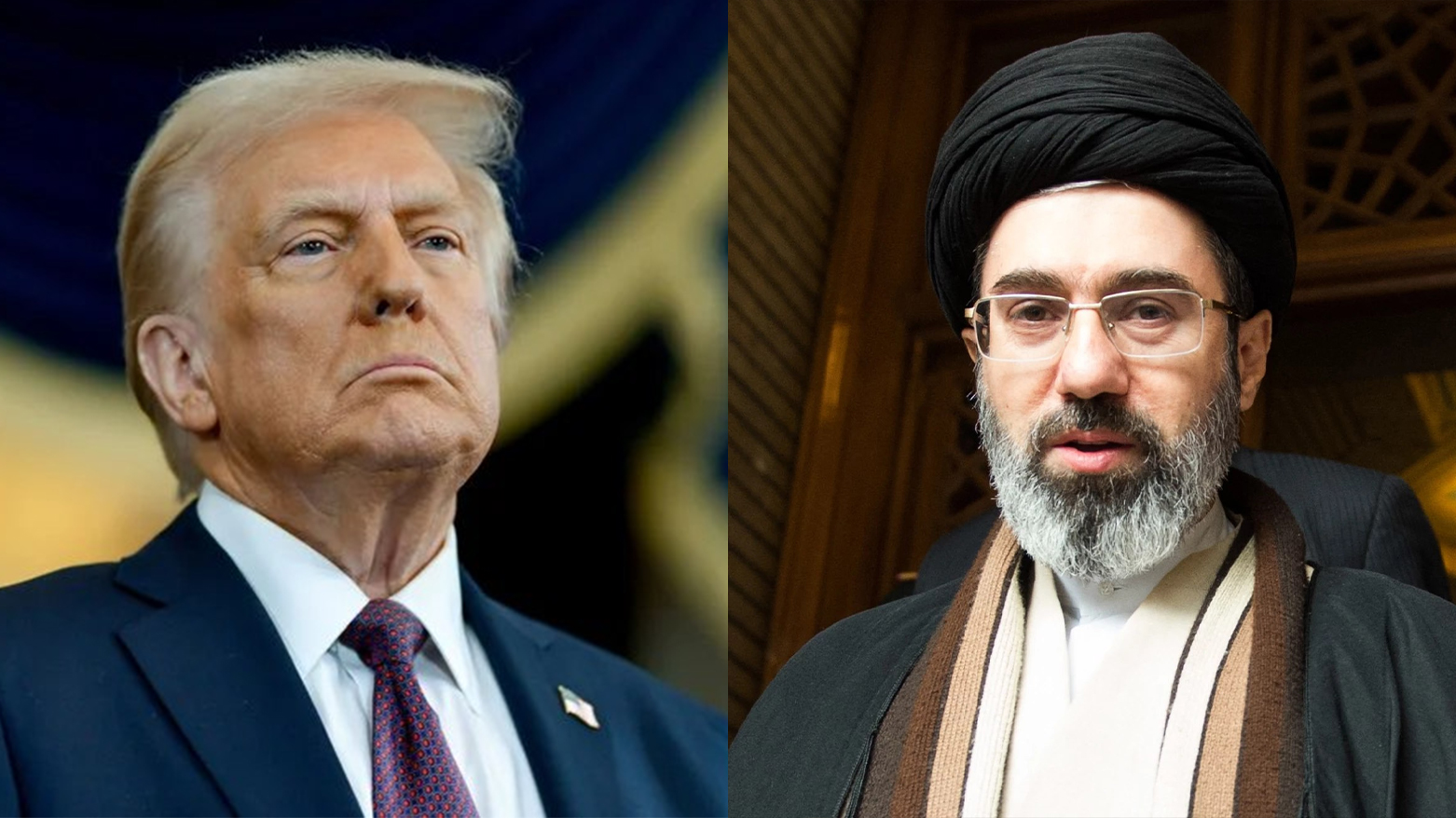
ERBIL (Kurdistan24) - Iranian Foreign Minister Abbas Araghchi informed U.S. mediator Steve Witkoff in a phone call last Thursday that he had received the consent and blessing of Ayatollah Mojtaba Khamenei, the new Supreme Leader of Iran following the death of his father Ayatollah Ali Khamenei, to conclude the ongoing conflict as soon as possible provided Iran’s conditions were met, Ynet News reported, citing people exposed to the content of the discussions.
The conversation occurred on a regular cell phone line between Tehran and the United States, with Jared Kushner present alongside Witkoff on the American side, officials familiar with the exchange said. Senior representatives from the United States and Iran took part in the call, while Israel — the third country involved in the conflict — was not included in the talks and learned of them only through separate channels, the officials added.
President Donald Trump subsequently announced the existence of a previously secret channel of communications with Iran that could lead to an agreement, the officials said. Tehran responded with a strong denial, asserting that no dialogue had taken place and that there was nothing to discuss, according to the same officials.
U.S. and Israeli officials confirmed the existence of the talks and elements of their content, including the details of the Thursday conversation, despite the Iranian denial, the officials noted. Cross-referencing from independent sources supported the account, they said.
The channel between the American mediators and the Iranian foreign minister had functioned in one form or another through various intermediaries since the fourth day of the conflict, the officials said.
On the Iranian side, several senior representatives participated, with Ali Larijani overseeing the transmission of messages even though he did not speak directly with the Americans, the officials added. Israel later assassinated Larijani with U.S. consent, an action perceived in Iran and elsewhere as confirmation of Israeli interest in continuing the conflict without a defined end, the officials said.
Contacts persisted even as baggage accumulated between the parties, the officials explained. Iranian officials believed the United States had deceived them during the previous round of talks in Geneva, when the direction had appeared to shift toward war.
The Iranian diplomat stressed during the Thursday call that his participation followed the receipt of consent and blessing from Mojtaba Khamenei to close the matter promptly if Iran’s conditions were satisfied, the officials said, citing those familiar with the discussions.
A senior Israeli official who reviewed the matter stated that Araghchi intended to demonstrate to the United States the current order of power in Iran, contrary to expectations in Washington and Jerusalem, the officials said.
The same official noted that it was important for Araghchi to clarify that he was operating with full authority from those in control, the officials added. Through the talks, the United States effectively recognized the rule of Mojtaba Khamenei in Iran, the officials said.
The exchange carried notable drama for both sides, the officials observed. The United States had earlier envisioned overthrowing the regime or securing a fundamental leadership change. Instead, it engaged in negotiations with the same foreign minister with whom it had previously ended talks, now acting in the name of the son of the former Supreme Leader, the officials said.
Witkoff, who combines business interests with diplomacy and is not a full-time government employee, conducted portions of the conversations in public places with Kushner at his side, the officials said. In at least one instance on Thursday, he remained stationary for an extended period in such a location and spoke in a loud voice, sharing aspects of the conversation with passersby, according to the officials.
Drafts exchanged between the parties indicated that Iran was prepared to extend roughly the same terms it had agreed to in Geneva prior to the outbreak of the conflict, the officials said.
These included a willingness to discuss the removal of highly enriched uranium to Russia. Iran, however, refused to address ballistic missiles in any way and declined to eliminate enrichment activities entirely from its territory, the officials added.
During the call, Witkoff raised his voice and informed Araghchi that Trump had declared there would be no enrichment on Iranian soil, leaving nothing further to discuss, the officials said.
The conversation continued and concluded with ongoing momentum, including further draft exchanges and considerations of reaching a conclusion by the end of the week, the officials noted.
Israeli officials, whose country participated in the military campaign but remained outside the talks, voiced concerns regarding the potential form of any agreement, the officials said. Reports of the conversation and apparent progress reached Jerusalem.
At a press conference on Thursday evening, Prime Minister Benjamin Netanyahu stated in Hebrew to Israelis that the war would continue for some time and for as long as necessary, the officials said. In English remarks to foreign journalists at the same event, he expressed conviction that the war would end much sooner than anticipated, according to the officials.
The communications channel had operated through intermediaries from the early stages of the conflict, the officials said. Initially, elements within Washington believed the war might lead rapidly to the collapse of the regime in Tehran.
American sources indicated that Trump was among the first to anticipate this outcome and the last to abandon the vision of a limited military operation capable of producing a leadership shift acceptable to the White House, the officials added.
Israeli intelligence had assessed over decades the feasibility of altering the regime in Iran, the officials said.
In 2008, then-Mossad director Meir Dagan formulated a plan involving the removal of senior Iranian leadership, including Ayatollah Khamenei, and the installation of a figure with ties to Israel, but insiders blocked the initiative as excessively risky, the officials noted.
Most Mossad leaders and the intelligence community overall remained doubtful about the prospects of engineering a coup, according to the officials.
Under Yossi Cohen’s leadership through 2021, the Mossad performed analyses comparing the scale of protests since the 1979 Iranian revolution with the estimated citizen participation required to challenge the regime, the officials said.
Cohen remarked in an internal discussion in 2018 that the organization had determined it could not close that gap, the officials added. The strategy instead emphasized weakening the regime via economic sanctions, assassinations of nuclear scientists and military commanders, and sabotage operations against nuclear facilities, the officials said.
Following Israel’s victory over Hezbollah in September 2024, Mossad chief David Barnea — previously Cohen’s deputy — grew more convinced that regime change could occur during a war and directed additional organizational resources toward related planning, the officials said.
The plans encompassed initial waves of high-level assassinations and other severe measures, followed by initiatives to spark riots and protests potentially leading to the regime’s overthrow, the officials added. Individuals close to the Mossad maintained that such efforts to incite unrest were envisioned only after the war, not during it, the officials noted.
As the conflict extended without resolution, the anticipated swift regime collapse did not occur, the officials said.
The war failed to attain clearly defined objectives such as securing Iran’s uranium stocks, compelling acceptance of U.S. and Israeli positions on nuclear and missile matters, or achieving regime change, the officials added.
The prolonged fighting instead generated further complications, notably a blockade of the Strait of Hormuz — a development long foreseen in scenarios involving an existential threat to the Islamic Republic — for which the U.S. Central Command appeared inadequately prepared, according to the officials.
At the current stage, the United States and Iran are directing efforts toward organizing a negotiation session this week, potentially including an initial meeting between U.S. Vice President Vance and Araghchi , the officials said.
Pending such a meeting, Iran is anticipated to direct its military actions primarily toward Israel rather than Gulf states, with the aim of widening divisions between Israel and the United States and isolating Jerusalem, the officials added.
Gaps between the positions of the parties remained substantial, the officials said. The possibility of reaching an accord satisfactory to all three involved countries stayed uncertain.