Former U.S. Envoy Warns Iran Could Use Downed Pilot as Bargaining Chip
Former U.S. envoy Brett McGurk warns Iran could exploit a captured U.S. pilot as leverage, as search efforts continue and he describes the conflict as a high-stakes, protracted war with no clear diplomatic exit.
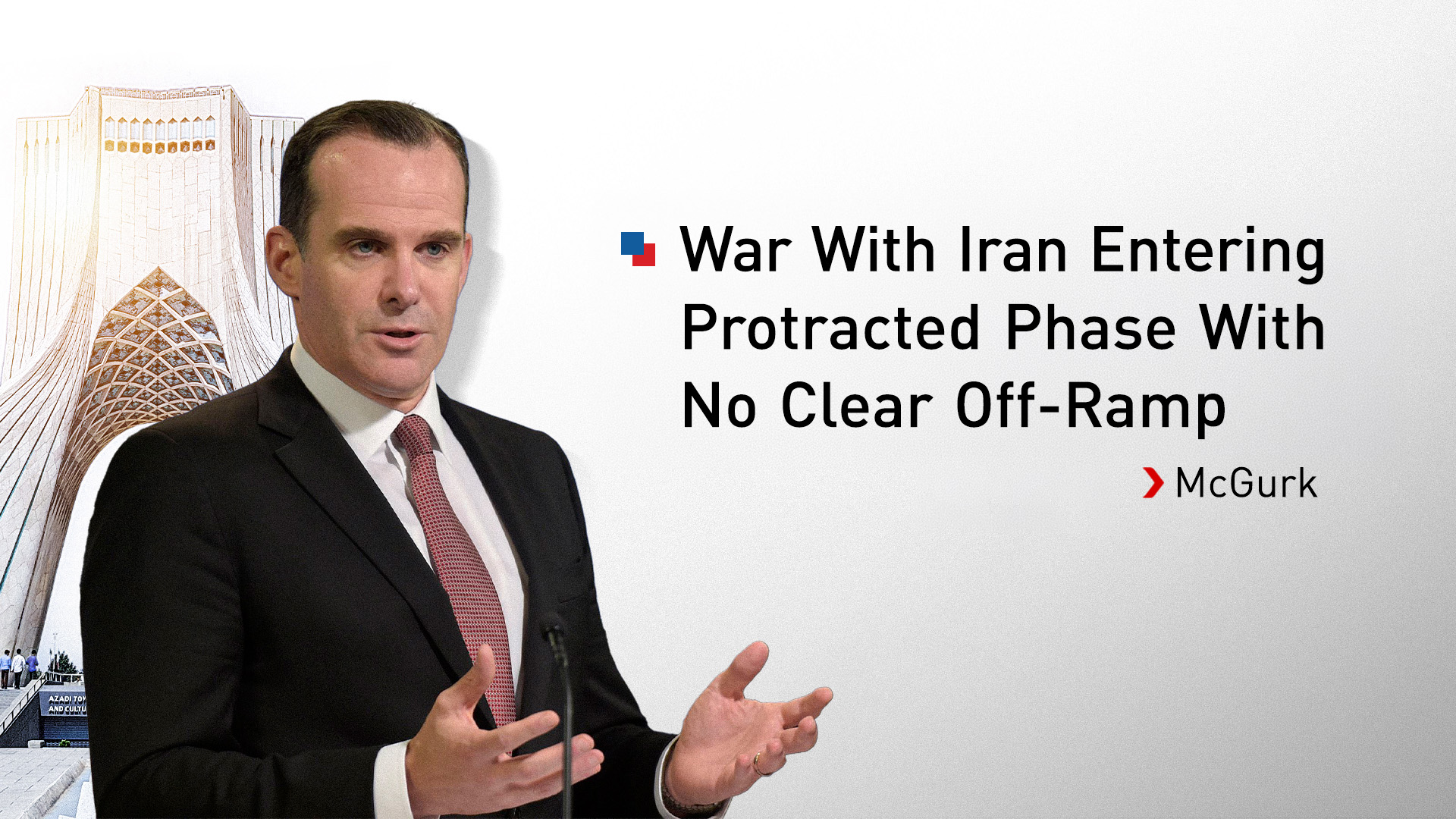
ERBIL (Kurdistan24) - Brett McGurk, former White House coordinator and presidential envoy, said in an interview with CNN’s OutFront with Erin Burnett on Friday, that a high-risk U.S. rescue operation is underway to recover a missing American service member in Iran, warning that Tehran would seek to exploit any opportunity to capture U.S. personnel as fighting continues on Iranian soil.
McGurk described the mission as an “ongoing rescue” effort being conducted under combat conditions, emphasizing that search-and-rescue capabilities are routinely deployed alongside U.S. forces operating in hostile environments. He noted that operational details remain undisclosed due to the sensitivity and danger of the mission, adding that “this is the most dangerous thing they can do.”
The remarks come as U.S. and allied forces continue efforts to locate a missing crew member from a downed F-15E Strike Eagle aircraft shot down over Iran earlier on Friday. According to reports, one of the jet’s two crew members was successfully recovered shortly after the incident, while the second, identified as a weapons systems officer, remains unaccounted for.
U.S. officials have confirmed that search-and-rescue operations are ongoing, with assistance from Israeli forces. The aircraft was downed amid the broader U.S.-Israeli air campaign against Iran, which began on Feb. 28, 2026, under the operation known as Epic Fury.
McGurk cautioned that the stakes surrounding the missing service member are exceptionally high, stating that Iran would likely seek to take any captured American into custody for leverage. “Iran would love to have an American military personnel in their custody,” he said during the interview, adding that even the recovery of remains could be used as a bargaining tool. He described such actions as consistent with what he characterized as Iran’s established approach to detaining foreign nationals.
The situation has been further complicated by developments inside Iran, where state media has urged citizens to report or hand over any “enemy pilot” to authorities. According to reports, Iranian officials have also offered incentives for locating the missing airman, with local authorities indicating that individuals involved in capturing or killing the downed aviator would be formally recognized.
U.S. President Donald Trump has declined to outline any potential response should the missing crew member be captured or harmed. In a brief phone interview, he stated, “we hope that’s not going to happen,” without elaborating further, before ending the call. According to reporting, Trump has not issued a formal public statement specifically addressing the downing of the aircraft, although he had delivered a televised address earlier in the week defending the broader military campaign.
In that address, Trump asserted that U.S. operations had inflicted extensive damage on Iran’s military capabilities, stating that its air force, navy, and missile systems had been severely degraded. He also reiterated his administration’s intention to continue military operations.
The downing of the F-15E marks the first instance of an American fighter jet being shot down by Iranian fire since the start of the current conflict. It is also the fourth U.S. fighter aircraft lost during the campaign and the sixth military aircraft overall. Earlier losses included three F-15E jets reportedly downed by friendly fire over Kuwait in March.
Military officials have acknowledged that the incident presents both operational and diplomatic challenges. The recovery effort has already encountered significant resistance. According to a senior American official cited in media reports, two U.S. Air Force HH-60G rescue helicopters dispatched to locate the downed crew came under heavy fire from Iranian ground forces during the mission.
Despite the attack, all helicopter crew members survived, though some sustained injuries. The helicopters were able to land safely, and injured personnel received initial treatment before being transferred for further medical care, according to reports. The aircraft involved are specifically designed for combat search-and-rescue operations, underscoring the complexity and risks associated with the mission.
The helicopter incident occurred amid what officials described as one of the most difficult operational days for U.S. forces since the start of the campaign. In addition to the F-15E shootdown, an A-10 Warthog attack aircraft reportedly crashed near the Strait of Hormuz on the same day, with the status of its pilot remaining unclear.
The overlapping incidents have intensified concerns about the vulnerability of U.S. air operations in the region and the challenges associated with conducting recovery missions in contested airspace.
McGurk, speaking in the CNN interview, characterized the broader situation as a sustained military conflict, stating that the United States is “in combat right now over Iran, on Iranian soil.” He added that the campaign is likely to be prolonged, noting the absence of a clear diplomatic pathway to de-escalation.
“We’re in a protracted campaign here,” he said, indicating that further strategic considerations would be necessary once the immediate crisis surrounding the missing service member is resolved.
Parallel developments suggest that the conflict is unlikely to conclude in the near term. Israeli officials have indicated that military operations against Iran could continue for at least two more weeks, with further actions requiring approval from the U.S. president. Reports also indicate that ceasefire efforts have stalled, with mediation attempts failing to produce an agreement.
According to mediators cited in reports, Iran has declined to engage in proposed talks under current conditions, while U.S. officials have outlined specific requirements for any ceasefire, including the reopening of the Strait of Hormuz.
The strategic importance of the strait has become a central factor in the conflict. U.S. intelligence assessments indicate that Iran is unlikely to reopen the waterway in the near term, viewing its control over the passage as a critical source of leverage. The strait, through which a significant portion of global oil shipments pass, has been subject to disruptions during the conflict, contributing to broader economic concerns.
Officials have also warned that any attempt to forcibly reopen the strait could involve substantial risks, given Iran’s ability to target shipping lanes using drones and missiles. The narrow geography of the waterway further complicates potential military operations.
Meanwhile, U.S. officials have reported that extensive strikes carried out during the campaign have significantly reduced Iran’s missile and drone capabilities. According to Pentagon figures cited in reports, more than 11,000 targets have been struck, resulting in a substantial decline in Iranian attack capacity.
Despite these developments, the operational environment remains highly volatile. The ongoing search for the missing service member continues to be conducted under combat conditions, with U.S. and allied forces racing against time.
McGurk emphasized the importance of maintaining focus on the immediate objective of safely recovering the missing airman, while acknowledging the broader implications of the situation. “This is about as serious as it gets,” he said, underscoring the risks involved.
The convergence of military operations, rescue efforts, and geopolitical tensions has placed the situation among the most critical moments of the current conflict. Officials have indicated that further updates will depend on developments in the field, with operational security limiting the release of detailed information.
The outcome of the rescue mission remains uncertain, as U.S. and allied forces continue efforts to locate and recover the missing service member amid ongoing hostilities in Iran.