Trump Warns Iran: Open the Strait or Face “Hell”
U.S. president threatens dramatic strikes on power plants and bridges as Tehran rejects 48-hour ultimatum
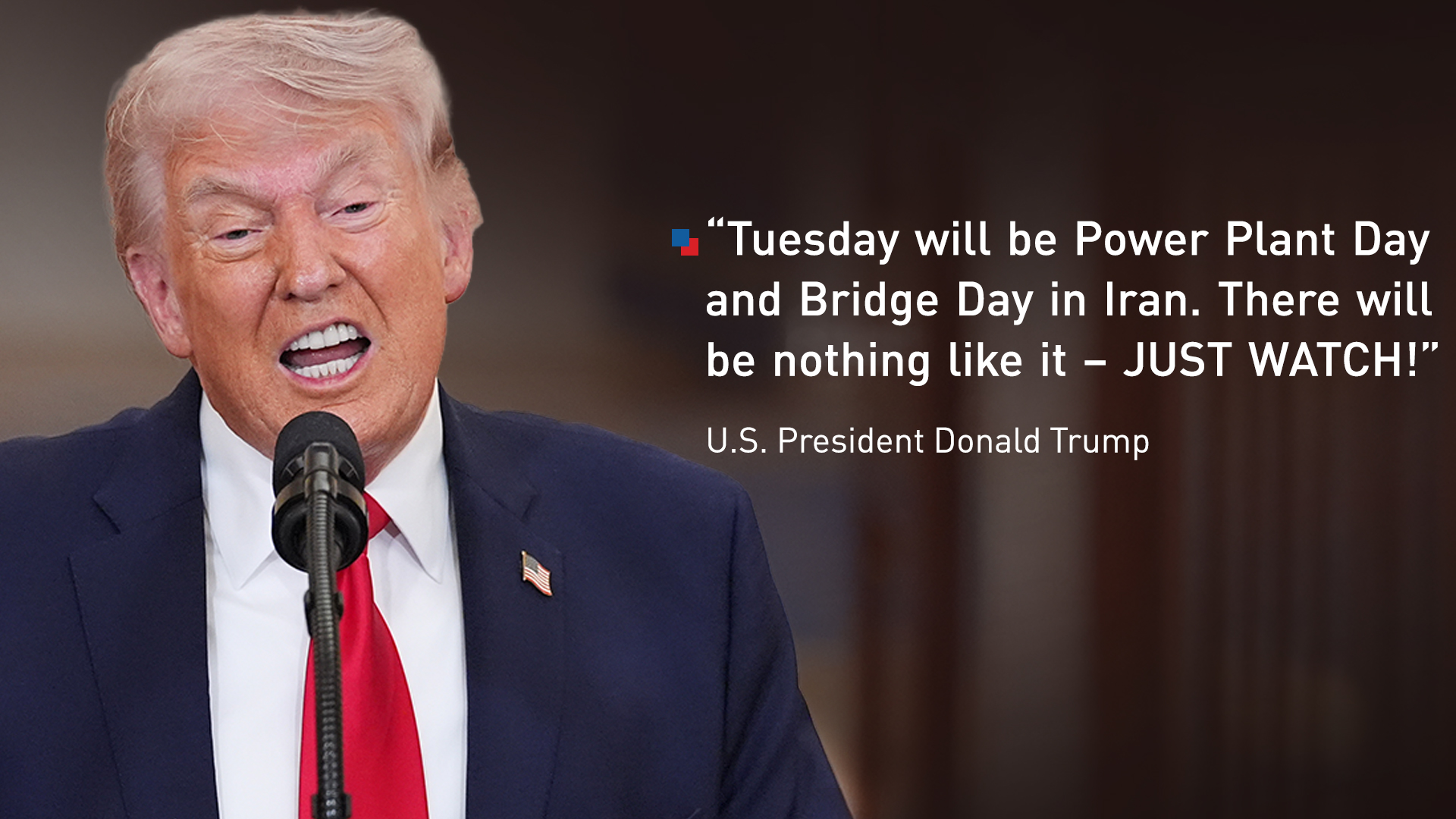
ERBIL (Kurdistan24) — U.S. President Donald Trump on Sunday escalated tensions with Iran, posting on his Truth Social platform that “Tuesday will be Power Plant Day, and Bridge Day, all wrapped up in one, in Iran,” warning Tehran to “open the fuckin’ Strait, you crazy bastards, or you’ll be living in Hell — JUST WATCH!” The statement underscores mounting frustration in Washington over Iran’s control of the strategically vital Strait of Hormuz and comes amid a six-week-old conflict triggered by U.S. and Israeli strikes on Iran.
The Strait of Hormuz, a narrow waterway linking the Persian Gulf to the Gulf of Oman, is a critical artery for global energy markets, with roughly one-fifth of the world’s oil passing through the passage.
Trump’s post frames a 48-hour ultimatum for Tehran to reopen the strait to international shipping or face potential U.S. strikes targeting critical infrastructure, including power plants and bridges.
The president’s use of bold and provocative language marks one of the most direct public warnings issued by a U.S. leader to Iran in recent years.
Iranian officials swiftly dismissed the ultimatum, calling it “helpless” rhetoric and warning that any attack on their territory would provoke a strong retaliatory response. Tehran has emphasized its control of the strait as a matter of national sovereignty and has repeatedly rejected external pressure to alter maritime operations in the region.
The warning arrives in the context of a six-week-long military confrontation triggered by U.S. and Israeli strikes on Iranian territory on February 28. Since then, Iran has conducted multiple missile and drone strikes across the Gulf, targeting shipping lanes, oil infrastructure, and military installations.
The Strait of Hormuz has become a focal point of these tensions, with commercial vessels diverted or delayed, leading to spikes in global oil prices and heightened anxiety among energy markets.
Trump’s post also highlights the increasing role of social media as a platform for delivering high-stakes foreign policy messages, bypassing traditional diplomatic channels.
The president’s message, blending military threats with provocative rhetoric and even religious references, underscores the heightened intensity of the standoff while signaling a willingness to consider direct action against Iranian infrastructure.
Earlier in the day, in a separate Truth Social post, Trump hailed a dramatic military operation to recover a wounded U.S. airman from deep inside Iran, saying the rescue of the second crew member of a downed F‑15 fighter jet was “one of the most daring Search and Rescue Operations in U.S. History.”
“We have rescued the seriously wounded, and really brave, F‑15 Crew Member/Officer, from deep inside the mountains of Iran,” Trump wrote, describing the rescued airman as a “highly respected Colonel” pursued by Iranian forces.
He said U.S. forces carried out a second rescue mission after a daylight operation the previous day in which the jet’s pilot was recovered following seven hours over Iranian territory. Trump called the efforts “an AMAZING show of bravery and talent by all!” and scheduled a news conference with military leaders at the White House for Monday.
The operation followed the shoot‑down of an F‑15E Strike Eagle, a two‑seat multi‑role fighter, on Friday when it was struck by Iranian air defenses over southwestern Iran.
The aircraft’s two‑person crew ejected and initially evaded capture as both U.S. and Iranian forces searched rugged terrain. One airman — the pilot — was rescued soon after the crash, while the second, a weapons‑systems officer, remained missing until Sunday’s operation.
U.S. military officials say the rescue involved dozens of aircraft and special forces units, with coordinated intelligence and air support to locate and extract the downed airman before Iranian units could reach him.
Trump highlighted that neither rescue resulted in U.S. fatalities, underscoring what he described as a demonstration of U.S. air dominance and operational precision.
Diplomatic efforts to resolve the standoff remain ongoing but have so far failed to produce concessions from Tehran. The international community continues to call for restraint on all sides, emphasizing the need to maintain open shipping lanes and prevent civilian casualties.
With the 48-hour deadline looming, attention is focused on whether Tehran will respond to Trump’s warning or double down on its current stance, potentially setting the stage for one of the most dangerous confrontations in the Gulf in decades.