Trump Says 'Good Chance' Of Iran Deal on Monday as Graham Warns Diplomatic Window Is Closing Fast
Trump said there is a "good chance" of an Iran deal Monday, threatening to seize Iranian oil if talks fail. Senator Graham warned Tehran the diplomatic window is nearly closed, as OPEC+ cautioned that strikes on energy infrastructure risk prolonged global supply shortages.
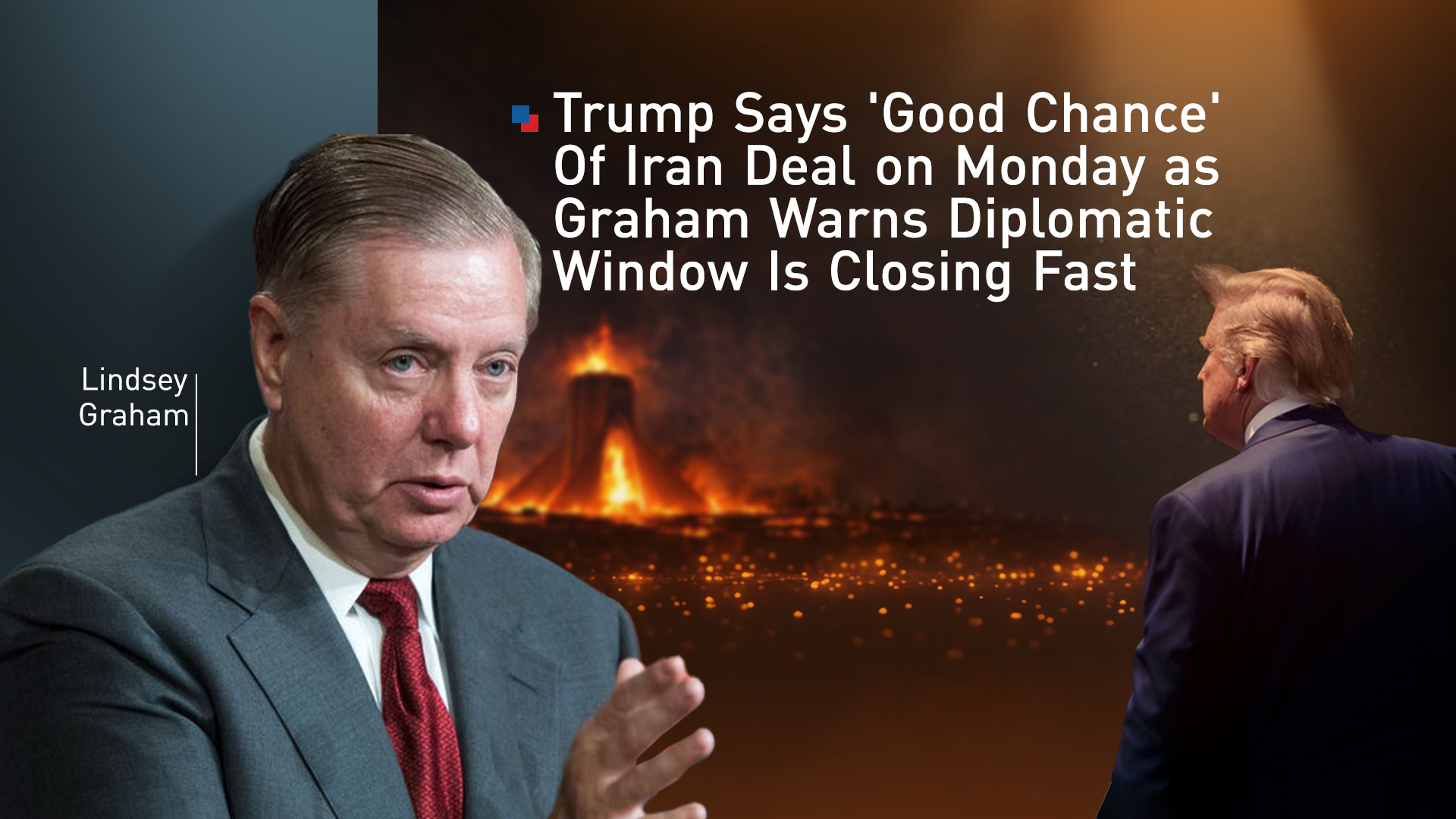
ERBIL (Kurdistan24) - With a military deadline bearing down on Tehran and negotiations still underway, US President Donald Trump said Sunday he believes there is a strong possibility of reaching a deal with Iran by Monday — while simultaneously raising the specter of seizing Iranian oil if talks collapse.
Speaking to a Fox News journalist, Trump expressed cautious optimism about the prospects of an agreement. "I think there is a good chance tomorrow, they are negotiating now," he said. The remarks came ahead of his deadline for Tehran to reopen the Strait of Hormuz or face heavy bombing.
The president did not limit himself to optimism, however. "If they don't make a deal and fast, I'm considering blowing everything up and taking over the oil," he warned.
Graham: 'Choose wisely and choose quickly'
Hours later, senior US Senator Lindsey Graham amplified the pressure, posting a stark warning to Iran on X on Sunday. Graham stated that Trump has made a definitive decision to restore freedom of navigation in the Strait of Hormuz — even if doing so requires the use of maximum military force.
In his post, Graham wrote: "President Trump is intent on restoring freedom of navigation in the Strait of Hormuz. He is deadly serious when it comes to his ultimatum to Iran to open the Strait of Hormuz or face a massive military response against vital infrastructure."
The senator said he still holds out hope that the strait can be reopened and enriched uranium secured through diplomacy, calling that outcome the best for the region and the world. He closed with a blunt appeal to Tehran: "To say the window on diplomacy is closing would be an understatement. To Iran, choose wisely and choose quickly."
The energy stakes: OPEC+ sounds the alarm
The diplomatic brinkmanship is unfolding against a backdrop of profound anxiety in global energy markets. The Joint Ministerial Monitoring Committee of OPEC+, meeting on Sunday, expressed deep concern over the targeting of energy infrastructure amid the ongoing conflict, warning that strikes on oil and petrochemical facilities in the region would not only cause immediate damage but carry long-term consequences for global fuel supply.
According to a draft statement obtained by Reuters, OPEC+ stressed that restoring damaged oil and industrial facilities to normal operation would require enormous financial expenditure and an extended period of time — meaning global markets could face prolonged energy shortages.
The draft also carried a direct reference to the waterways at the center of the crisis: "The committee emphasizes the importance of preserving international waterways to ensure the continued uninterrupted flow of energy." The statement was a pointed allusion to the disruptions in the Strait of Hormuz and the Sea of Oman, which serve as the arteries of global oil transport.
In a separate but related move, OPEC+ — led by Saudi Arabia, Russia, and the Gulf states — issued an urgent decision to reduce oil production by 206,000 barrels per day beginning next month.
The warning comes as tensions in the region have reached a peak: Israel and the US are threatening to strike Iranian energy infrastructure, while Iran's Islamic Revolutionary Guard Corps has claimed responsibility for attacks on petrochemical facilities in Gulf states.