A Midnight Drone Strike in Erbil Extends a Peshmerga Family’s Legacy of Martyrdom
An Iranian drone destroyed a Zargazawi home, martyring Musa Rasul and his wife. As two injured children survive them, Rasul joins his brother in an enduring Kurdish truth: martyrs don't die.
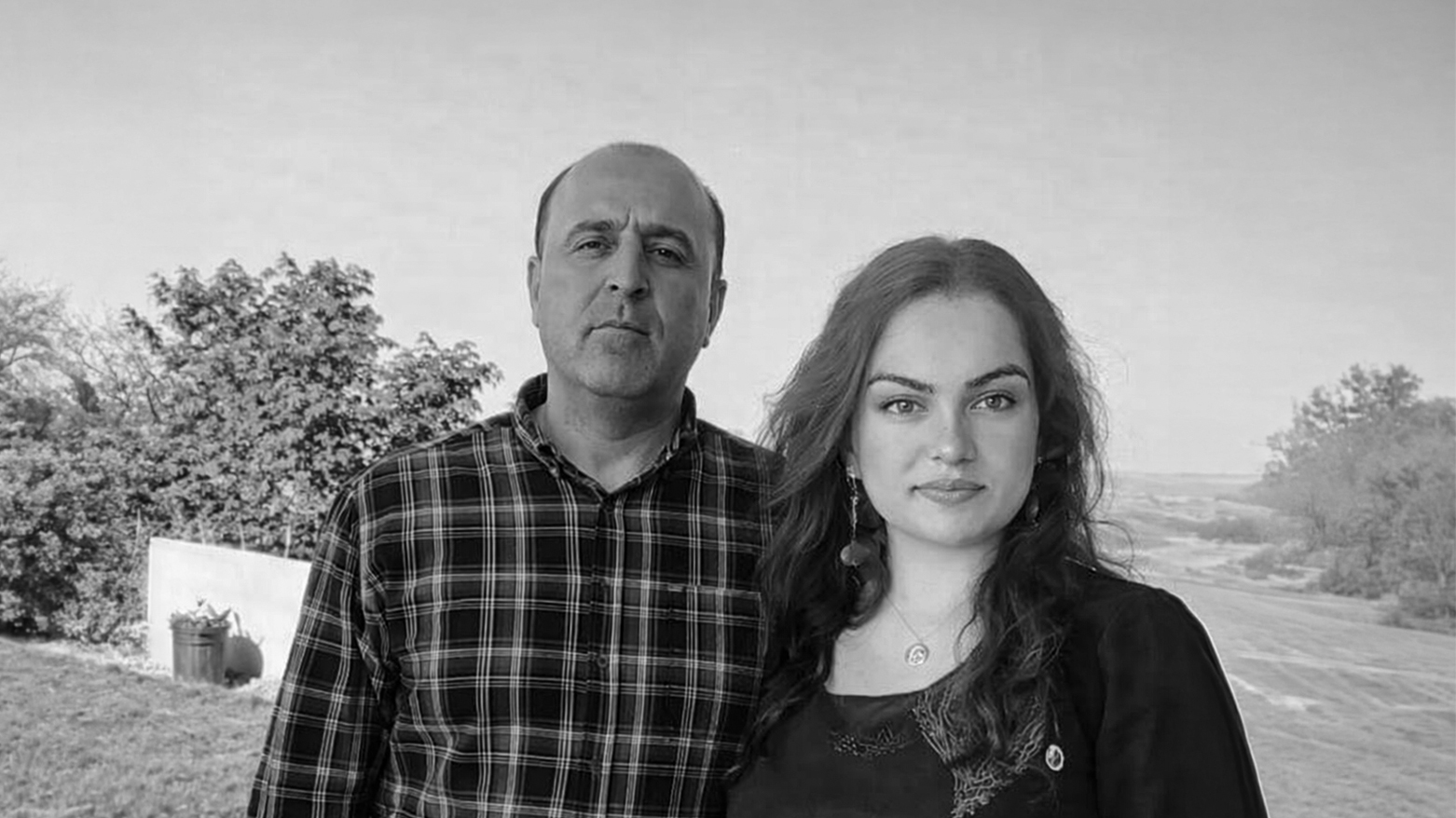
ERBIL (Kurdistan24) - At a quarter past midnight on Tuesday, an explosive-laden drone launched from Iranian territory descended on the village of Zargazawi, destroying a civilian residence and claiming the lives of a member of the Peshmerga forces alongside his wife.
The strike, which hit the Darashakran sub-district on the outskirts of Erbil on early hours of Tuesday morning, ruptured the quiet of the household while the family slept, leaving the couple’s two young children injured but alive amid the wreckage of their home.
The survival of the children, aged two and five, was dictated by the ordinary domestic routines of the evening. Shortly before retiring for the night, Muzhda Asaad Hassan had fed milk to her two-year-old child.
She settled both children securely in a separate room of the house before joining her husband, Musa Anwar Rasul, in their bedroom. Kurdistan24 correspondent detailing the aftermath noted that the couple “were in the sweetness of sleep” when the munition detonated.
Because the children were situated away from the primary point of impact, they escaped the immediate lethal force of the blast. Medical personnel treating the children have since confirmed that their health conditions remain stable.
For Rasul’s family, the sudden loss compounds a history of sacrifice intertwined with the region’s enduring security crises. In 2018, Rasul’s brother, Abdullah Anwar, was martyred in action on Mount Qarachogh while fighting against Islamic State militants.
Tuesday’s drone strike brought the violence of the broader geopolitical landscape directly into the domestic sphere, turning a civilian dwelling into a site of fatal conflict.
The Directorate General of Counter Terrorism confirmed the operational trajectory of the weapon, issuing a formal statement that the unmanned aerial vehicle was launched from within Iran.
Security officials characterized the strike on the residential building as a violation of international law and a war crime, emphasizing that the targeted structure was a civilian home and the resulting casualties were entirely non-combatants.
The fatal detonation was the culmination of an aerial threat that had persisted throughout the previous day. Erbil Governor Omed Khoshnaw detailed the sequence of events, stating that local defense systems began detecting multiple inbound drones shortly after noon on Monday.
While security forces successfully intercepted several of the incoming aerial vehicles during the afternoon and evening hours, one drone ultimately evaded the defensive measures and reached its target in Zargazawi just after midnight.
The breach of the region's airspace and the resulting civilian fatalities prompted an immediate, coordinated response from Kurdish leadership, who uniformly condemned the incident and demanded intervention from the federal government in Baghdad.
Peshmerga Minister Shoresh Ismail described the strike as a brutal assault that fundamentally threatened regional stability.
“We strongly condemn tonight's terrorist attack, which was carried out via an explosive-laden drone against the village of Zargazawi on the outskirts of Erbil,” Ismail said in a public statement. “Unfortunately, this brutal assault resulted in the martyrdom of a heroic Peshmerga named Musa Anwar Rasul and his spouse.”
The minister stressed that the targeting of residential areas constitutes a transgression of all legal and humanitarian boundaries. Reaffirming the ministry’s protective mandate, Ismail stated, “We reiterate that the lives of citizens and the sovereignty of our land are red lines.”
He formally called for a “practical stance” from both federal authorities and the international community to halt further incursions.
Kurdistan Region President Nechirvan Barzani echoed the condemnation, labeling the late-night strike a terrorist attack. Emphasizing that such actions are in no way acceptable, the president directed his appeal toward national authorities, asserting that it is imperative for the Iraqi federal government to fulfill its duty and responsibility to prevent such crimes.
Kurdistan Regional Government Prime Minister Masrour Barzani also addressed the fatalities, expressing profound grief over the deaths of the family members. Denouncing the perpetrators, the prime minister unequivocally stated that targeting civilians and citizens' homes amounts to a war crime.
At the provincial level, local leaders voiced mounting frustration over the central government's lack of response to the repeated violations of the region's airspace.
Governor Khoshnaw emphasized that the Kurdistan Region has focused entirely on protecting its population and has not engaged in the broader regional conflicts driving the current hostilities.
“The Iraqi government has remained silent in the face of attacks targeting the Kurdistan Region,” Khoshnaw said, urging federal officials to take decisive action to ensure accountability. “In the face of violence perpetrated by these terrorist groups against the Kurdistan Region, the Iraqi government has shown no decisive position so far.”
The strike in Darashakran occurred against the backdrop of an ongoing, volatile regional conflict originating in Iran. Since the outbreak of wider warfare, Erbil province and various districts within the Kurdistan Region have repeatedly endured missile and drone bombardments.
Authorities note that some of these strikes are executed directly by the Iranian Revolutionary Guard Corps, while others are launched by allied armed groups operating in alignment with Tehran.
Although Iran frequently justifies these cross-border operations by citing the presence of United States military installations and rival factions near the borders, the operational reality on the ground repeatedly leaves innocent citizens and civilian infrastructure bearing the lethal consequences.
The escalating security situation also drew diplomatic engagement from neighboring states. On Monday evening, prior to the fatal strike, Syrian President Ahmed al-Sharaa held a telephone conversation with President Nechirvan Barzani.
During the call, the Syrian leader explicitly condemned attacks targeting the Kurdistan Region. The presidency confirmed that the two leaders discussed the broader regional instability, the cascading impacts of the ongoing conflict, relations between Syria and Iraq, and the situation of Kurdish communities residing in Syria.
Both figures emphasized the necessity of diplomatic efforts to halt the warfare and resolve disputes through peaceful means.
During their telephone conversation, which covered the broader regional situation and the status of Kurdish communities in Syria, the Syrian president explicitly condemned the attacks targeting the Kurdistan Region, as both leaders emphasized the necessity of diplomatic frameworks to resolve the expanding conflict.