Trump Says 'Whole Civilization Will Die', Signals Regime Change in Iran
"47 years of extortion, corruption, and death, will finally end," the U.S. President Donald Trump added.
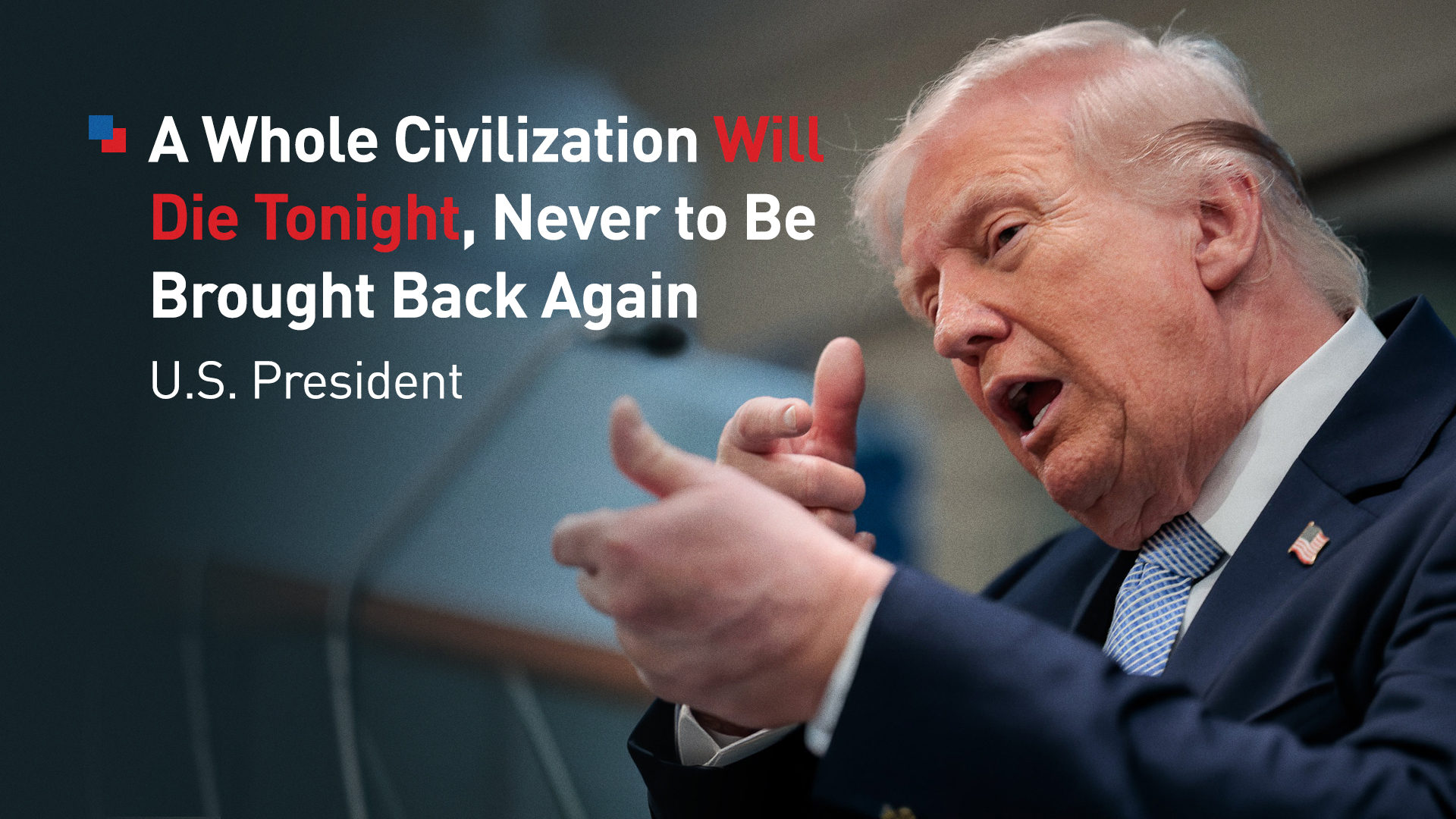
ERBIL (Kurdistan24) - U.S. President Donald Trump wrote on his Truth Social on Tuesday that “a whole civilization will die tonight,” while stating that developments tied to what he described as “complete and total regime change” could mark “one of the most important moments” in global history, according to the post.
In the message, Trump said he did not want such an outcome to occur but added that “it probably will,” while suggesting that a shift in leadership in Iran could produce different results. “47 years of extortion, corruption, and death, will finally end,” he wrote, concluding with a message addressed to “the Great People of Iran.”
The post comes amid escalating rhetoric and military tensions involving the United States and Iran, as well as ongoing diplomatic efforts described by officials as approaching a decisive stage.
Speaking on Fox News, U.S. Senator Lindsey Graham said negotiations with Iran had reached what he described as a critical juncture, warning that failure to secure an agreement could result in military action.
“This time tomorrow night we’re going to have one of two scenarios,” Graham said. “Capitulation of their desire to rain terror on the world through diplomacy or we’re going to have a massive military attack destroying this regime’s capability to ever wage war again.”
Graham stated that the objective of negotiations includes the removal of Iran’s stockpile of highly enriched uranium, restrictions on missile capabilities, and guarantees regarding navigation through the Strait of Hormuz. “There can’t be one ounce of this 60% grade uranium left in Iran,” he said, adding that such material could be further enriched or used in a “dirty bomb.”
He also said Iran possesses approximately 900 pounds of uranium enriched to that level, which he described as having no commercial purpose. “We need to get our hands on that,” Graham said, according to his televised remarks.
The senator further indicated that diplomatic efforts were nearing a conclusion, stating that the United States was “inside the ten-yard line” in achieving its objectives. He said the situation would become clearer within a short timeframe, emphasizing that military force remained an option if negotiations failed. “I’d prefer diplomacy but if we have to use military force we’re going to do it,” he said.
Trump’s latest remarks follow statements made a day earlier during a White House press conference, where he warned that the United States could destroy Iran’s infrastructure within hours if demands related to the Strait of Hormuz were not met. “The entire country could be taken out in one night, and that night might be tomorrow night,” he said, according to remarks carried by AFP.
In the same briefing, Trump said U.S. forces had developed operational plans targeting Iranian infrastructure, including bridges and power plants, which he said could be rendered inoperable within a short timeframe if required. He also described a large-scale U.S. military rescue operation involving more than 170 aircraft deployed across two missions, according to statements made at the press conference.
CIA Director John Ratcliffe said the operation included a deception strategy to mislead Iranian forces, with one airman surviving by concealing himself until rescue teams arrived, according to the same briefing.
Developments described by U.S. officials are unfolding alongside ongoing military exchanges across the region. AFP reported explosions in Tehran and the nearby city of Karaj, while Israeli air defenses were activated in response to incoming missiles.
Regional impacts have extended to neighboring countries, with Saudi Arabia reporting the interception of ballistic missiles targeting its eastern region, and a petrochemical facility in Jubail struck in overnight attacks, according to a witness cited by AFP. Authorities also temporarily closed the King Fahd Bridge linking Saudi Arabia and Bahrain following security alerts.
In Kurdistan Region, local authorities reported that a drone originating from Iran struck a residential home, killing two civilians. An AFP journalist also reported explosions near Erbil airport, which hosts personnel from the U.S.-led coalition, while a security source said air defense systems intercepted missiles headed toward the U.S. consulate in Erbil.
Maritime tensions remain central to the standoff. Diplomatic sources told AFP that the United Nations Security Council is expected to vote on a resolution addressing Iran’s actions in the Strait of Hormuz, including calls to ensure freedom of navigation and halt attacks on commercial vessels.
According to AFP, Tehran has restricted access to the strategic waterway following earlier strikes, contributing to increased global oil and gas prices.
Iranian officials have dismissed U.S. statements. An Iranian army spokesman described the rhetoric as “rude” and “arrogant,” according to AFP, and said it would not affect the country’s actions.
Trump’s post on Tuesday underscores the heightened tone of U.S. messaging as officials describe an imminent decision point in the confrontation with Iran.