Israel Says Hezbollah Leader’s Secretary Killed in Beirut Strike as Truce Comes Under Strain
Hezbollah retaliates with rockets while China urges respect for Lebanon’s sovereignty
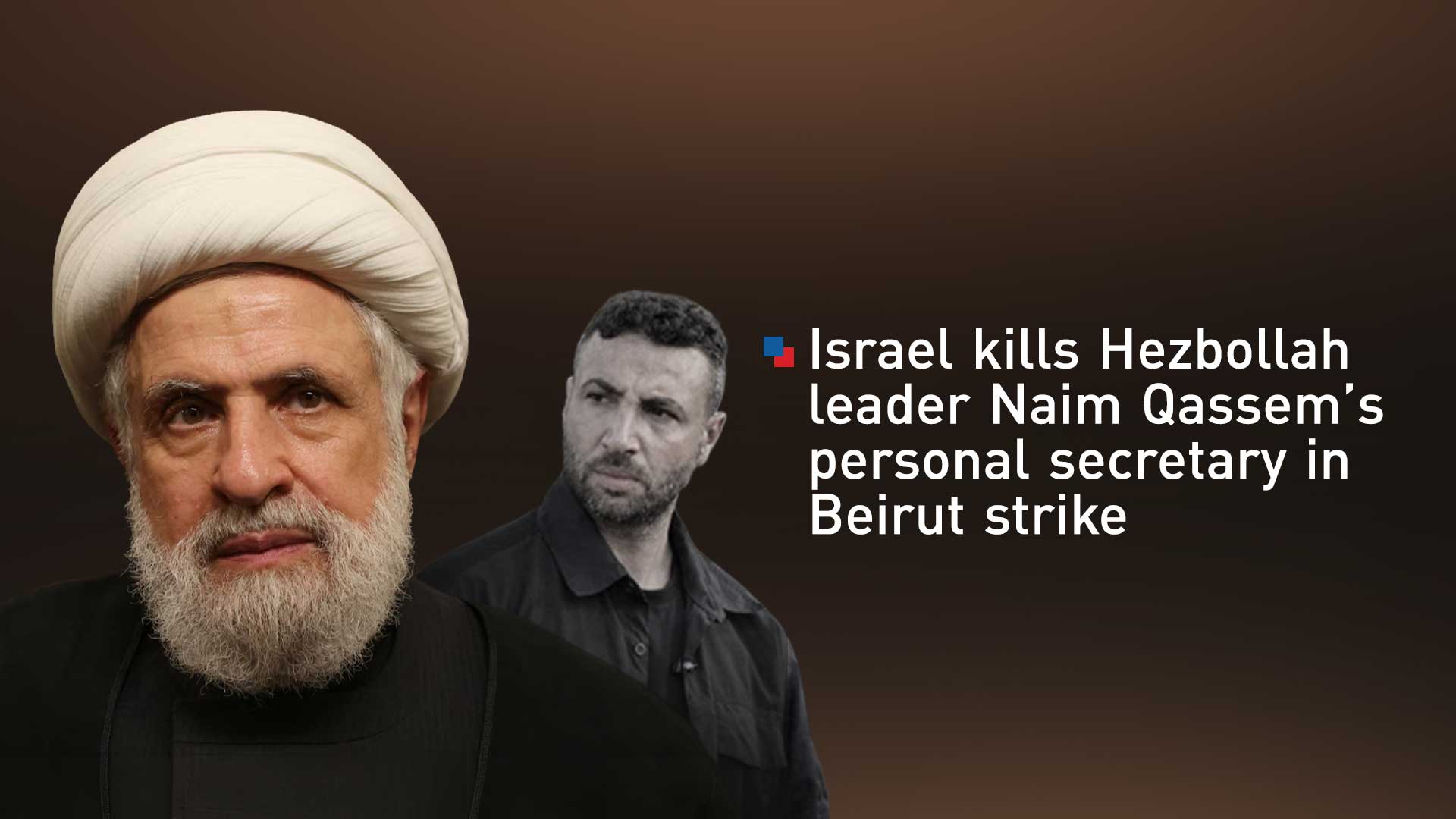
ERBIL (Kurdistan24) — Israel’s military said Thursday it had killed a close adviser to Hezbollah leader Naim Qassem in a strike on Beirut, amid ongoing disagreements over whether Lebanon is covered by the U.S.-Iran ceasefire.
In a statement, the Israel Defense Forces said it had “eliminated” Ali Yusuf Harshi, described as the personal secretary and nephew of Qassem. The military said Harshi was a close associate who played a central role in managing and securing the Hezbollah leader’s office.
The Israeli military added that it also struck two key crossings allegedly used by Hezbollah to transport weapons south of the Litani River, as well as around ten weapons storage facilities, launchers, and command centers in southern Lebanon.
🔴ELIMINATED: Ali Yusuf Harshi, the personal secretary to Hezbollah Secretary-General Naim Qassem in Beirut.
— Israel Defense Forces (@IDF) April 9, 2026
A close associate and personal advisor, Harshi played a key role in managing and securing Qassem’s office.
The IDF also struck two key crossings used by Hezbollah to…
The strikes come amid growing uncertainty over the scope of a ceasefire agreed between Washington and Tehran, with Lebanon emerging as a key flashpoint.
Israel has maintained that its operations in Lebanon are not covered by the truce, a position that has been widely disputed by Iran and its regional allies.
Hezbollah said Thursday it had fired rockets toward Israel in response to what it described as violations of the ceasefire agreement. In a statement, the group said it targeted the Israeli kibbutz of Manara near the Lebanese border with a rocket barrage, asserting its “right” to respond to the previous day’s deadly strikes.
The escalating exchange has drawn international concern. China on Thursday warned that Lebanon’s sovereignty “should not be violated,” with foreign ministry spokeswoman Mao Ning calling for the protection of civilian lives and property and urging restraint to de-escalate the situation.
The latest developments underscore the fragility of the broader ceasefire framework, as hostilities along the Israel-Lebanon frontier threaten to widen the conflict despite ongoing diplomatic efforts to contain it.
The United Kingdom's Secretary of State for Foreign, Commonwealth and Development Affairs, Yvette Cooper, said Thursday that the United Kingdom “strongly” supports extending the ceasefire to Lebanon, voicing deep concern over the latest wave of Israeli attacks.
Speaking to Sky News, she highlighted the humanitarian toll, including mass displacement, and stressed the urgency of broadening the truce to prevent further civilian suffering.
France’s foreign minister Jean-Noel Barrot echoed those concerns, condemning the Israeli strikes as “unacceptable” and warning they risk undermining the already fragile agreement reached between Washington and Tehran.
His remarks came after Lebanese authorities reported that at least 182 people were killed and nearly 900 wounded in a single day of strikes.
Lebanon declared a national day of mourning on Thursday following the attacks, which officials said targeted hundreds of civilians. Flags were lowered, and public institutions closed as the country grappled with one of the deadliest escalations since the conflict expanded in early March, when the Iran-backed Hezbollah entered the war.