Named “Ifa,” After the Trucks: An Anfal Survivor and the Machinery of Disappearance
Given the name Shadiya by her family, she was later given the nickname "Ifa" strictly because she was born inside that specific model of military vehicle. She views the moniker as an expression of profound generational pain, introducing herself as a "symbol of Anfal."
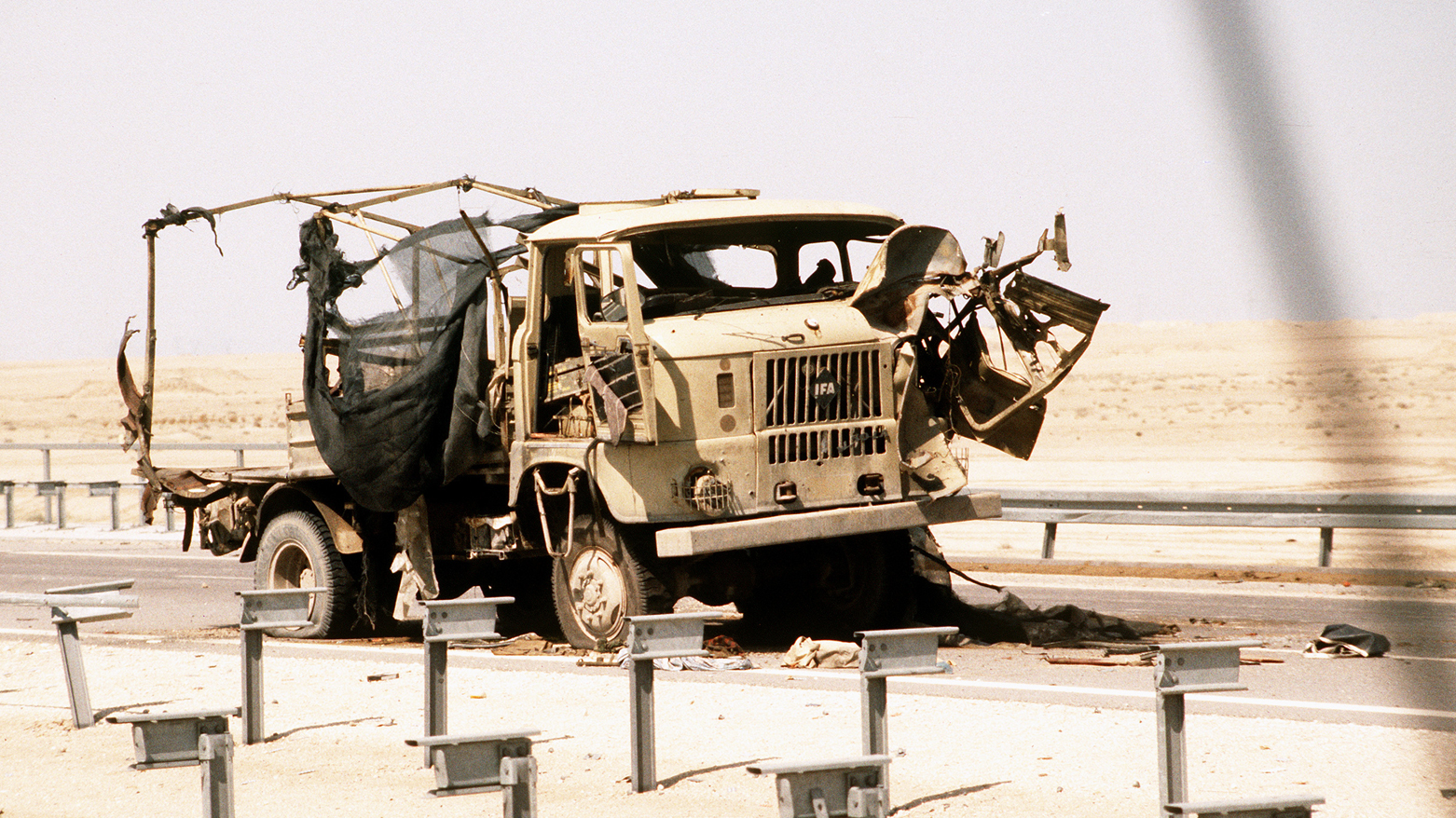
ERBIL (Kurdistan24) - Thirty-eight years ago, amid the systematic forced displacement of Iraq's rural Kurdish communities, a child was born in the cargo bed of an IFA G5 military transport vehicle en route to an internment camp. Today, that survivor, Shadiya Ismail—known by the nickname "Ifa"—stands as a living embodiment of the Anfal genocide, as regional authorities mark the campaign's anniversary by demanding formal constitutional restitution from the federal government in Baghdad.
The systemic erasure of rural Kurdish communities during the Ba'athist regime’s 1988 military campaign was defined not only by mass executions but by the industrial mechanics of deportation.
For Ifa, that historical reality is literally inscribed into her identity. In an account provided to Kurdistan24, she detailed the circumstances of her birth, which coincided with the onset of the military sweeps targeting her native village of Aliawa, located in the Qadir Karam sub-district.
When the Anfal campaign reached Aliawa, the civilian population was forcibly uprooted. The residents, including Ifa’s heavily pregnant mother, were initially transferred by military escort to the Leylan military camp.
The logistical architecture of the Anfal operations required the rapid sorting and processing of captive populations. After a single day of internment at the Leylan facility, Iraqi military personnel initiated a systematic separation protocol.
"They separated the people; they put the youth, the elderly, and the young inside military vehicles of the IFA G5 type," Ifa stated.
The segregated demographics were subsequently dispatched to varying fates. A portion of the village’s population was routed directly to southern Iraq. According to Ifa, those individuals have not returned to this day.
The remaining captives, including her mother, were loaded into the transport vehicles and directed toward the Topzawa military camp.
It was during this transit, surrounded by displaced civilians inside the military machine, that Ifa was born. Stripped of basic humanitarian provisions and medical equipment, the captives resorted to the immediate environment to perform the delivery. "They cut my umbilical cord in the most primitive way using two stones," she recalled.
Given the name Shadiya by her family, she was later given the nickname "Ifa" strictly because she was born inside that specific model of military vehicle. She views the moniker as an expression of profound generational pain, introducing herself as a "symbol of Anfal" who serves as a living witness to the state-sponsored crime committed against her people.
The specific atrocities surrounding Ifa’s birth occurred within the broader operational theater of the Anfal’s third phase.
On Tuesday, the Garmian area formally commemorated this specific chapter of the genocide. The third phase of the Anfal is widely assessed by regional historians and officials as the most severe and logistically complex stage of the broader eradication effort.
The military operations for this phase commenced at dawn on April 7, 1988, launched simultaneously from nearly seventeen different staging locations, and sustained their momentum until April 20.
Due to the unprecedented intensity and brutality concentrated within the middle of this operational window, the Kurdistan Parliament formally designated April 14 as the "Day of the Garmian Anfal." In public remarks, Kurdistan Region Prime Minister Masrour Barzani has characterized the anniversary of this campaign as a "black day" in the history of the Kurdish people.
During this focused two-week campaign, nearly 55,000 citizens from the Garmian area were victimized.
The Ba'athist military strategy extended far beyond demographic removal, incorporating a scorched-earth policy explicitly designed to render the geography permanently uninhabitable for the targeted ethnic group.
According to regional records, the advancing army destroyed all villages and rural settlements across the territory.
The infrastructural annihilation demonstrated a precise methodology. Military engineering units blew up local mosques and systemically targeted the region’s hydrological network, filling natural water springs with poured concrete and cement.
To compound the ecological and physical destruction, the military looted civilian wealth, confiscating money, livestock, and agricultural machinery. This tactic was deliberately engineered to eliminate any hope of sustaining future life or agricultural recovery in the area.
The human cargo extracted from the destroyed Garmian villages was predominantly funneled into the Iraqi penal system, with the vast majority sent to the notorious Nugra Salman prison in the southern desert.
Regional authorities report that a portion of these detainees were buried alive, while thousands of others perished from starvation, dehydration, and the physical trauma of institutional torture.
Despite an administrative pause on official governmental ceremonies this year—a decision authorities attributed to the "current situation"—the social gravity of the anniversary proved resilient.
On Tuesday, families of the Anfal victims arrived in groups at local graveyards and the central Anfal monument in Garmian to participate in sorrowful commemorations and pay respect to the 55,000 victims.
The grassroots commemorations run parallel to a formal diplomatic and legal campaign being waged by the authorities in Erbil.
On the occasion of the 38th anniversary, the Kurdistan Regional Government’s Ministry of Martyrs and Anfal Affairs published a comprehensive statement framing the historical atrocities and issuing direct policy demands to the federal government in Baghdad.
The Ministry’s statement conceptualized the Anfal not merely as a physical massacre, but as a holistic eradication effort targeting the linguistic, cultural, and environmental foundations of the Kurdish identity.
The goal of the former regime, the Ministry asserted, was the total extermination and erasure of the Kurdish character on their ancestral lands, purposefully degrading the natural environment so that the territory would no longer be suitable for human habitation.
Within this historical framework, the Ministry situated the 1991 Kurdish uprising as the definitive historical response required to end the Ba'ath regime’s utilization of systemic genocide and chemical bombardments. However, while the immediate physical threat was neutralized decades ago, the institutional aftermath remains unresolved.
The Ministry confirmed that its primary contemporary duty is the continued diplomatic effort to introduce the Anfal dossiers to regional and international legal centers to secure formal, global recognition of the events as genocide.
The deliberate targeting of the Kurdistan Region's environment alongside its civilian population serves as a cornerstone of this international legal argument.
Domestically, the political tension surrounding the Anfal legacy focuses squarely on constitutional compliance.
The Ministry of Martyrs and Anfal Affairs utilized the anniversary to direct a formal, legally grounded demand at the federal Iraqi government. The statement explicitly cited Article 132 of the Iraqi Constitution, which outlines the state's responsibility to the victims of the previous authoritarian regime.
"The Iraqi government must fulfill its legal and constitutional duties within the framework of Article 132 of the Constitution to compensate the victims of the former regime and guarantee that such massacres will not be repeated in the new Iraq," the Ministry declared in its release.
The unresolved nature of the compensation mandate highlights a persistent structural friction within the modern Iraqi state. While successive federal governments have acknowledged the historical criminality of the Ba'athist era, the bureaucratic implementation of constitutional restitution has remained sluggish and legally contested.
The Ministry concluded its statement by sending blessings to the souls of the Anfal martyrs and wishing pride for their surviving families.
Yet, as survivors like Shadiya Ismail continue to age, the intersection of living memory and delayed state policy grows increasingly fraught.
The physical evidence of the genocide—from the concrete-choked springs of Garmian to the survivors named after the military transports that carried them to the desert—remains a fixture of the Kurdish landscape, waiting on the legal machinery of Baghdad to fulfill its foundational constitutional promises.
5 Things to Know: The Anatomy of the Garmian Anfal and the Push for Restitution
To understand the institutional and historical weight of the April 14 commemorations, the factual record provided by survivors and regional authorities outlines five critical dimensions of the genocide and its political aftermath:
1. The Scale of Phase III
The third phase of the Anfal campaign, which focused heavily on the Garmian area, is considered the most severe stage of the genocide. Initiated at dawn on April 7, 1988, from 17 distinct operational staging grounds, the two-week offensive victimized nearly 55,000 citizens. The intensity of the mid-April operations prompted the Kurdistan Parliament to designate April 14 as the official Day of the Garmian Anfal.
2. Infrastructural and Ecological Annihilation
The Ba'athist military strategy was not limited to demographic removal. Military units utilized poured concrete and cement to seal natural water springs, dynamited local mosques, and systematically looted livestock and agricultural machinery. The KRG Ministry of Martyrs categorizes these tactics as an intentional "genocide of the Kurdish land, environment, and identity," designed to render the geography permanently uninhabitable.
3. The Logistics of Deportation
The removal of the population utilized industrial military logistics. Civilians were funneled from their destroyed villages into temporary holding facilities, such as the Leylan military camp, where populations were segregated. Using transport vehicles like the East German IFA G5, the military shipped detainees to the Topzawa military camp and ultimately to southern internment sites.
4. The Horrors of Nugra Salman
The primary destination for the abducted populations of Garmian was the Nugra Salman prison in the southern Iraqi desert. Regional historical records indicate that detainees were subjected to systemic starvation, dehydration, and torture, with a portion of the captive population reportedly buried alive in the surrounding sands.
5. The Unfulfilled Constitutional Mandate
The modern political struggle centers on Baghdad's legal obligations. The KRG Ministry of Martyrs and Anfal Affairs is actively demanding that the federal government activate Article 132 of the Iraqi Constitution. This constitutional provision mandates state compensation for the victims of the former regime and requires institutional guarantees to ensure the non-repetition of such atrocities in the new Iraqi state.