Italy Suspends Automatic Renewal of Defense Agreement With Israel
The Italian government has officially halted the automatic five-year renewal of its defense and military research memorandum with Israel, citing the impact of the ongoing regional conflict.
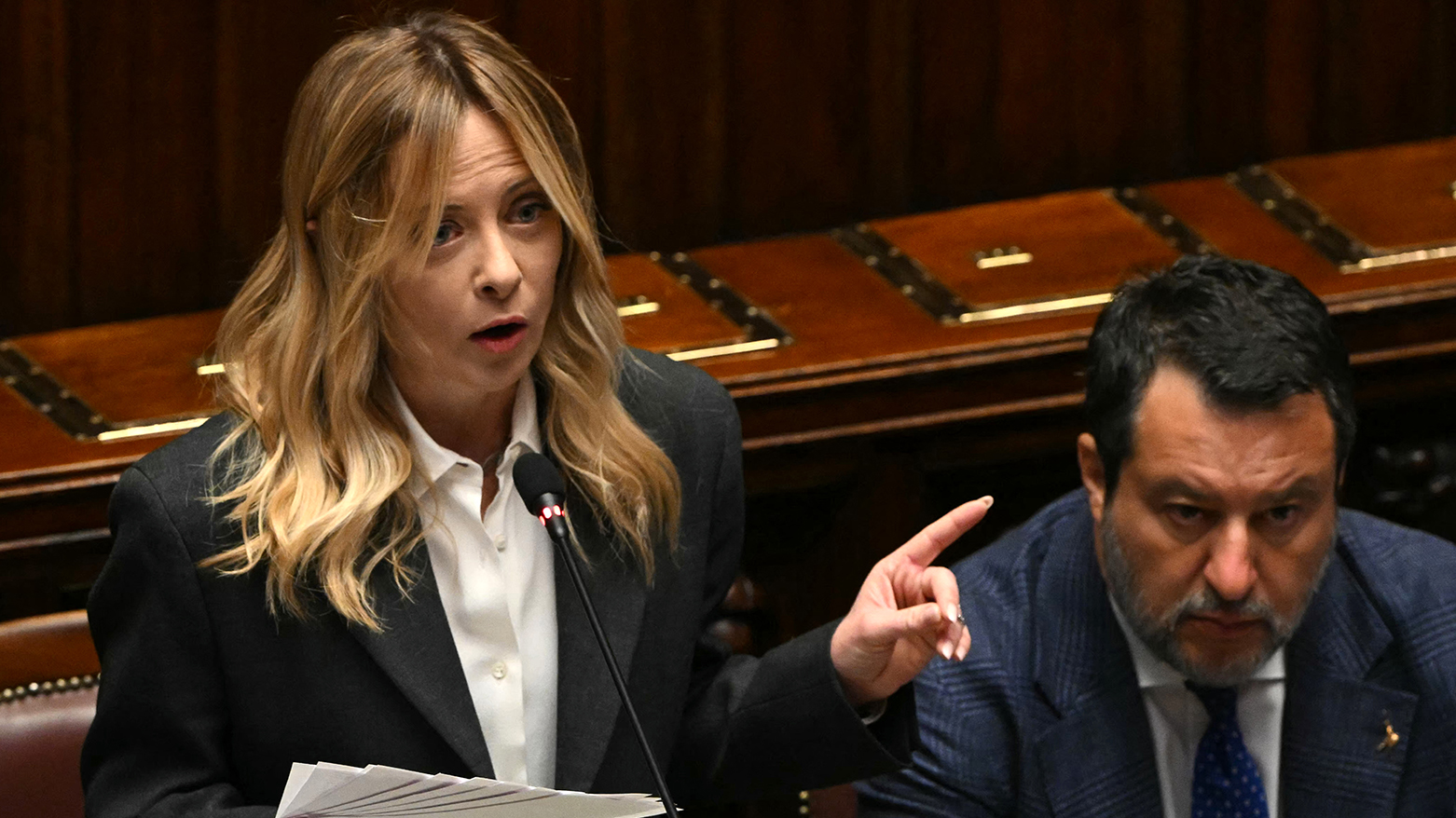
ERBIL (Kurdistan24) - Italian Premier Giorgia Meloni announced on Tuesday that her government has officially suspended the automatic renewal of a long-standing defense cooperation agreement with Israel. The decision, which marks a notable shift in Rome’s security policy, was attributed to the volatility of the current regional environment and follows months of increasing domestic and international pressure regarding the humanitarian consequences of the ongoing conflict in the Middle East.
Speaking to members of the press during a visit to the Vinitaly wine fair in Verona, Meloni stated that the Italian government reached the decision to halt the renewal process in light of the prevailing security and political situation.
According to a report from the news agency ANSA English, the premier’s announcement specifically targets the Memorandum of Understanding (MoU) that provides a comprehensive framework for defense cooperation between the two nations, encompassing the exchange of military hardware and collaborative technological research for their respective armed forces.
The legal and operational foundations of this bilateral partnership were detailed in a report by the Times of Israel, which noted that the original agreement was signed in 2003 under the administration of former Italian Prime Minister Silvio Berlusconi.
The MoU, which set the stage for extensive cooperation in defense and scientific research, was ratified by the Italian parliament in 2005. Historically, the pact has contained a clause for automatic renewal every five years, ensuring a continuous strategic alliance between the Italian and Israeli defense ministries.
The technical specifics of the most recent iteration of this framework were highlighted by ANSA English, which reported that the defense cooperation guidelines came into force on April 13, 2016. The current suspension officially interrupts the five-year cycle of automatic extensions.
In an administrative move to formalize the decision, Italian Defense Minister Guido Crosetto addressed a letter to his Israeli counterpart, Israel Katz, informing him of Rome’s position, according to sources cited by ANSA.
As Meloni’s right-wing government navigates the complexities of the regional war, it has faced significant scrutiny at home.
The Times of Israel highlighted that Italian citizens have taken to the streets en masse since the Oct. 7, 2023, Hamas massacre to denounce the ongoing military operations in the Gaza Strip. This domestic unrest has placed the Meloni administration under intense pressure to reassess its strategic ties with Jerusalem.
Furthermore, the Times of Israel detailed that Italy’s stance has hardened on the international stage over the previous months.
During an address to the United Nations in September, Premier Meloni signaled that Italy would support specific European Union sanctions against Israel. At that time, she asserted that Israeli military actions had crossed a humanitarian line, citing a "slaughter of civilians" and the violation of established international norms.
The suspension of the defense pact also follows instances of direct military friction.
According to the Times of Israel, which cited both Italian media and Defense Ministry sources, Rome recently refused to permit certain United States aircraft to utilize the Sigonella airbase in Sicily.
The aircraft, which were reportedly on a combat mission related to the U.S.-Israeli conflict with Iran, were denied landing rights as part of Italy's effort to maintain a specific distance from the escalating military engagement.
The 2003 memorandum was intended to be a cornerstone of scientific and military synergy, but its future now remains uncertain.
Dispatches from ANSA English confirmed that the decision was made "in consideration of the current situation," a phrase Meloni used to encapsulate the multifaceted security risks and diplomatic concerns presently facing the Mediterranean nation.
While the suspension does not formally terminate all ties, it effectively removes the institutional momentum that has characterized the defense relationship for over twenty years.
The move by Rome is seen by regional observers as a calculated effort to align Italian foreign policy with a more cautious approach to the Middle East conflict. By halting the automatic mechanism of the defense treaty, the Italian government has asserted its prerogative to review military cooperation through the lens of humanitarian adherence and regional stability.